
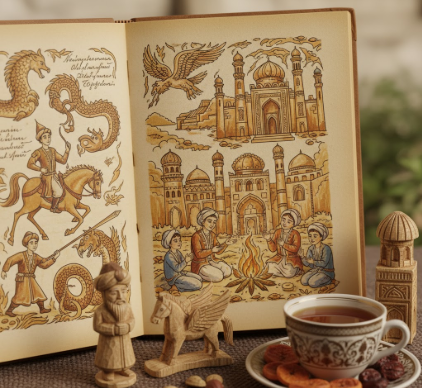
I used to think fairy tales were just bedtime stories, you know? Harmless little narratives about talking animals and magic carpets.
Then I started digging into Uzbek fairy tales—the kind passed down through generations in tea houses and around family tables in places like Samarkand and Bukhara—and honestly, I realized I’d been missing the entire point. These stories aren’t just entertainment. They’re cultural blueprints, encoded with survival strategies, moral frameworks, and a kind of folk wisdom that predates written language by centuries, maybe millennia. The tales feature characters like Khoja Nasreddin, a trickster figure who uses wit to outsmart oppressors, or the div—these malevolent spirits that live in desolate places and test human courage. What struck me most was how these narratives don’t shy away from complexity: heroes fail, villains sometimes have legitimate grievances, and happy endings often come with asterisks attached.
Anyway, here’s the thing about oral traditions. They mutate. A story told in the Fergana Valley might have completely different details than the same tale recieved in Khiva, even though the core message stays intact. Scholars estimate these stories have been circulating for roughly 800 to 1,000 years, give or take, though pinning down exact dates is like trying to catch smoke.
The Trickster Wisdom That Refuses to Die No Matter How Many Times Empires Try
Khoja Nasreddin dominates Uzbek folklore in ways that are hard to overstate.
He’s everywhere—riding his donkey backwards, giving absurd advice that turns out to be profound, humiliating pompous officials with logic traps they can’t escape. The character appears across Central Asia and the Middle East, but Uzbek versions have this particular edge, this defiance baked into the humor. During Soviet times, when overt resistance could get you disappeared, Nasreddin stories circulated as safe rebellion. You could laugh at authority without directly challenging it. I guess it makes sense that a character who survives by outwitting power would thrive under regimes that crush direct dissent. The stories teach lateral thinking: when you can’t fight force with force, you fight it with paradox, with humor, with making the powerful look foolish on their own terms.
Wait—maybe that’s too romantic. Some tales are just funny without deeper meaning.
Female Characters Who Refuse the Passive Princess Template Completely and Definitately
Western fairy tales gave us Cinderella waiting for rescue. Uzbek tales give us characters like Gulandom, a clever girl who solves riddles that stump kings, or the various unnamed daughters who save their fathers from debt or death through quick thinking rather than beauty. These aren’t modern revisions—these are old stories, worn smooth by repetition. The gender dynamics are complicated, sure. Women in these tales operate within patriarchal structures, but they exploit every loophole, every gap in male authority. There’s a story I came across about a bride who outsmarts forty thieves on her wedding night while her husband hides, terrified. The tale doesn’t overthrow gender roles entirely, but it definately mocks male incompetence in ways that must have been cathartic for female storytellers and listeners. Turns out, narrative subversion doesn’t require modern feminism—it just requires people finding ways to say what they can’t say directly.
The supernatural elements carry weight too. Divs aren’t just monsters—they represent chaos, the dangers outside civilization’s boundaries. Peris, benevolent spirits, sometimes help humans but demand respect in return, teaching that nature has agency, that the world doesn’t exist solely for human use.
Why These Stories Still Matter When Netflix Exists and Attention Spans Are Supposedly Dead
I’ve seen younger Uzbeks dismiss these tales as outdated, irrelevant to modern Tashkent life with its cafes and startups and WiFi everywhere. But here’s what I’ve noticed: the core anxieties haven’t changed. Stories about navigating corrupt officials? Still relevant. Tales about using cleverness when you lack power? Still relevant. Narratives about maintaining identity under foreign domination—whether Mongol, Russian, or Soviet? Maybe more relevant now as globalization pressures local cultures into homogeneity. These fairy tales aren’t museum pieces. They’re active templates for how to be human when the world doesn’t make it easy, when survival requires more than brute strength or blind obedience. They teach moral flexibility without abandoning core values—a skill every generation needs, honestly. The tales circulate now through WhatsApp voice messages, YouTube animations, school curricula trying to revive endangered traditions. The medium changes but the message persists: be clever, be brave, don’t trust power, help your community, respect forces bigger than yourself. Not bad advice, even in 2025.







