The rockface looked ordinary until I got close enough to see the scratches weren’t random.
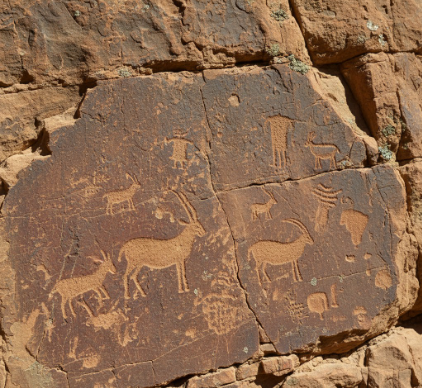
Sarmish Gorge sits in Uzbekistan’s Zarafshan Range, and honestly, I’d passed through twice before noticing the petroglyphs at all. The canyon trail runs about 4 kilometers through limestone cliffs that reach maybe 80 meters in some sections—give or take, I’m terrible with estimating heights—and the prehistoric art is scattered along the western wall in clusters that don’t follow any obvious pattern. Archaeologists from Samarkand State University documented roughly 230 individual markings in 2018, though local guides insist there are more hidden under lichen growth. The images include ibex with exaggerated horns, human figures with raised arms, and geometric patterns that might represent celestial bodies or might just be doodles from someone incredibly bored 3,000 years ago. We don’t actually know for sure. Dating rock art is messy because you can’t carbon-date stone itself, only organic residues if you’re lucky enough to find them, and here the estimates range from Late Bronze Age to early Iron Age based on stylistic comparisons with other Central Asian sites.
I used to think prehistoric art was this profound spiritual thing every time. Turns out, some of it probably was just marking territory or passing time. The Sarmish carvings sit at eye level mostly, which suggests they weren’t meant to be hidden or sacred necessarily—just visible to whoever walked past. That’s different from cave paintings deep underground that required crawling through tight spaces with primitive lamps.
Why This Canyon Became a Canvas for Ancient Herders and Their Surprisingly Specific Animal Obsessions
The ibex appears everywhere, sometimes in hunting scenes, sometimes alone. Central Asia’s mountain goat populations were massive back then, and these animals weren’t just food—they were currency, status symbols, and apparently artistic muses. One panel shows what looks like a hunting party with bows, but the proportions are all wrong; the ibex is three times larger than the humans, which either means the artist couldn’t judge scale or was making a point about the animal’s importance. I’m leaning toward the latter because other panels show careful attention to detail in the hooves and horn curvature. These weren’t sloppy drawings.
Wait—here’s the thing about the geometric patterns.
They cluster near water seepage points where the rock stays damp year-round, and some archaeologists think these spots had ritual significance because water sources were life-or-death critical in this climate. Others argue the softer, moisture-affected limestone was just easier to carve, which is frankly more practical but less romantic. Both could be true. The patterns include concentric circles, spirals, and grid-like arrangements that show up in Scythian art from roughly the same period, suggesting either cultural exchange or just humans independently deciding that circles look cool. Trade routes through the Zarafshan Valley connected to the Silk Road eventually, so ideas definitely moved through here, though whether these specific artists ever met Scythian travelers is unknowable.
Walking the Trail Today Means Negotiating with Goats Who Think They Own the Place
The modern trail isn’t well-maintained. Expect loose scree, minimal signage, and local goat herds that block the path and stare at you with unsettling intensity. I’ve seen tourists trying to photograph the petroglyphs while shooing away goats who are literally standing on Bronze Age art, which feels like some kind of poetic justice or maybe just irony. The best light for viewing is early morning when the sun hits the western wall at an angle that makes the carved grooves cast tiny shadows. By midday everything flattens out visually and you’ll miss half the images.
Preservation is becoming an issue because visitors sometimes touch the carvings—oils from skin degrade the stone surface over time—and there’s been at least one incident of modern graffiti that required removal efforts. The site has no official protection status yet, though local advocacy groups have been pushing for recognition since 2016. Uzbekistan’s tourism ministry seems interested but underfunded, which is a common story for Central Asian archaeological sites that aren’t Samarkand or Bukhara.
I guess what strikes me most is how ordinary the experience of seeing them feels. No museum glass, no interpretive plaques with confident explanations. Just you and some marks on stone that someone made when bronze tools were cutting-edge technology and writing hadn’t reached this valley yet. They wanted to leave something behind, and they did, and now we stand there trying to figure out what they meant. Maybe they’d find that funny. Maybe they’d think we’re overthinking it.
Anyway, bring water—there’s none along the trail—and decent shoes because the path gets steep near the upper panels.