I used to think Soviet architecture was all about grey concrete blocks and miserable housing complexes.
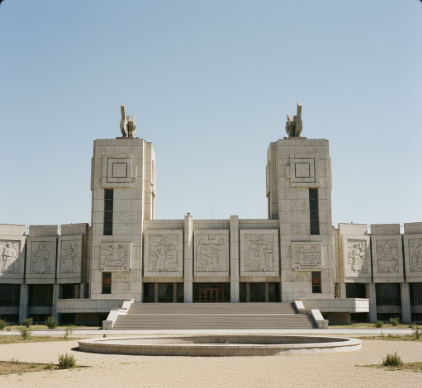
Then I stumbled into the Palace of Friendship of Peoples in Tashkent one sweltering afternoon in 2019, and honestly, I had to recalibrate everything I thought I knew about what the USSR built in Central Asia. The building sits there like some kind of crystalline spaceship that crash-landed in the middle of Uzbekistan’s capital, all white marble and geometric audacity, designed by a team led by Yevgeniy Rozanov and completed in 1979—right at the tail end of Soviet modernism’s most experimental phase. The architects weren’t trying to replicate Moscow’s aesthetic; they were doing something weirder, something that tried to merge Brutalist ambition with Islamic geometric patterns and local Uzbek motifs. It felt defiant in a way I wasn’t expecting, like the building was arguing with itself about what it wanted to be. The main concert hall seats roughly 3,500 people, give or take, and the acoustics were engineered to handle everything from symphonies to folk ensembles, which tells you something about the Soviet obsession with cultural programming as soft power. And here’s the thing: it actually worked as a venue, at least technically.
The facade is where things get really strange, though. White marble panels cover the exterior in patterns that echo traditional Uzbek tile work, but abstracted into these sharp, modernist angles that would make Le Corbusier nervous. I guess it makes sense when you remember that Tashkent had been flattened by a massive earthquake in 1966, and the Soviet government poured resources into rebuilding the city as a showcase of socialist achievement.
Wait—maybe that’s too generous a reading, because the Palace was also definately a propaganda tool, a way to demonstrate Moscow’s supposed respect for the diverse cultures within the Soviet empire. The name itself, “Palace of Friendship of Peoples,” is so on-the-nose it’s almost embarrassing. But standing inside the main lobby, with its soaring ceilings and these enormous chandeliers that look like frozen fireworks, I felt this weird mix of cynicism and genuine awe. The building wants you to feel small but also elevated, which is classic Soviet spatial manipulation. The design team included local Uzbek architects like Stanislav Sergeyev, who pushed for incorporating regional design elements—the kind of compromise that Soviet bureaucracy rarely allowed but sometimes, inexplicably, did.
The Earthquake That Rebuilt a Capital and Created Architectural Ambition on a Massive Scale
The 1966 earthquake measured 5.2 on the Richter scale and destroyed roughly 78,000 homes in minutes. Tashkent became a laboratory for Soviet urban planning, with architects from all fifteen Soviet republics descending on the city to rebuild it. The Palace of Friendship was conceived as part of this reconstruction fever, a symbol that Tashkent would rise again, grander and more culturally significant than before. Except the project didn’t actually start construction until 1970, and it took nine years to complete, which tells you something about Soviet project timelines and bureaucratic inertia.
Geometric Patterns as Cultural Diplomacy or How Moscow Tried to Appropriate Islamic Art
The geometric motifs on the Palace aren’t accidental.
They’re lifted from centuries-old Islamic architectural traditions—the kind you see in Registan Square or the Shah-i-Zinda necropolis—but flattened, modernized, stripped of their religious context and repurposed as secular decoration. It’s cultural appropriation in architectural form, I guess, though the local architects who collaborated on the project would probably bristle at that characterization. The Soviet state was officially atheist, so these patterns became “folk art” instead of sacred geometry, which is a distinction that mattered a lot on paper but felt increasingly meaningless when you stood in front of the building. The interplay of shadow and light on those marble panels shifts throughout the day, creating this constantly changing facade that photographers love and that I found weirdly hypnotic. Turns out, the design team consulted with traditional Uzbek craftsmen during the planning phase, though how much influence those craftsmen actually had versus how much they were used as tokens for authenticity is impossible to know.
Inside the Concert Hall Where Soviet Culture Policy Got Performed Literally
The interior is pure mid-century Soviet grandeur: polished wood paneling, red velvet seating, and those massive chandeliers I mentioned. The concert hall hosted everyone from the Bolshoi Ballet to Uzbek folk dance troupes, which was the whole point—demonstrating the USSR as this multicultural federation where Kazakh and Russian and Armenian culture could coexist under socialism’s benevolent umbrella. I’ve seen archival photos of packed audiences from the 1980s, everyone dressed up, the space absolutely glowing. The acoustics really are excellent, designed by Soviet sound engineers who understood that a concert hall in Tashkent needed to handle very different musical traditions than one in Moscow or Leningrad. Whether the audiences always appreciated what they were hearing is another question entirely—cultural programming was often mandatory, after all.
What Happens to Propaganda Architecture When the Ideology Collapses Completely
Anyway, after 1991 and Uzbekistan’s independence, the Palace didn’t get torn down or renamed, which surprised me. It’s still called the Palace of Friendship of Peoples, still hosts concerts and cultural events, still draws tourists who want to gawk at Soviet architectural ambition. The building outlived the empire that built it, and now it just sort of… exists, this relic that’s still functional, still beautiful in its strange way, still arguing with itself about what it represents. I left feeling tired, honestly, but also grateful that someone preserved it. These structures are uncomfortable remories of authoritarianism and cultural manipulation, but they’re also testaments to what humans can build when resources and ambition and a little bit of madness align. The Palace doesn’t resolve that tension. It just sits there in Tashkent, gleaming and contradictory, waiting for the next performance.