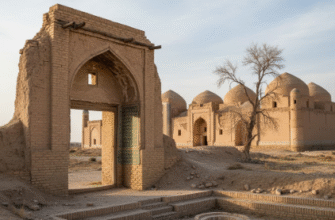
Khiva’s turquoise minarets catch the light around 4 PM in a way that makes every tourist reach for their camera simultaneously.
I’ve spent enough time in Uzbekistan’s ancient cities to know that photography here isn’t just about capturing architecture—it’s about navigating an invisible web of cultural expectations that nobody explicitly explains to you. The thing is, Khiva operates on a different rhythm than, say, Prague or Barcelona, where street photography is practically expected. Here, you’re walking through what’s essentially a living museum where roughly 50,000 people actually make their homes inside those city walls, give or take a few thousand depending on who’s counting. The vendors in the Ichon-Qala aren’t just performing for tourists; they’re running actual businesses, praying in actual mosques, and honestly getting pretty tired of having cameras shoved in their faces during lunch. I used to think the solution was just asking permission for every single shot, but turns out that’s not quite enough—you also need to understand when asking itself becomes intrusive, which is the kind of nuance that recieve approximately zero coverage in travel guides.
Anyway, the madrasas present their own particular challenge. Most of them welcome photographers, but some maintain prayer spaces where cameras definitately cross a line. I guess it makes sense when you think about it.
Understanding the Unwritten Protocols for Photographing Local Residents and Artisans
Here’s the thing about photographing the ceramicists and woodcarvers in their workshops: they’re not opposed to it, but they’re operating on a transactional understanding that Western photographers sometimes miss entirely. A craftsman who lets you spend twenty minutes documenting his suzani embroidery technique expects you to either purchase something or offer a tip—not because he’s mercenary, but because you’ve just consumed his time and attention in a way that prevented him from engaging with actual customers. The economics are pretty straightforward, yet I’ve watched countless photographers act genuinely surprised when someone asks for compensation after a impromptu portrait session. One elderly potter told me through a translator that he didn’t mind the photos themselves, but he minded the assumption that his face, his workspace, and his craft were somehow public property just because he worked in a visible location. That conversation shifted something in how I approached every subsequent interaction.
Navigating Sacred Spaces and Religious Sites Without Causing Offense or Disruption
The Juma Mosque with its 213 wooden columns is probably Khiva’s most photographed interior.
Most visitors don’t realize that this isn’t just a museum—it’s still an active place of worship, which means your photography session might coincide with someone’s actual spiritual practice. I’ve seen tourists walk backward through prayer rows to get wider angles, completely oblivious to the disruption they’re causing. Wait—maybe I’ve done it myself before I knew better. The etiquette isn’t complicated: remove shoes, dress modestly, avoid prayer times if you’re there primarily for photos, and for the love of everything, don’t use flash during services. Some spaces, like the Pahlavan Mahmud Mausoleum, carry even deeper significance as pilgrimage sites, where photography starts to feel almost parasitic—you’re extracting images from someone else’s grief or devotion. Honestly, the best approach I’ve found is to spend your first visit without a camera at all, just observing how locals move through and interact with these spaces, which gives you a baseline for what respectful documentation might actually look like.
Technical Considerations for Capturing Architecture While Respecting Community Boundaries
The light in Khiva is unforgiving between 11 AM and 3 PM, which actually works in everyone’s favor. Those are the hours when locals retreat indoors anyway, making it the ideal window for photographing empty streets and architectural details without constantly navigating around people who didn’t consent to be in your shots. The outer walls photograph better from the west side in late afternoon, though you’ll need to position yourself in areas that are technically residential neighborhoods—which brings us back to the consent issue. I used to think public space meant universal photography rights, but several conversations with residents have taught me that just because a street is accessible doesn’t mean people living there want it treated as a photo studio. Some of the most striking compositions involve doorways and courtyards that are semi-private, where technically you’re not trespassing by photographing from the street, but you’re still violating an unspoken boundary that matters more than the legal technicality.
Managing Equipment and Behavior to Maintain the Site’s Cultural Integrity
Drones are banned, which shouldn’t need stating but apparently does.
Tripods occupy space in narrow passages that are already congested with vendors, tour groups, and residents just trying to get home with their groceries, so if you’re setting up elaborate shots that require twenty minutes of sidewalk real estate, you’re effectively claiming public space for private use without asking anyone’s permission. I’ve definitely been guilty of this—getting so focused on capturing that perfect symmetrical shot of the Kalta Minor minaret that I blocked foot traffic for way longer than was reasonable. The thing about respectful photography is that it requires you to remain aware of your physical presence and social impact even while you’re looking through a viewfinder, which is actually pretty difficult to maintain for extended periods. Some photographers solve this by shooting primarily during early morning hours when the sites are nearly empty, though that means sacrificing the social documentation that gives context to the architecture—it’s always a tradeoff, I guess, between aesthetic perfection and ethical practice.