Khiva sits there in the desert, and honestly, I keep thinking about how many times this place has been conquered, rebuilt, razed, and reimagined.
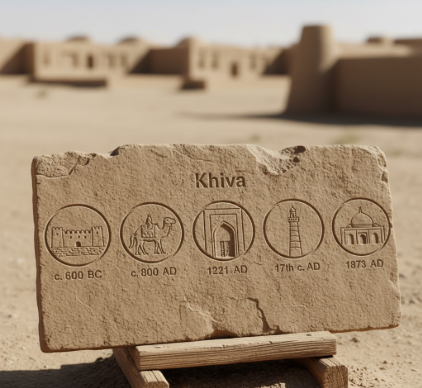
The city’s origins blur somewhere around the 6th century CE, maybe earlier—archaeologists argue about this constantly, which is fair because the evidence is fragmented and buried under centuries of dust and politics. Some sources claim a fortress existed here as early as the 4th century, serving as a waystation on trade routes that connected Persia to China, but the documentation is sparse enough that we’re essentially guessing based on pottery shards and architectural hints. By the 10th century, though, Khiva appears in Arabic texts as a recognized settlement within the Khorezm region, a place where scholars gathered and caravans stopped to water their camels before pushing deeper into Central Asia. The Mongol invasion of 1220—led by Genghus Khan’s forces—basically flattened everything, turning what had been a modest but thriving center into rubble and trauma. It’s one of those moments in history where you can almost hear the silence afterward, the emptiness where bustling markets used to be. I guess it makes sense that it took decades for the city to even begin recovering, and even then, it never quite returned to what it was before the Mongols arrived.
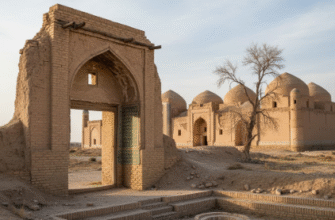
Khiva reemerged in the 16th century under a new identity, and this is where things get intresting. The Arabshahid dynasty established the Khanate of Khiva in 1511, transforming the settlement into a political and cultural capital that would dominate the region for centuries. The city walls we associate with Khiva today—those towering mud-brick fortifications—were constructed primarily in the 17th century, creating the Ichan Kala, the inner fortress that still stands as a UNESCO World Heritage Site.
The Khanate’s Rise and the Slave Trade Nobody Wants to Discuss
Here’s the thing: Khiva became wealthy partly through agriculture and trade, but also through a slave market that operated openly until the mid-19th century.
Russian and Persian captives were bought and sold in the city’s central square, a fact that gets glossed over in tourist brochures but is documented extensively in Russian military reports from the 1800s. The Khanate reached its territorial peak under Abulgazi Khan in the mid-1600s, expanding control over surrounding oases and extracting tribute from Turkmen tribes. But internal power struggles weakened the state—there were coups, assassinations, brothers killing brothers for the throne—and by the 18th century, the khanate was fragmenting. The Qongrat dynasty seized control in 1804, ushering in what some historians call Khiva’s final golden age, though “golden” feels like a stretch when you read about the executions and the constant border skirmishes with Bukhara and Kokand. The architecture flourished, though—madrasas and minarets were erected with intricate tilework, and the Kalta Minor minaret, started in 1852, was intended to be the tallest in Central Asia before the khan who commissioned it died and construction just… stopped.
Wait—maybe I should mention the Russian conquest earlier, because it’s pivotal.
In 1873, Russian imperial forces under General Konstantin Kaufman captured Khiva after a brutal campaign that involved crossing the Kyzylkum Desert and besieging the city for weeks. The Khan Muhammad Rahim II surrendered, and Khiva became a Russian protectorate, losing autonomy but technically remaining a khanate until 1920. That year, Bolshevik forces arrived and abolished the khanate entirely, establishing the Khorezm People’s Soviet Republic, which was later absorbed into the Uzbek SSR in 1924. The last khan, Sayid Abdullah, fled—or was executed, depending on which account you read—and centuries of dynastic rule collapsed in a matter of months. Soviet authorities turned Khiva into a museum city, preserving its architecture while erasing much of its living culture, which feels like a weird kind of mummification.
What Survives When Everything Else Doesn’t
Modern Khiva is strange. Tourists wander through Ichan Kala photographing the same mosques and madrasas that once housed scholars debating Islamic jurisprudence, but the city feels staged, like a theme park version of itself. Uzbekistan gained independence in 1991, and Khiva was designated a protected site, which saved the buildings but also froze them in a kind of artificial stasis. I’ve seen locals complain that they can’t renovate their homes inside the old city because of preservation laws, which is understandable but also frustrating when you’re trying to install plumbing. The timeline of Khiva is less a straight line and more a series of collapses and reinventions—each era layering over the last, erasing and preserving in equal measure, until what remains is this strange composite of memory and stone that defies easy categorization.