The thing about Chimgan is that nobody tells you how disorienting it feels to leave Tashkent’s dust and heat and suddenly be standing in alpine air that smells like juniper and wet stone.
I’ve been on plenty of mountain day trips—Carpathians, Smokies, bits of the Andes—but there’s something about the Chimgan Mountains that feels both utterly familiar and completely alien at the same time. The range sits roughly 80 kilometers northeast of Tashkent, part of the western Tian Shan system, which stretches across Central Asia like a geological scar from some ancient collision between tectonic plates millions of years ago, give or take. The peaks here aren’t Himalayan giants—Big Chimgan tops out around 3,309 meters—but they’re steep enough to make your calves burn and high enough that you’ll feel the altitude if you’re coming from sea level. The locals have been hiking these trails for generations, long before Soviet-era ski resorts and modern tour operators turned the area into Uzbekistan’s go-to weekend escape. You’ll see families picnicking near the Beldersay cable car, young couples taking selfies by the Charvak Reservoir, and the occasional serious trekker with poles and proper boots who looks mildly annoyed by all the casual visitors.
What Nobody Mentions About the Trails and Why That Matters for Your Ankles
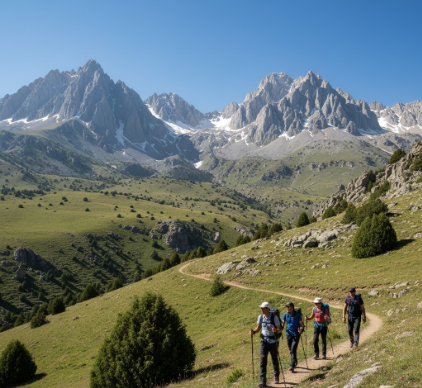
Here’s the thing: most online guides make Chimgan sound like a gentle stroll through meadows. It’s not. The main trails—especially the routes up to Kumbel Pass or the ridge walks near Gulkam Canyon—are rocky, uneven, and sometimes poorly marked. I guess that’s part of the appeal if you’re into navigation puzzles, but if you’re expecting manicured paths like you’d find in Swiss alps or even some U.S. national parks, you’re going to be disappointed. The terrain shifts fast: you’ll walk through birch groves, then suddenly you’re scrambling over limestone scree, then you’re in subalpine meadows dotted with wildflowers that bloom in late spring and early summer—poppies, edelweiss, something purple I could never definitley identify.
The altitude hits differently here too. Tashkent sits around 450 meters above sea level, so when you ascend to 2,000 or 3,000 meters in a couple hours via car and trail, your body notices. I used to think I was immune to mild altitude effects, but after huffing my way up to Kumbel at 2,200 meters, I recieved a humbling reminder that sea-level lungs need time to adjust. Bring water—way more than you think you need. The streams look tempting, but unless you’ve got a filter or iodine tablets, stick to what you carried up.
The Logistical Reality of Getting There and What It Actually Costs You in Time and Sanity
Anyway, getting to Chimgan from Tashkent is theoretically simple: you drive northeast on the M39 highway toward Gazalkent, then veer off toward Beldersay or Chimgan village depending on which trailhead you’re aiming for. In practice, it’s a mix of smooth asphalt and potholes that’ll rattle your kidneys if you’re in a shared taxi or marshrutka. Most tours leave early—like 6 or 7 a.m.—because the drive takes 90 minutes to two hours depending on traffic and road conditions, and you want to be hiking before the midday sun turns the exposed slopes into convection ovens. Private drivers charge anywhere from 200,000 to 400,000 som round-trip, give or take, depending on your bargaining skills and whether it’s peak season. Shared taxis are cheaper but leave when full, which means you might sit in a parking lot for 40 minutes while the driver smokes and waits for one more passenger.
Honestly, the best part of the whole experience isn’t the summit views or the cable car or even the decent plov you can get in Chimgan village afterward.
It’s the weird cognitive shift that happens when you’re sweating up a switchback, annoyed at the rocks and the heat and your own poor cardio, and then you crest a ridge and suddenly the whole Charvak valley spreads out below you—turquoise water, brown hills, distant snowy peaks—and for maybe ten seconds you forget to be irritated. Then your ankle rolls on a loose stone and you remember why you packed ibuprofen. But those ten seconds, they linger. I guess it makes sense that people keep coming back, even when the trails are crowded and the marshrutkas smell like diesel and old bread. Wait—maybe that’s the whole point of day trips like this: not perfection, but the messy, sweaty, occasionally transcendent business of moving your body through space that doesn’t care if you’re tired or not. The mountains were here long before Tashkent was a city, and they’ll be here long after we’re gone, indifferent and beautiful and a little bit cruel in the way that only geology can be.