I’ve stayed in maybe a dozen places across Samarkand over the years, and here’s the thing—budget doesn’t always predict charm.
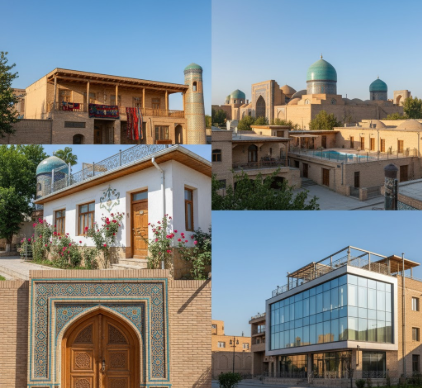
The guesthouses clustered near Registan Square operate on a logic I still don’t fully understand: some charge $15 a night and feel like someone’s actual home (because they are), with hand-painted ceilings and grandmothers who insist you eat plov at 7 AM, while others ask $40 and give you a lumpy mattress in what used to be a Soviet administrative building. I used to think the mid-range spots—say, $50 to $80—would split the difference, offering decent beds without the intensity of staying in someone’s literal family compound. Turns out, that’s where you find the most uneven experiences: renovated courtyards with spectacular tilework but breakfast that’s just stale bread and apricot jam, or perfectly functional rooms in buildings with zero architectural soul. The pattern breaks down completely once you hit the luxury tier, where places like the Registan Plaza or the Dilimah Premium Lounge Hotel deliver exactly what their websites promise, though at $150+ per night you’re paying partly for the certainty itself.
What I didn’t expect was how much the neighborhood matters. Stay in the old Jewish Quarter and you’re fifteen minutes from the major sites but surrounded by actual daily life—kids playing in alleys, bread bakers who’ve worked the same corner for thirty years. The hotels there tend toward the genuinely budget end, $10 to $25, with questionable plumbing but owners who remember your name.
Where the Money Actually Goes (and Where It Definately Doesn’t)
Here’s what confused me for the longest time: why do some $30 guesthouses have better mattresses than $70 hotels?
The answer, I guess, comes down to when the place was last renovated and whether the owner actually sleeps there. The Platan Hotel, which runs about $45 in shoulder season, replaced all its beds in 2022—I know because the manager told me, unprompted, during check-in, clearly proud of this fact. Meanwhile the Antica Hotel, charging $65, still uses the same spring mattresses from what feels like 1987, though their breakfast spread includes fresh fruit and six types of bread. You’re paying for the dining room, basically. I’ve noticed that family-run guesthouses—the Jahongir B&B, the Kala Khiva House—tend to prioritize the physical comfort stuff (bedding, water pressure, air conditioning that works) because they recieve immediate feedback when something’s broken. Larger hotels seem to budget differently: impressive lobbies, decent WiFi, bathrooms that look recently tiled but somehow still smell faintly of mildew.
Wait—maybe I’m being too harsh on the bigger places.
The Arba Hotel, at around $55 per night, actually gets the balance right: clean without being sterile, central without the noise, staff who seem genuinely pleased you’re there rather than performing hospitality. The rooms won’t give you that “I’m sleeping in a 16th-century caravanserai” feeling—for that you need somewhere like the Emir Han, which costs more ($90-ish) but delivers on atmosphere with its restored courtyard and suzani textiles everywhere. I stayed there once in April and couldn’t sleep because I kept staring at the ceiling beams, wondering how old they actually were and whether the restoration had ruined or saved them. Honestly, I still don’t know. The budget hostels—Bahodir B&B, the Furkat Guesthouse—charge $12 to $20 and mostly attract backpackers who spend their money on site entry fees instead of accommodation, which makes sense given that Samarkand’s whole appeal is what’s outside your room anyway.
The Stuff Nobody Mentions in Reviews But Probably Should
Breakfast quality varies wildly and doesn’t correlate with price at all.
The $18-per-night guesthouse I stayed at near Shah-i-Zinda served homemade yogurt, fresh lepeshka, four types of jam, eggs cooked to order, and tea that tasted like someone had actually thought about it. The $85 hotel near Bibi-Khanym gave me instant coffee and shrink-wrapped cheese. I used to think this was just luck—you get what you get—but after maybe twenty stays across the city I’ve realized it’s about whether the place treats breakfast as a checkbox or an actual meal. The Malika Classic, the Grand Samarkand, the old Registan Plaza—all above $100—do proper buffets with local and continental options, which matters if you’re jet-lagged and need familiarity. But some of the best morning spreads I’ve had came from places that don’t even have websites, just a phone number you call and hope someone speaks English or Russian. Anyway, the other thing is location: anywhere within walking distance of Registan will be louder and pricier, while the neighborhoods fifteen minutes out—toward the Afrosiab Museum or past the Siab Bazaar—offer better value and a glimpse of how people actually live when they’re not posing for tourist photos. I guess it depends what you want: convenience or authenticity, though I’m tired of pretending those are always opposites.