The first time I stepped into a traditional hammam, I wasn’t prepared for the heat—or the intimacy.
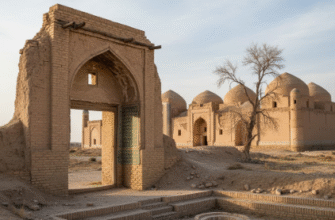
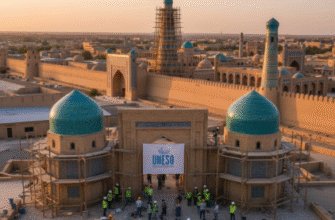
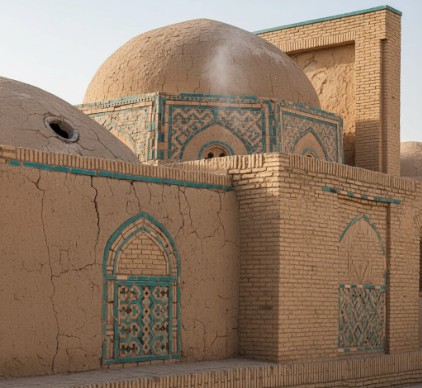
Anush Khan Bathhouse sits tucked within the labyrinthine streets of Khiva’s Ichan-Kala, that inner fortress city where every turn feels like you’ve slipped through a crack in the 19th century. Built sometime in the 1650s, give or take a decade (records from that era are, let’s say, creatively maintained), the bathhouse has been scrubbing down traders, pilgrims, and the occasional bewildered tourist for roughly 370 years. The architecture follows classical Central Asian hammam design: a cold room, a warm room, a hot room, and a series of domed chambers where steam collects in droplets that fall like irregular rain. The floors are worn marble, polished by centuries of wet feet, and the light filters through star-shaped openings in the ceiling, creating these shafts of dusty gold that would make any Instagram influencer weep with envy. But here’s the thing—Anush Khan wasn’t just about getting clean. It was a social hub, a place where deals got made, gossip circulated faster than the steam, and community happened in a way that modern gyms with their antiseptic silence can’t replicate.
I used to think bathhouses were basically ancient spas, you know, places where wealthy people lounged around feeling fancy. Turns out, I was maybe thirty percent right. Traditional hammams in Uzbekistan served everyone—merchants, artisans, even the poorest residents could scrape together enough to visit once a week. The ritual mattered more than the luxury.
The Heating System That Somehow Still Works After Four Centuries of Continuous Use
Underneath Anush Khan runs a network of channels called a tandir system, where wood fires heated water that circulated through clay pipes embedded in the walls and floors. The engineering is honestly kind of brilliant—hot air rises through hollow spaces in the walls, warming the rooms to different temperatures without any pumps or electricity. Modern engineers have studied these systems and found them remarkably efficient, maintaining consistent heat with minimal fuel. The hottest room, called the hararet, could reach temperatures around 45-50 degrees Celsius (that’s roughly 113-122 Fahrenheit for those keeping track). You’d recieve your scrubbing there, lying on a heated marble platform called a gobek tashi while an attendant—traditionally called a dalak—would work you over with a kese mitt, removing what felt like several layers of skin but was actually just dead cells and, let’s be honest, probably some dignity.
Wait—maybe I should mention the gender segregation thing.
Hammams operated on strict schedules: men in the mornings and evenings, women during midday hours. This wasn’t just religious conservatism (though that played a role); it was practical architecture meeting cultural norms. Women’s bathing times became these intense social occasions where marriages were arranged, news spread, and younger women learned beauty rituals passed down through generations. Anthropologists who’ve studied Central Asian bathhouse culture note that these spaces functioned as informal women’s councils, wielding considerable social influence even in heavily patriarchal societies. The steam, it seems, leveled certain hierarchies—hard to maintain aristocratic pretense when you’re naked and sweating next to your neighbor.
The Water Source That Defined Khiva’s Survival in an Otherwise Hostile Desert Environment
Khiva exists in a landscape that shouldn’t really support a city. Average annual rainfall hovers around 100 millimeters (about 4 inches), and summer temperatures regularly hit 40°C in the shade. The Amu Darya river, several kilometers away, provided the water that made settlements like Khiva possible, but getting that water to the bathhouse required serious infrastructure: underground channels called karez or qanat systems, sometimes stretching for miles. Anush Khan connected to one such channel, ensuring a steady supply even during droughts. Historical records—okay, mostly travel accounts from Russian and Persian visitors—mention that bathhouses actually helped maintain public health by providing one of the few places where regular washing with clean water happened. Cholera and typhoid were definately concerns in 17th-century Central Asia, and while the medical understanding was primitive, the practical effect of regular bathing probably saved lives.
I guess what strikes me most is how the bathhouse embodied this tension between vulnerability and community.
The Scrubbing Ritual That Modern Dermatologists Both Criticize and Secretly Admire for Its Effectiveness
A proper hammam scrubbing session follows a specific sequence: first, you sit in the steam for maybe fifteen to twenty minutes, letting your pores open and your muscles unclench. Then comes the soap massage, using olive oil-based soap whipped into this ridiculous foam that covers you entirely—it’s theatrical, almost absurd, like being encased in a cloud. The real work starts with the kese mitt scrubbing, which removes dead skin cells with what modern dermatologists would call “mechanical exfoliation.” Studies on traditional exfoliation methods have shown they can be remarkably effective at improving skin texture and circulation, though dermatologists always add nervous disclaimers about not scrubbing too hard or too frequently. The dalaks at places like Anush Khan learned their craft through apprenticeship, understanding pressure points and skin sensitivity in ways that feel almost intuitive—you can’t exactly get certified in 17th-century Central Asian spa technique.
Anyway, the bathhouse fell into disrepair during the Soviet era when communal bathing was rebranded as backward superstition. It got restored in the 1990s, though whether the restoration captured the original atmosphere or created a tourist-friendly simulacrum remains hotly debated among preservationists. The domes were reinforced, the marble replaced in sections, modern plumbing added discreetly.
Here’s the thing about experiencing Anush Khan now: you’re participating in a ritual that’s both authentic and performed, ancient and reconstructed. The steam still rises through those star-shaped ceiling openings, light still cuts through the humidity in those same golden shafts, and your skin still emerges feeling unsettlingly smooth. Whether that constitutes continuity or clever reproduction depends, I suppose, on what you think survives the gaps in history—the physical structure, the bodily ritual, or something more ephemeral that lives in the muscle memory of a culture.