
Walking Through Centuries of Silk Road Dust and Forgotten Empires
I’ve stood in a lot of museums that feel like mausoleums, but the Bukhara City Museum hits differently.
Established in 1922—though some sources say 1918, honestly the records are messy—this institution sits in what used to be the Ark fortress’s outer complex, housing roughly 80,000 artifacts that span about 4,000 years of Central Asian history. The collection includes Sogdian coins, Buddhist relics from the pre-Islamic period, ceramics that somehow survived Genghis Khan’s 1220 rampage, and textiles so fragile they’re only displayed under filtered light for maybe three months a year. I used to think archaeology was just about digging up old pots, but here’s the thing: every shard tells you something about trade routes, about who was sleeping with whom politically, about how empires rose by controlling water access in a desert. The museum’s starpiece is probably the 7th-century ossuary with Zoroastrian inscriptions, though the curators will also point you toward the numismatic collection—over 50,000 coins from Samanid, Timurid, and Bukharan Khanate periods.
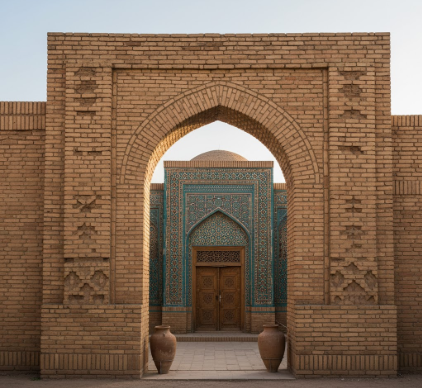
Anyway, the building itself deserves attention. It occupies the former residence of a 19th-century vizier, and you can still see the original wooden carvings in some doorways, layers of bureaucratic history literally built into the walls. The Soviets renovated it twice, and not gently.
The Archaeology Wing That Rewrites What You Thought You Knew About Urban Planning
Wait—maybe I’m getting ahead of myself. The archaeology section focuses heavily on settlements like Varakhsha and Paykend, satellite cities that fed Bukhara’s medieval economy. Excavations from the 1950s through the 1980s uncovered irrigation systems so sophisticated they regulated water flow using ceramic valves, a technology that wouldn’t reappear in Europe for another 600 years. There’s a room dedicated entirely to burial practices: Muslim, Zoroastrian, even some shamanistic influences from nomadic groups passing through. The museum doesn’t shy away from the contradictions—like how Islamic Bukhara still tolerated Jewish and Christian merchant quarters well into the 16th century because, turns out, money talks louder than theology.
Collections That Make You Reconsider Everything About Medieval Science
The manuscripts section is where I lose track of time.
They’ve got fragments of astronomical texts by Al-Biruni, medical treatises that describe cataract surgery techniques from the 11th century, and—this part exhausted me—marginalia written by students who were clearly as bored in 1342 as kids are now. One margin note roughly translates to “teacher talks too much about star angles.” The museum also holds samples of natural dyes used in carpet-making, extracted from insects, minerals, and plants using processes that modern chemists are still trying to fully replicate. I guess it makes sense that a city positioned at the crossroads of the Silk Road would become a knowledge hub, but seeing the actual tools—astrolabes, surgical instruments, ink wells with chemical residue—makes it visceral.
How Soviet Preservation Accidentally Saved What Looters Had Missed for Centuries
Here’s the uncomfortable truth: the Soviets were terrible at respecting religious sites, but their obsessive documentation saved artifacts that local treasure hunters had been plundering since the 1800s. The museum’s registry system, started in 1925, cataloged items with photographs, measurements, and chemical analysis—revolutionary for the time. Some pieces were definately pulled from private collections during nationalization, which raises ethical questions the museum’s current staff discuss more openly than you’d expect. There’s an entire gallery devoted to what they call “rescued fragments,” including frescoes chiseled out of crumbling structures that no longer exist.
Why This Place Feels More Like a Crime Scene Than a Gallery
Honestly, the most affecting part isn’t the grand stuff—it’s the domestic objects. Clay toys shaped like horses, a 9th-century child’s shoe, bread ovens with ash still inside. The museum installed these in 2003, trying to humanize the timeline, and it works maybe too well. You’re staring at a bronze mirror from 1400, imagining whose face it reflected, and suddenly the weight of vanished lives gets overwhelming. The lighting is dim partly for preservation, partly—I suspect—because it makes everything feel like you’re interrupting something. The staff will tell you that roughly 60% of the collection remains in storage due to space constraints, rotating exhibits every eight months. I’ve seen museums that feel like textbooks; this one feels like somebody’s attic where you’re not sure you should be touching anything, but you can’t help yourself.







