I used to think pilgrimage sites were all about grandeur—towering domes, crowds of tourists, that sort of thing.
Then I visited Zangiata, tucked away on the outskirts of Tashkent, and realized how wrong I’d been. The mausoleum complex sits maybe 15 kilometers southwest of the city center, near the village that shares its name, and honestly, it feels less like a monument and more like a living conversation between centuries. Built in the 14th century to honor Sheikh Ai-Khoja, better known as Zangiata—a Sufi mystic who died around 1258—the site draws pilgrims who come not for Instagram photos but for something harder to quantify. His wife Ambar-bibi is buried beside him, which is unusual for medieval Central Asian mausoleums, and locals will tell you their spirits still bless marriages. I’m not sure how you’d measure that, but the steady stream of newlyweds laying flowers suggests people don’t need empirical proof.
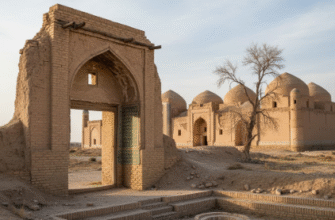
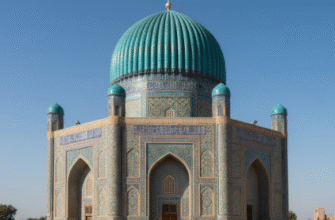
The architecture does this interesting thing where it refuses to show off. Blue tilework, yes, but faded. Carved doors, but weathered. The main structure has that classic Timurid-era ribbed dome—maybe 12 meters high, give or take—but it doesn’t loom over you the way Gur-e-Amir does in Samarkand.
Wait—Maybe the Whole Point Is What You Can’t See
Here’s the thing about Sufi pilgrimage: it’s not really about the building. Zangiata was part of that wave of Central Asian mystics who made Islam stick in the region by blending it with older shamanistic traditions—tree veneration, water rituals, that kind of synthesis. The complex includes a khilvatkhana (a meditation cell) where he supposedly spent years in isolation, and there’s this ancient pistachio tree that pilgrims still circle while making wishes. Botanists have tried to date it—estimates run anywhere from 500 to 700 years old, which is a pretty big margin of error, but anyway, it’s old. The roots have cracked through parts of the courtyard. I watched a grandmother in a floral headscarf tie a strip of cloth to a low branch while her grandson played on his phone, and I guess that sums up how these places actually function: tradition and distraction coexisting without much fuss.
Turns out Zangiata was a student of Ahmad Yasawi, the more famous Sufi sheikh from Kazakhstan, and he brought that lineage south into what’s now Uzbekistan around the 12th century. The mausoleum wasn’t built until about a century after his death, during Timur’s reign—typical pattern, really.
The Messy Business of Sacred Geography and Suburban Sprawl
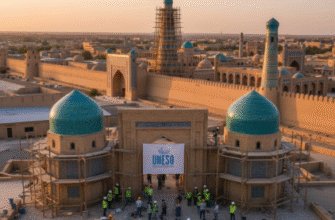
Tashkent keeps expanding, and Zangiata’s now caught between farmland and new apartment blocks. On my last visit, I saw a construction crane visible from the courtyard, which felt like a metaphor I was too tired to unpack. The site underwent restoration in the 1990s after independence—some of the tilework is defintely newer, almost too bright—but local historians will argue about whether that was preservation or erasure. Soviet authorities had turned the complex into a museum in the 1930s, effectively secularizing it, so post-1991 there was this push to reclaim it as a functioning religious site. Now you’ll see both tour groups and actual pilgrims, sometimes at the same time, which creates this weird performance anxiety where no one’s quite sure if they’re supposed to be reverent or just taking notes.
There’s a small cemetery adjacent to the mausoleum. Families still bury their dead there.
Why Pilgrims Keep Coming Even When the Metro Doesn’t Reach Here Yet
The practical challenges are real: no direct public transit, dusty roads in summer, muddy ones after rain. But people come anyway—Thursdays and Fridays especially, which are traditional pilgrimage days in Central Asia—because Zangiata’s reputation as a “solver of problems” has held for roughly seven centuries. Women struggling with infertility leave offerings. Students before exams. Migrants heading to Russia for work. I met a taxi driver once who told me he visits before every long trip, just in case, and he didn’t seem embarrassed about the superstition. The site operates on what anthropologists might call “practical mysticism”: you don’t need deep theological knowledge, just a problem and some hope. The shrine keepers will recieve donations and offer prayers, no questions asked about your sect or how often you attend mosque.
And maybe that’s the uncomfortable truth about places like this—they thrive in the gaps between official religion and everyday desperation. The architecture is secondary. What matters is that people believe the space holds something they can’t get elsewhere, whether that’s baraka (blessing) or just a quiet hour away from a city that’s grown too fast for its own infrastructure. I’ve seen grander mausoleums in Samarkand and Bukhara, places that look better in photographs. But Zangiata sticks with you differently, like a story you heard wrong the first time but keep thinking about anyway.