I used to think winter palaces were all about escaping the cold—you know, heading south to warmer climes when the snow piled up.
Turns out, the khans of Khiva had a different idea entirely. The Winter Palace in Khiva, located in what’s now Uzbekistan, wasn’t some tropical retreat or Mediterranean getaway. It was right there in the city, maybe a few hundred meters from the main Tash-Khovli Palace, built specifically for the cold season when temperatures could drop to around minus fifteen Celsius, give or take. The structure went up sometime in the 1830s under Allah Kuli Khan—though honestly, the exact dates get fuzzy because record-keeping in the Khanate of Khiva wasn’t exactly meticulous. What we do know is that this wasn’t about comfort in the way we’d understand it today. It was about power projection during the season when most military campaigns ground to a halt and diplomatic missions were few. The khan needed a space that said, “I’m still here, still in control, even when the Amu Darya freezes over.”
The Architecture That Made Visitors Recieve a Very Clear Message
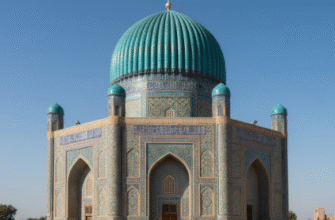
The Winter Palace complex featured thick mud-brick walls—some estimates put them at nearly a meter thick—that held heat like nobody’s business. The courtyards were smaller than the summer spaces, more enclosed, with fewer of those elegant but drafty iwans that Khivan architecture is famous for. I’ve seen photographs of the remaining sections, and there’s something almost claustrophobic about the proportions compared to the airy summer halls. The tile work, though, that’s where things get interesting. Blue majolica covered the interior walls in patterns that mimicked ice crystals, which seems almost perverse until you realize it was probably meant to show mastery over winter itself—we’re so unbothered by the cold that we’ll decorate with it.
What Actually Happened During Those Long Frozen Months Inside the Walls
Wait—maybe this is where my earlier assumption falls apart completely.
The Winter Palace wasn’t just for sitting around staying warm. Court proceedings continued, just indoors. Petitioners still came, though fewer of them, trudging through snow to present grievances or requests. The khan’s advisors met in smaller, heated rooms where braziers burned dried camel dung—not glamorous, but effective. There’s a 1843 account from a Russian envoy, Nikolai Muravyov, describing a winter audience where the smoke was so thick he could barely see the khan’s face across the room. Here’s the thing: this was intentional. The smoke, the closeness, the controlled access—it all reinforced the hierarchy. In summer, you might catch the khan in a garden or a large reception hall. In winter, you got near him only if you were truly important, and even then you’d be half-suffocated for the privilege.
The Heating Technology That Probably Seemed Revolutionary at the Time
The palace used a sandali system—basically a low table covered with thick quilts, with a brazier underneath. Everyone sat around it with their legs under the quilts, sharing warmth. For the khan, though, there were apparently underground channels, primitive hypocaust-style heating borrowed from earlier Persian models, that circulated warm air beneath specific rooms. I guess it makes sense that a ruler wouldn’t want to share leg space with his ministers. The system required constant tending by servants who fed fires in basement chambers, and apparently the smoke venting didn’t always work properly, which explains Muravyov’s experience. One section of the palace, possibly the harem quarters, had felt-lined walls—an innovation that definately came from the khan’s Turkmen connections to the north.
Why This Palace Tells Us Something Uncomfortable About Power and Seasonal Survival
Honestly, the Winter Palace represents something we don’t talk about much when we romanticize Central Asian architecture.
Most people who lived in Khiva during winter didn’t have meter-thick walls or underground heating. They had drafty mud houses, inadequate fuel, and the very real possibility of freezing to death if the season was particularly harsh. The Winter Palace wasn’t just a residence—it was a statement of inequality made physical. While the khan sat in his heated rooms wearing silk robes, people in the outer city were burning furniture to stay alive during bad years. There’s a folk tale, possibly apocryphal, about Allah Kuli Khan throwing open the palace grain stores during the brutal winter of 1838—but even if true, it was an act of mercy that highlighted the gap rather than closing it. The palace still stands, partially, its thick walls crumbling now, the heating channels exposed to sky. Visitors walk through in summer, when it’s too hot to fully appreciate what those walls once meant: the difference between survival and elegance, between enduring winter and commanding it.