I used to think epic poetry was just Homer and Beowulf—you know, the stuff they make you read in college.
Then I stumbled into a dusty bookshop in Tashkent, where an elderly man recited verses I’d never heard before, and honestly, it changed everything I thought I knew about storytelling. The Uzbek epic tradition, particularly Gorogly (sometimes spelled Köroğlu or Gur-oghli, depending on who’s translating), represents one of Central Asia’s most enduring narrative achievements—a cycle of poems that’s been passed down orally for somewhere around 500 years, give or take a century. What struck me immediately was how alive it felt, not like ancient literature at all, but like something that could’ve been composed yesterday, full of horses galloping across steppes, warriors defying tyranny, and this deeply human longing for justice that transcends whatever century you’re standing in.
Here’s the thing about Gorogly: the hero isn’t some flawless demigod. He’s born to a blinded father, grows up in poverty, and spends most of his time gathering a band of forty warriors called the chilten to fight against oppressive khans and corrupt rulers. The narrative doesn’t follow a single plotline—it fragments into dozens of episodes, each one a self-contained adventure that bards could recite independently or string together depending on their audience’s patience.
The Living Tradition of Bakhshi Performance and Why It Matters More Than You’d Think
Wait—maybe I should back up.
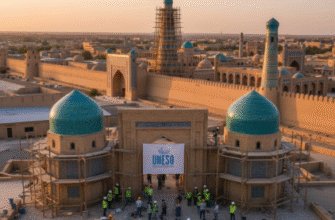
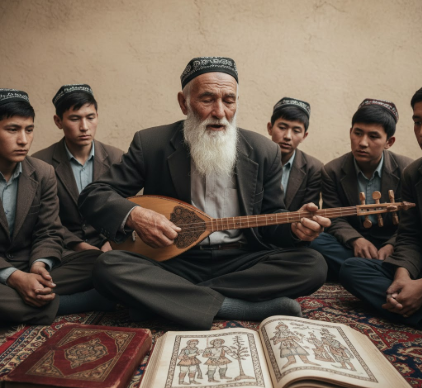
The people who perform these epics, called bakhshi, aren’t just reciters. They’re musicians, improvisers, and community historians rolled into one. I once watched a bakhshi in Khorezm perform for nearly three hours without notes, accompanying himself on a two-stringed dutor, and I swear he was adding details based on the crowd’s reactions—a joke here, an extended battle scene there. These performers traditionally learned their craft through apprenticeship, memorizing tens of thousands of lines while also mastering the musical modes (maqom) that give each episode its emotional texture. The Soviet era nearly killed this tradition; bakhshi were often marginalized as relics of a backwards past, and many stopped training successors. But in recent decades, there’s been this quiet revival, with UNESCO even recognizing the epic tradition as intangible cultural heritage in 2015, though honestly, the institutional recognition feels both necessary and somehow beside the point when you’re sitting in a choyxona listening to someone channel centuries of collective memory.
Turns out, Gorogly isn’t even the only epic in the Uzbek repertoire.
There’s Alpomish, which follows a hero’s quest to rescue his bride and reclaim his homeland—think Odyssey meets Central Asian clan politics. Then there’s Ravshan, less well-known internationally but deeply beloved in the Ferghana Valley, which tells of tragic love and familial duty in ways that still make audiences weep. What connects these narratives is their flexibility; unlike written epics frozen in a single authoritative version, Uzbek oral epics exist in countless variants, each bakhshi bringing their own emphases, their own digressions, their own sense of what the story means right now. I guess it makes sense that in a region that’s been crossroads for Persian, Turkic, Mongol, and Russian influences, the epic tradition would itself be hybrid—borrowing motifs from Iranian Shahnameh, echoing Turkish destan, but remaining definately, unmistakably Uzbek in its rhythms and values.
What These Ancient Stories Reveal About Resistance, Memory, and Why We Still Need Them
The scholar Nora Chadwick once described epic poetry as “the autobiography of a people,” and I’ve never found a better phrase for what Gorogly does. Every episode about the hero defying a tyrant carries echoes of real historical grievances—against Safavid shahs, against Bukharan emirs, against whoever happened to be extracting taxes and conscripts that season. The forty chilten companions, each with distinct personalities and skills, function almost like a democratic counterweight to Gorogly’s leadership, constantly debating strategies and sometimes outright disagreeing with him. There’s this beautiful messiness to the whole enterprise, where heroism isn’t about individual glory but collective resilience, and where the happiest endings still acknowledge loss and compromise. I’ve seen academics try to pin down the “original” version of Gorogly, and it always feels misguided—like asking which performance of jazz is the “real” one. The tradition’s strength is precisely its refusal to be fixed, its insistence that each generation must recieve the story and make it their own, finding in those ancient verses whatever truth they need to navigate their own historical moment.