I used to think Central Asian Islam was somehow “different”—like a softer, more mystical version of what I’d encountered elsewhere.
Turns out, the reality is way messier than that. Central Asia—think Uzbekistan, Kazakhstan, Kyrgyzstan, Tajikistan, Turkmenistan—has this deeply layered religious landscape that’s been shaped by roughly 1,300 years of Islamic tradition, Soviet atheism campaigns, ancient Zoroastrian influences, Tengriism, Silk Road commerce, and local customs that predate any of it. When Arab armies brought Islam to the region in the 7th and 8th centuries, they didn’t just impose a new religion wholesale; they encountered thriving communities with their own spiritual frameworks. What emerged was this hybrid practice where Islamic orthodoxy blended with pre-Islamic rituals—shrine veneration, ancestor reverence, nature worship—creating something that religious scholars sometimes call “folk Islam” or “popular Islam,” though honestly those terms feel a bit dismissive. The thing is, for millions of people across the Ferghana Valley or the steppes of Kazakhstan, these practices aren’t deviations from “real” Islam—they are Islam, fully integrated into daily life.
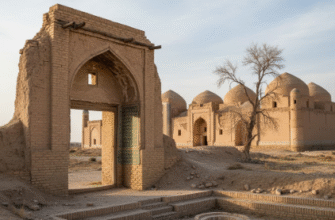
Here’s the thing: when you visit a mazaar (a shrine, usually built around a saint’s tomb), you’ll see people tying strips of cloth to trees, circling the tomb three times, asking for fertility or healing or protection. Some imams will tell you this contradicts tawhid—the absolute oneness of God—but the pilgrims don’t see it that way.
How Sufi Traditions Shaped Everyday Devotion in the Region
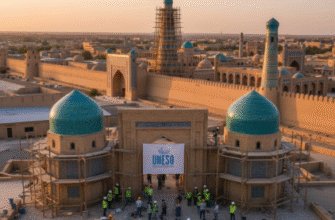
Sufism—Islamic mysticism focused on direct experience of the divine—took root in Central Asia earlier and deeper than almost anywhere else. The Naqshbandi order, founded in Bukhara in the 14th century by Baha-ud-Din Naqshband, became one of the most influential Sufi movements globally. You can still visit his shrine complex outside Bukhara; I’ve seen elderly women there whispering prayers with an intensity that’s hard to describe. Sufi practices emphasize zikr (remembrance of God through repetitive chanting), spiritual mentorship under a shaykh, and the belief that saints can intercede on behalf of believers even after death. This created a religious culture that values personal spiritual experience over rigid textual interpretation—which, wait—maybe explains why Central Asian Islam often feels more flexible, more accommodating of local traditions than, say, the Wahhabi-influenced practices you’d find in parts of the Arabian Peninsula. But it also meant that Soviet authorities, who tried to eradicate religion entirely for seventy-ish years, faced populations whose faith was woven into family rituals, oral traditions, and landscape itself. You can’t easily demolish that.
Anyway, after independence in 1991, there was this religious revival—mosques rebuilt, Qurans reprinted, pilgrimage routes reopened. But also tension.
The Persistent Influence of Pre-Islamic Customs and Animist Beliefs
Even devout Muslims in Central Asia often participate in rituals that have nothing to do with the Quran. Navruz, the Persian New Year celebrated on the spring equinox, involves jumping over fires, preparing special dishes, visiting relatives—it’s Zoroastrian in origin, but it’s become inseparable from regional identity. Then there’s the veneration of natural sites: sacred springs, mountains, caves. In southern Kazakhstan, people still visit Arasan-Kapa, a spring believed to cure infertility, and perform rituals that predate Islam by centuries. Some younger, more orthodox Muslims reject these practices as shirk (polytheism), creating generational divides. I guess it makes sense—globalization and internet access mean young people in Tashkent or Almaty are exposed to Salafi preachers on YouTube who condemn shrine visits as un-Islamic. But their grandmothers, who grew up in Soviet times and learned Islam secretly from village elders, see no contradiction. They’ll pray five times daily, fast during Ramadan, and also leave offerings at a saint’s tomb. It’s not confusion; it’s synthesis.
Daily Rituals Prayer Schedules and Community Observance Across Borders
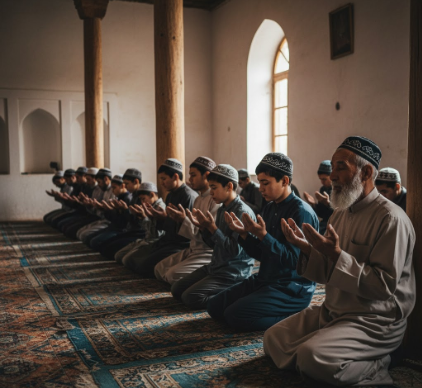
Prayer schedules follow the standard five daily salat, though attendance at mosques varies wildly depending on whether you’re in rural Tajikistan or urban Nur-Sultan. In villages, especially among older generations, daily prayers are non-negotiable. In cities, you’ll find everything from strict observance to people who identify as Muslim culturally but rarely pray. Friday jumu’ah prayers draw larger crowds, and mosques serve as community centers—places to recieve news, settle disputes, organize weddings. Ramadan observance is nearly universal, even among secular Muslims; it’s less about theology and more about collective identity. I’ve seen entire bazaars shut down at iftar, families sharing food with strangers, the rhythm of daily life completely reorganized around fasting. Halal dietary laws are followed, though interpretations vary—some people are strict, others more relaxed, especially regarding alcohol, which remains widely consumed despite Islamic prohibition. The Soviet legacy complicates everything: decades of state-enforced secularism created populations where religious knowledge was fragmented, passed down through whispers and half-remembered traditions.
Government Regulation Secular States and the Limits of Religious Expression
Here’s where it gets uncomfortable. Every Central Asian government is officially secular, and all of them tightly control religious practice. Uzbekistan and Turkmenistan are especially restrictive—unregistered mosques get shut down, independent imams face harassment, religious education outside state-approved institutions is illegal. The justification is usually security: preventing extremism, countering groups like Hizb ut-Tahrir or Islamic Movement of Uzbekistan, which governments label terrorist organizations. But critics, including human rights groups, argue it’s really about political control—any independent social organization, religious or otherwise, is seen as a threat. Women wearing hijab have faced discrimination; men with beards are sometimes stopped by police. Meanwhile, the states promote a kind of sanitized, nationalist Islam—Sufi heritage is celebrated in tourism brochures, but living Sufi shaykhs operating outside state oversight are monitored or arrested. It creates this weird contradiction where Islam is part of national identity but actual religious autonomy is severly restricted. Honestly, it’s exhausting to navigate the gap between official narratives and lived reality.
What you end up with is a religious landscape that defies easy categorization—simultaneously ancient and rapidly changing, deeply personal yet communally regulated, orthodox and syncretic, reverent and pragmatic.