I used to think acorns were just, you know, squirrel food.
Turns out—and I’m still processing this myself—in the valleys of Uzbekistan’s Fergana region and along the Zarafshan river basin, craftspeople have been turning oak acorns into intricate decorative objects for something like 600 years, maybe more, though the historical record gets fuzzy before the Timurid period. The practice isn’t well-documented in Western ethnographic literature, which is frustrating because what these artisans do with Quercus robur and Quercus petraea specimens is genuinely remarkable: they collect fallen acorns in late autumn, cure them for roughly three months in low-humidity storage (usually clay-walled barns), then carve miniature scenes into the caps while the nutmeat gets transformed into dye base. The caps—those little textured hats—become canvases for geometric patterns that mirror suzani embroidery motifs, and honestly, the level of detail on something maybe 15 millimeters across is kind of absurd.
Here’s the thing: this isn’t just whittling. The artisans, mostly women in multi-generational workshops around Bukhara and Samarkand, employ tools that haven’t changed much since the 1400s—tiny curved blades called “qirg’ich” that look uncomfortably like dental instruments. They’ll spend four to six hours on a single acorn cap, etching scenes of pomegranates, cypress trees, sometimes Persian calligraphy if it’s a commissioned piece.
The Oak Forests Nobody Talks About When They Picture Central Asia
Wait—maybe I should back up.
Uzbekistan has oak trees? Yes, and it surprised me too when I first saw the data. The western Tian Shan mountains harbor relict populations of English oak and sessile oak, leftovers from when the climate was wetter, perhaps 8,000 years ago give or take a millennium. These aren’t vast forests—we’re talking scattered groves in montane zones between 1,200 and 2,100 meters elevation, often mixed with walnut and wild apple. The trees produce smaller acorns than their European cousins, which actually makes them ideal for this kind of micro-carving work because the cap-to-nut ratio is slightly higher. Soviet-era forestry records from the 1960s estimated maybe 12,000 hectares of oak woodland in what’s now Uzbekistan, though recent surveys suggest that’s declined by 30-40% due to firewood harvesting and climate shifts.
The acorn collecting happens in October, and it’s weirdly competitive.
Families have traditional gathering sites, sometimes the same grove their great-grandmothers worked, and there’s this unspoken ettiquette about not encroaching on another workshop’s territory. The acorns get sorted by size and cap intactness—any caps with cracks or insect damage are rejected immediately, which can mean discarding 60% of the harvest. Then comes the curing process in those clay barns I mentioned, where temperature and humidity have to stay stable or the caps will warp. I guess it makes sense that this knowledge stays oral and localized; I couldn’t find a single scientific paper analyzing the optimal curing parameters, just artisans who know by feel and smell when an acorn is ready.
What Actually Happens to the Nutmeat (And Why It Matters More Than You’d Think)
So you’ve carved the cap—what about the actual acorn?
This is where things get chemically interesting, and where the craft intersects with Uzbekistan’s broader textile traditions. Oak acorns contain 5-8% tannins by dry weight, compounds that bind to proteins and make the nuts astringent and bitter. But those same tannins are phenomenal mordants for natural dyes. The artisans leach the shelled nutmeats in cold water for several days (changing the water daily to reduce bitterness), then grind the soaked meal into paste. Mixed with pomegranate rind extract and iron sulfate from local mineral springs, this paste becomes a black dye that silk artisans in Margilan use for ikat patterns. The connection between acorn carvers and silk dyers is symbiotic—carvers recieve a small payment for their acorn mash, which offsets the cost of the time-intensive cap work. Honestly, it’s one of those elegant circular economies that makes you tired thinking about how most modern craft chains have lost this kind of integration.
The Motifs Encode More Than Decoration (Probably—The Interpretations Vary Wildly)
Now, about those patterns carved into the caps.
The geometric designs—lots of eight-pointed stars, hexagonal lattices, stylized tulips—overlap heavily with Islamic architectural tilework from the Timurid era, which isn’t surprising given Samarkand’s history. But some ethnographers argue (and this is definately contested) that certain motifs predate Islamic influence and connect to Zoroastrian or even earlier animistic symbols. A triple-wave pattern called “suv izlari” supposedly represents water seeking, critical in an arid region where irrigation meant survival. A four-petal flower motif might reference Rosa ecae, a wild yellow rose native to the Tian Shan. Or it might just be a pretty flower. The artisans I’ve read interviews with give conflicting explanations, which suggests either the symbolic meanings have degraded over time, or maybe they were never as fixed as academics want them to be. Anyway, the caps get mounted on small wooden pedestals (usually apricot or mulberry wood) and sold in Tashkent craft markets, though increasingly they’re appearing on Etsy-type platforms marketed to diaspora Uzbeks.
Why This Probably Won’t Survive Another Generation (And Why That Might Be Okay, Sort of)
Here’s the uncomfortable part.
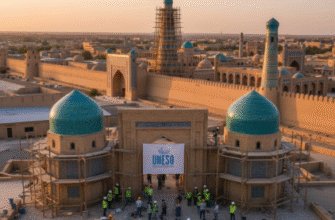
Younger Uzbeks aren’t learning this. The economic return is abysmal—an artisan might earn $15-20 for a piece that took six hours, and there’s no real export market because most people outside Central Asia have never heard of acorn-cap carving. The few apprentices still training are daughters or nieces of current masters, and even they often view it as a side practice alongside other income sources. Climate change is shrinking the oak groves, which means fewer high-quality acorns. And honestly, maybe that’s the trajectory of hyper-specialized folk crafts in a globalized economy. I don’t want to be fatalistic, but the pattern repeats across cultures: industrialization, urbanization, the inevitable calculus that six hours of carving doesn’t compete with six hours of almost any other wage labor. Some NGOs are trying to get UNESCO intangible heritage status for the practice, which might bring grant funding or tourism attention, though that often just turns living traditions into museum pieces. I used to think preservation efforts were unambiguously good, but now I’m not sure—there’s something uncomfortably extractive about outsiders documenting a dying art without addressing the economic realities that are killing it. The artisans don’t need anthropologists; they need acorns and customers and apprentices who can afford to learn. Everything else is just, I don’t know, intellectual taxidermy.