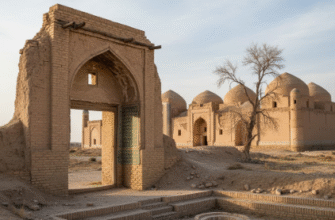
I still remember the mild panic that set in when my phone lost signal somewhere between Samarkand and Bukhara.
Turns out, staying connected in Uzbekistan isn’t quite the nightmare I’d anticipated—though it definately requires more planning than just landing and hoping your home carrier works. The country’s telecom infrastructure has evolved dramatically over the past decade, shaped by government reforms that began around 2019 and accelerated through 2021, but here’s the thing: navigating your options still feels like piecing together a puzzle where half the instructions are in Cyrillic and the other half contradict each other. I’ve talked to travelers who swear by one provider, then meet others who had the exact opposite experience in the same city. The mobile market is dominated by four main players—Ucell, Beeline, Uzmobile, and the newer Perfectum Mobile—each with coverage maps that look impressive on paper but can be wildly uneven in practice, especially once you venture beyond Tashkent, Samarkand, or Bukhara into the Fergana Valley or toward the Karakalpakstan region.
Wait—maybe I should back up. Most visitors arrive expecting they can just buy a SIM card at the airport and be done with it, which is partly true but misses some crucial details. Registration requirements have tightened in recent years, meaning you’ll need your passport for any SIM purchase, and the process can take anywhere from five minutes to, well, considerably longer depending on who’s working the counter that day.
The Actual Reality of Buying a Local SIM Card and What Nobody Tells You Beforehand
The Tashkent International Airport has official kiosks for the major carriers right after you clear customs, and honestly, this is probably your best bet unless you enjoy wandering around unfamiliar cities looking for telecom shops. Ucell generally offers the most extensive 4G coverage—I’m talking roughly 80-85% of populated areas, give or take—while Beeline tends to be cheaper but spottier outside urban centers. Uzmobile is state-owned and has decent penetration in rural areas where the private carriers haven’t bothered to build infrastructure. Perfectum Mobile entered the market later, around 2019 or 2020 I think, positioning itself as the premium option with faster data speeds in cities but limited coverage elsewhere. Tourist-oriented packages typically run between 20,000 and 50,000 som (about $2-5 USD at current exchange rates, though these fluctuate), which sounds absurdly cheap until you realize data limits can be surprisingly low—sometimes just 5-10GB for a month. The registration process involves scanning your passport, providing a local address (your hotel works fine), and occasionally answering questions about how long you’re staying, which feels more like friendly conversation than official interrogation but is technically part of their subscriber database requirements.
I guess it makes sense that they’d want records, given the country’s regulatory environment.
One wrinkle that catches people off guard: top-ups. Running out of data means finding a payment terminal, a carrier store, or using mobile banking apps that may or may not accept foreign cards—I’ve had mixed results. Some travelers report success with international cards through the Payme or Click apps, while others end up asking hotel staff for help or hunting down physical vouchers at kiosks. It’s the kind of low-level friction that doesn’t ruin your trip but accumulates into a vague sense of exhaustion by day four.
When WiFi Becomes Your Primary Strategy and Why That’s Both Good and Deeply Frustrating
Hotels and guesthouses across Uzbekistan have dramatically improved their WiFi game, especially in tourist-heavy areas.
I used to think relying on accommodation WiFi was a budget backpacker move, but in Uzbekistan it’s often more reliable than mobile data, particularly in historical city centers where stone buildings seem designed to block cellular signals. Most mid-range and upscale hotels offer genuinely fast connections—I’ve clocked speeds above 50 Mbps in Tashkent and Samarkand properties—while budget guesthouses can be hit-or-miss, sometimes maxing out at speeds that make loading Instagram feel like an archaeological excavation. Cafes and restaurants with WiFi have proliferated, though the password-sharing culture varies; some places post codes openly, others require you to ask staff, and a few treat internet access like a precious resource reserved for paying customers who order more than tea. Co-working spaces have emerged in Tashkent, catering to digital nomads and offering day passes with reliable connectivity, but these are essentially non-existent outside the capital. Public WiFi in parks or metro stations remains rare, and when it does exist, it’s usually slow enough to make you question whether it’s actually functioning or just mockingly pretending to be connected.
Honestly, the metro WiFi in Tashkent feels like a social experiment in patience.
The Hybrid Approach That Actually Works for Most Travelers Who Stay More Than a Few Days
After watching dozens of travelers cycle through the same connectivity frustrations, a pattern emerges: the people who have the smoothest experience combine a local SIM with strategic WiFi use rather than depending entirely on one or the other. Buy the SIM for navigation, messaging apps like Telegram (which is huge in Uzbekistan and works better than WhatsApp for reaching locals), and emergency connectivity when you’re out exploring. Save heavy data tasks—uploading photos, video calls, researching your next destination—for hotel WiFi in the evening. This hybrid approach keeps costs low while maintaining the freedom to, say, pull up Google Maps when you’re lost in the old city of Khiva or need to call your guesthouse for directions, which happens more often than you’d expect because street addresses can be wonderfully vague. eSIM options have started appearing for Uzbekistan through services like Airalo or Holafly, offering 1GB to 10GB packages that you can activate before even boarding your flight, though these typically cost more than local SIMs and may route through international servers in ways that slow speeds slightly. They’re convenient if you’re only staying a few days or hate the thought of dealing with physical SIM cards, but for trips longer than a week, the price difference adds up enough to make the airport kiosk stop worthwhile. Some travelers report using pocket WiFi devices rented internationally, which theoretically provide connectivity for multiple devices but often suffer from the same coverage limitations as mobile networks while adding another gadget to charge and potentially lose—I remain skeptical of their value unless you’re traveling in a group that can split the cost. The real trick is recalibrating your expectations: Uzbekistan’s connectivity infrastructure is functional and improving but not seamless, which means occasionally you’ll be offline, and that’s fine, maybe even good, depending on how you feel about constant digital access and whether you’re the type who finds disconnection refreshing or mildly terrifying.