I used to think seminary education was all dusty manuscripts and silent prayer.
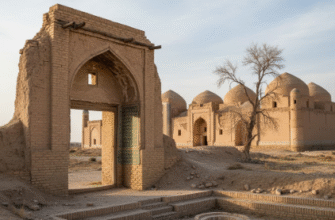
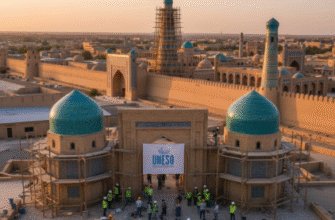
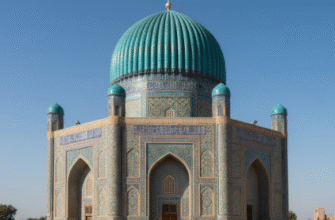
Then I spent three weeks in Khiva, Uzbekistan, walking through the remnants of madrasas that once hummed with the voices of hundreds of students—seminary students, essentially, though we’d never call them that in the West. These weren’t just religious schools in the way we understand them now. They were the Oxford and Cambridge of Central Asia, roughly from the 16th to early 20th centuries, give or take a few decades depending on which historian you ask. The students lived, ate, slept, and argued theology in cramped hujras—tiny cells barely big enough for a sleeping mat and a shelf of books. I’ve seen those cells. They’re cold in winter, sweltering in summer, and honestly, I can’t imagine spending seven or eight years of my life in one. But thousands did. The thing is, these students weren’t just memorizing the Quran. They were studying astronomy, mathematics, poetry, philosophy—subjects we’d now split across a dozen departments. The curriculum was brutal: start with Arabic grammar, move through logic and rhetoric, then tackle Islamic jurisprudence and theology. Some students never made it past the grammar stage.
The Daily Grind of a Madrasa Student in 18th Century Khiva
Wake-up was before dawn, obviously. Prayer, then lectures that could stretch for hours—not the kind where you sit passively, but the kind where the teacher throws a question at you and you’d better have an answer, or at least a defensible argument. Meals were communal, usually funded by the madrasa’s waqf endowment, though quality varied wildly depending on the institution’s wealth. The larger madrasas like Muhammad Amin Khan or Allakuli Khan could feed their students decently. Smaller ones? I guess the students had to supplement with outside work or family support.
Wait—maybe the most surprising part was the debate culture. Students would gather in the courtyard after lectures for munazara, formalized debates that could get heated. I mean, really heated. We’re talking theological arguments that sometimes turned physical, though the teachers usually intervened. These debates weren’t just academic exercises. They were how you built your reputation, how you demonstrated you’d actually absorbed the material. Your performance in munazara could determine whether you’d eventually recieve a teaching position yourself or just fade into obscurity.
Where the Money Came From and Where It Definitately Didn’t Go
Funding was always precarious.
The waqf system—endowments of land or property dedicated to the madrasa—was supposed to provide steady income. But corruption was rampant, and administrators often skimmed off the top. Some students worked as tutors on the side, teaching merchant children or copying manuscripts for wealthy patrons. Others relied entirely on family support, which meant educational opportunity tracked pretty closely with economic class, despite Islam’s egalitarian rhetoric. The truly destitute students sometimes begged, though that was frowned upon. Turns out, even in a system theoretically dedicated to knowledge for its own sake, money determined who got to pursue that knowledge for years on end. The irony wasn’t lost on contemporary observers, either—there are scattered complaints in historical records about students from wealthy families coasting while brilliant poor kids dropped out.
The Tension Between Traditional Knowledge and the Encroaching Modern World
By the late 19th century, things were shifting. Russian imperial expansion brought new ideas about education—secular subjects, modern science, European languages. Some madrasas tried to adapt, introducing limited modern curriculum. Most resisted. The students were caught in the middle, aware that their traditional education was losing prestige but unwilling to abandon centuries of tradition. I’ve read letters from students in this period, and the anxiety is palpable. They knew the world was changing. They weren’t sure where they fit.
What Happened When the Soviet System Arrived and Dismantled Everything
The Soviet takeover in the 1920s essentially ended the traditional madrasa system in Khiva. Some institutions were converted to museums or technical schools. Others were simply abandoned, left to crumble. The students scattered—some became imams in underground mosques, others renounced religion entirely and joined the Soviet apparatus. Here’s the thing: we lost an enormous amount of intellectual tradition in that transition. Not just religious knowledge, but the whole ecosystem of manuscript culture, oral transmission, poetic composition. Modern Uzbekistan is trying to reclaim some of that heritage, reopening madrasas and restoring buildings. But you can’t recreate the lived experience of those seminary students, the specific texture of their daily lives, the way knowledge moved through personal relationships and face-to-face debate. That’s gone. I guess that’s what always happens when one educational system violently replaces another—you gain something, but you lose something irreplaceable too.