I’ve stood in front of a lot of old towers, but the Kalyan Minaret hits different.
The thing climbs 48 meters into the sky—that’s roughly 157 feet, give or take—and it’s been doing that since 1127, which is honestly kind of insane when you think about it. Genghis Khan supposedly spared it during his rampage across Central Asia, though historians debate whether that’s romantic legend or actual fact. Either way, the minaret survived when pretty much everything else in Bukhara got leveled. The brickwork spirals upward in these geometric bands that shift as you walk around it, and I used to think that was just decorative until a guide explained the structural engineering involved—turns out those patterns distribute weight in ways medieval builders understood intuitively. The turquoise tile band near the top catches light at sunset in this way that makes you stop mid-sentence. People called it the Tower of Death for centuries because criminals were executed by being thrown from the top, which is the kind of detail that makes you reconsider your vacation photos.
The Kalyan Mosque’s Unfinished Conversation with Symmetry
Walk across the plaza and you hit the Kalyan Mosque, completed in 1514 after the previous version burned down. The courtyard can hold 12,000 people—I’ve seen estimates ranging from 10,000 to 15,000, depending on who’s counting—and standing in the center gives you this weird vertigo even though everything’s flat. The symmetry isn’t perfect, which bothers some visitors but honestly makes it more interesting. Blue domes punctuate the gallery on all four sides, and the tilework degrades unevenly across different sections, showing you which parts got restored when. Here’s the thing: the mosque isn’t trying to be a museum piece.
Prayer rugs still get rolled out. People still come for Friday services, weaving between tour groups with their cameras.
The mihrab—that’s the niche indicating Mecca’s direction—features this insanely detailed mosaic that I definitely spent too long photographing, and the acoustics in that corner do something strange to your voice. Whisper and it carries. Shout and it flattens out.
What the Poi Kalyan Complex Actually Teaches You About Architectural Ambition and Compromise
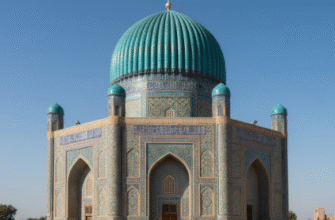
The Mir-i-Arab Madrasah faces the mosque from across the plaza, closing off the complex in this three-building arrangement they call Poi Kalyan—”at the foot of the great.” Built in 1536, it’s still a functioning religious school, which means you can’t always go inside. I guess that frustrates some tourists, but it also means the place isn’t just architectural taxidermy.
When you visit, you’re walking into a space that’s been continuously used for half a millennium, and that changes how you see the cracks in the tile, the worn steps, the sections where modern restoration meets original construction. The madrasah’s twin domes mirror each other in that not-quite-perfect way that seems intentional until you realize construction techniques in the 16th century didn’t allow for machine precision. Students’ cells ring the interior courtyard, small rooms where scholars studied theology and law while the Silk Road caravanned past outside. The contrast between the minaret’s survival instinct, the mosque’s practical devotion, and the madrasah’s ongoing educational mission gives you this three-part argument about what Islamic architecture was actually for—not just beauty, not just worship, but this whole interconnected system of civic life that we’ve kind of lost the thread on in modern urban planning. Wait—maybe that’s too grand a claim, but standing there in the late afternoon when the tour buses leave and the call to prayer echoes off all that brick, it’s hard not to feel like these buildings are still trying to teach us something about permanence and purpose. Anyway, that’s Poi Kalyan. Bring water, wear good shoes, and don’t expect easy answers about why some human creations endure while others crumble.