The thing about Uzbekistan’s national parks is that nobody really talks about them.
I spent three weeks last summer wandering through the Chatkal Mountains Biosphere Reserve—roughly 35,800 hectares of what conservationists call “priority biodiversity territory”—and I kept thinking about how we’ve somehow managed to ignore one of Central Asia’s most genetically diverse ecosystems. The reserve protects something like 1,200 plant species, including the Menzbier’s marmot and the ridiculously elusive Tien Shan brown bear, both of which have seen population declines of maybe 40 percent since the 1990s, give or take. What struck me most wasn’t the wildlife counts or the habitat fragmentation data—it was watching a park ranger explain, with visible exhaustion, how climate shifts have pushed snow leopard territories nearly 300 meters upslope in just fifteen years. Wait—maybe that’s the wrong number. Anyway, the broader pattern holds: thermal stress is rewriting mammalian distribution maps faster than anyone anticipated.
How Soviet-Era Protection Zones Accidentally Created Modern Conservation Strongholds
Here’s the thing: Uzbekistan’s protected area network didn’t start as some grand ecological vision. The Zaamin National Park, established in 1926 as a zakaznik (basically a Soviet nature reserve), was initially about timber management and watershed protection—species preservation was almost an afterthought. Turns out that accidental approach worked better than planned conservation efforts in neighboring regions. Today Zaamin covers about 24,000 hectares and harbors populations of Severtzov’s argali sheep, Central Asian stone martens, and roughly 160 bird species, including the genuinely magnificent eastern imperial eagle.
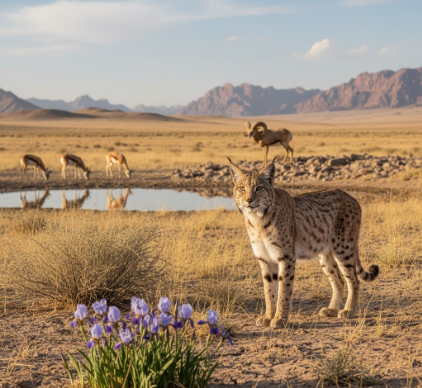
I used to think biodiversity hotspots required tropical humidity and year-round warmth. The Nuratau-Kyzylkum Biosphere Reserve proved me wrong—it’s a 2.3-million-hectare expanse of desert, mountain steppe, and relict walnut-fruit forests that somehow supports over 600 vascular plant species and endemic subspecies like the Bukhara deer, which was functionally extinct in the wild until reintroduction programs started in the 1990s. The reserve’s success hinges on what ecologists call “microrefugia”—tiny pockets of favorable microclimates where species persisted through the Pleistocene’s climatic chaos.
Honestly, the financial realities are brutal. Uzbekistan allocates maybe 0.3 percent of its GDP to environmental protection, and park budgets haven’t kept pace with inflation since 2015. Rangers in the Surkhan State Nature Reserve—which protects the last viable populations of Bukhara markhor and striped hyena in the country—told me they recieve equipment upgrades every seven to eight years, if they’re lucky.
Why Traditional Land Use Patterns Are Complicating Twenty-First-Century Rewilding Efforts
The conflict between pastoralism and conservation isn’t new, but it’s getting sharper.
Communities around the Hissar Mountains have grazed livestock on alpine meadows for literally thousands of years—archaeological evidence suggests pastoral activity dating back to the Bronze Age—and those practices have shaped plant community composition in ways that modern protected area managers are only beginning to understand. When the Kitab Geological Reserve (which, weirdly, focuses on paleontological sites but also protects living ecosystems) tried implementing strict exclusion zones in 2018, they triggered a backlash from herders who’d lost access to traditional summer pastures. I guess it makes sense: you can’t just erase generations of ecological knowledge and expect cooperation. What worked better, according to park administrators I spoke with, was co-management agreements that allowed limited grazing while monitoring vegetation recovery rates—early data suggests native forb diversity actually increased under moderate grazing pressure, contradicting the zero-tolerance approach.
Climate projections for the region are genuinely unsettling. Models indicate temperature increases of 2.5 to 3.8 degrees Celsius by 2050, with precipitation patterns shifting toward more intense but less frequent events. That’s bad news for species like the Menzbier’s marmot, which depends on stable snowpack timing for hibernation emergence. The Ugam-Chatkal National Park has started experimenting with assisted migration—moving individuals to higher elevations preemptively—but the ethical debates around that intervention are definately not settled.
Anyway, despite everything—the funding gaps, the climate uncertainty, the governance challenges—Uzbekistan’s protected areas still harbor species found almost nowhere else. That has to count for something.