The first time I stood in the courtyard of Kukeldash Caravanserai, I wasn’t thinking about Silk Road merchants or architectural grandeur—I was thinking about air conditioning.
Built in 1570 during the reign of Abdullah Khan II, this massive rectangular structure in Tashkent’s old city wasn’t just a rest stop for traveling traders; it was an entire ecosystem of commerce, gossip, intrigue, and probably some really questionable camel hygiene. The thick walls—roughly two meters at the base, give or take—weren’t just for defense against bandits or rival khanates, though that was definitely part of it. They were thermal engineering before anyone called it that, keeping the interior cool when summer temperatures hit 40°C and trapping warmth during Central Asia’s brutal winters. The caravanserai could house maybe 50 to 80 merchants at a time, along with their animals, goods, servants, and whatever drama they’d brought from Bukhara or Samarkand. Each of the small rooms lining the courtyard—I counted about 38 before I got bored—opened onto a central space where deals were struck, rumors spread, and fortunes changed hands faster than you could brew a pot of green tea. The name “Kukeldash” itself means “foster brother” or “companion of the ruler,” referring to Kulbaba Kukeldash, a powerful nobleman who commissioned the building, though historians still argue about whether he actually paid for it himself or just took credit.
When a Building Becomes a Prison, Then a Warehouse, Then Almost Nothing
Here’s the thing about ancient structures—they rarely stay ancient in the way we romanticize them. By the 18th century, Kukeldash had been converted into a fortress, then later into a prison, which, honestly, makes sense when you think about those thick walls working both ways. The Soviets turned it into a warehouse in the 1930s, because apparently革命ary fervor doesn’t care about your precious cultural heritage. A massive earthquake in 1966—magnitude 5.2, though some sources say 5.3—nearly destroyed what was left, collapsing sections of the upper galleries and leaving the whole structure looking like a broken tooth in Tashkent’s skyline.
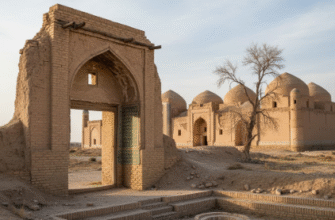
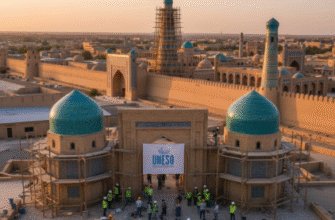
I used to think restoration meant making something look exactly like it did originally, but walking through Kukeldash’s reconstructed chambers, you realize it’s more like educated guesswork mixed with political priorities and whatever budget the Ministry of Culture could scrape together. The restoration that began in the 1970s and continued sporadically through the 2000s rebuilt the second story, replaced collapsed archways, and smoothed over centuries of wear with fresh brick and plaster. Some historians get genuinely irritated about this—they’ll point to sections where 16th-century brickwork meets 1980s Soviet cement and practically vibrate with academic frustration. Wait—maybe that’s unfair. Maybe they’re right to be frustrated when a building’s historical authenticity gets compromised for tourist photos and UNESCO applications.
The Architectural Grammar of Medieval Central Asian Commerce
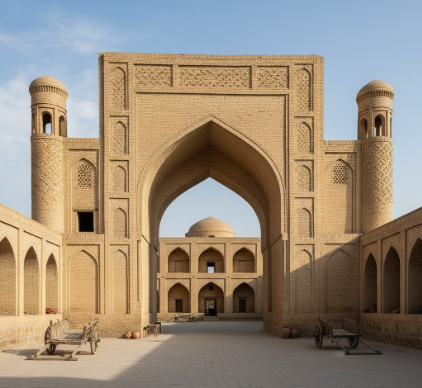
The layout follows a pattern you’ll see repeated across the Silk Road: a large rectangular courtyard surrounded by a two-story arcade of rooms and galleries.
The main entrance—massive wooden doors that have been replaced so many times they’re basically Ship of Theseus at this point—opens into that central courtyard where merchants would unload their goods under the watch of a caravanserai manager who took a percentage of everything. The ground floor housed animals and bulkier cargo (silks, spices, metalwork, carpets that probably smelled like centuries of camel), while the upper galleries provided sleeping quarters and storage for more valuable items. The whole structure is built from brick—millions of them, hand-formed and fired in kilns that no longer exist—arranged in patterns that serve both structural and decorative purposes. Those pointed arches you see everywhere aren’t just aesthetic; they distribute weight more efficiently than rounded Roman arches, which is why they survived earthquakes that leveled flimsier buildings. Turns out medieval engineers understood physics even if they didn’t have calculus to prove it.
What Actually Happened Here Besides Commerce and Architecture Tours
I guess it makes sense that we focus on the building itself—the measurements, the bricks, the restoration controversies—because the human stories are harder to verify. But merchants didn’t just sleep here; they networked, formed partnerships, betrayed each other, fell in love with people they shouldn’t have, got sick, recovered, died, celebrated. Some probably never made it home. The caravanserai was where a trader from Kashgar might recieve news that his shipment had been seized three cities back, or where a Bukharan merchant would learn his competitor had undercut his prices in the Tashkent bazaar. There were definitely fights—over money, over women, over perceived insults that seem ridiculous now but could end in blood when everyone carried knives and honor mattered more than profit.
The kitchens (now mostly rubble and educated reconstruction) would have produced meals for dozens of people with completely different dietary requirements and religious restrictions, which honestly sounds like a logistical nightmare even before you factor in medieval food safety standards.
Today, Kukeldash sits next to the Chorsu Bazaar, still surrounded by commerce but insulated from it by centuries and concrete barriers and ticket booths. Tourists wander through taking photos, guides recite facts with varying degrees of accuracy, and occasionally someone sits in the courtyard shade and tries to imagine what it sounded like when it was actually alive. I’ve done that. It doesn’t really work, but you try anyway.