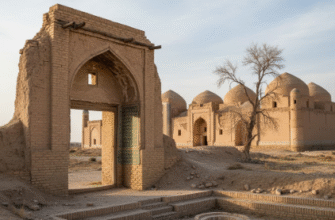
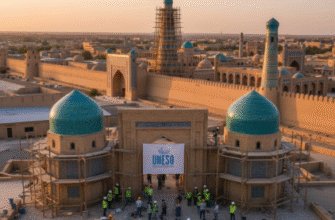
I used to think glove-making was one of those dying crafts you only read about in museum plaques, the kind where someone’s great-grandfather did it and now nobody cares.
Then I spent an afternoon in Bukhara’s old quarter, watching a seventy-something craftsman named Rustam stretch lambskin over a wooden form with the kind of casual precision that made me reconsider everything. His hands moved without hesitation—measuring, cutting, stitching—each motion seemingly automatic yet somehow deeply intentional. The workshop smelled like leather and wood smoke, and honestly, the whole scene felt like stepping into a timeline that refused to move forward. Bukhara’s glove-making tradition goes back at least five centuries, maybe longer depending on who you ask, and the techniques haven’t changed much because, turns out, they didn’t really need to. The leather comes from local sheep and goats, tanned using pomegranate rinds and oak bark, which gives it this particular suppleness that synthetic methods can’t quite replicate. Rustam told me through a translator that his grandfather taught him when he was nine, and he’s been doing it for sixty-two years—give or take a few months he couldn’t quite remeber.
The Geometry of Fingers and the Problem of Modern Hands
Here’s the thing about traditional Bukharan gloves: they’re not sized like the S-M-L system we’re used to. Each pair gets custom-fitted because the old masters believed—and current practitioners still insist—that a glove should feel like a second skin, not a fabric envelope. The pattern-making process involves seventeen separate measurements of the hand, including the circumference of each finger at three points and the exact angle of the thumb’s departure from the palm. It’s obsessive, maybe a little excessive, but when you slip one on it makes a weird kind of sense.
Wait—maybe I should back up.
The actual construction uses a technique called “reverse seaming” where the glove gets assembled inside-out, then flipped so all the stitching sits against the outer surface rather than rubbing against your skin. This creates these tiny raised lines across the knuckles and finger joints that function almost like external tendons, reinforcing the leather at its stress points. Modern manufacturers hate this method because it’s time-intensive and requires genuine skill, but it’s why nineteenth-century Bukharan gloves sometimes show up in decent condition at antique markets while their European counterparts from the same era have mostly disintegrated. The thread itself comes from silk cultivated in the Fergana Valley—specifically a variety called Shohi, which has this slight elasticity that cotton and synthetic threads lack.
What Gets Lost When Everything Gets Efficient and Why Anyone Still Bothers
Production numbers have collapsed, obviously. In the 1950s, Bukhara had maybe forty workshops producing gloves for local markets and export throughout Central Asia. Now there are six, and only two of those employ more than one person. Rustam works alone most days, producing perhpas three pairs per week when his arthritis cooperates, selling them to tourists and the occasional Uzbek customer who remembers when everyone wore proper gloves to Friday prayers. The economics don’t really work—a pair takes fifteen to twenty hours of labor and sells for roughly what you’d pay for factory-made leather gloves from Turkey or Pakistan.
But here’s where it gets complicated, at least for me. Watching Rustam work, I kept thinking about efficiency and obsolescence and whether craftsmanship has any actual value beyond the sentimental. His gloves are beautiful, undeniably, with their hand-tooled geometric patterns and perfectly aligned seams. They’ll probably last thirty years if you treat them right. Yet functionally, they’re not dramatically superior to a decent pair from a contemporary manufacturer—warmer maybe, better-fitted certainly, but not enough to justify the price differential for most people. The tradition persists not because it’s economically rational but because Rustam and the handful of others can’t quite bring themselves to stop, and because a small number of customers still value the connection to historical continuity. I guess that’s worth something, though I’m not entirely sure what.
Anyway, he’s training his nephew now, a kid who’s seventeen and has other options but chose this instead.