I’ve spent more hours than I care to admit chasing light across Samarkand’s ancient skyline, camera in hand, trying to capture what happens when the sun decides to put on a show.
The Registan’s Blue Domes Transform Into Something Almost Unreal at Golden Hour
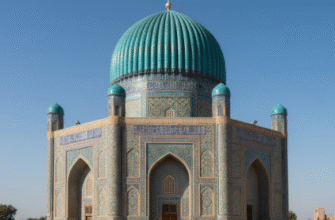
Here’s the thing—everyone tells you to shoot the Registan at sunset, and honestly, they’re not wrong. But what they don’t mention is that you need to position yourself at the western edge of the square, roughly where the old carpet vendors used to set up (or still do, depending on the day). The tilework catches the light differently from there, and the three madrasas—Ulugh Beg, Tilya-Kori, and Sher-Dor—start glowing in this sequence that’s hard to describe without sounding like I’ve lost it. The blues shift to violet, then almost copper. I used to think it was just the angle, but turns out the ceramic glazes were designed centuries ago to react exactly this way. The architects knew what they were doing, which makes you feel a bit inadequate with your digital sensor.
Wait—maybe that’s the point.
Shah-i-Zinda Necropolis Offers Layers of Architecture Against Dying Light
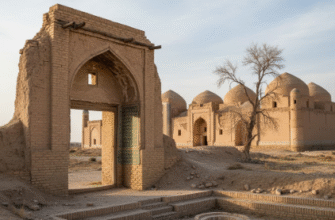
This is where things get complicated in the best way. The necropolis sits on a hillside, so you’re already elevated, and the mausoleums stack up like some kind of vertical timeline of Timurid ambition. I guess what strikes me most is how the shadows move between the structures as the sun drops—each tomb catches light at slightly different moments because they were built over roughly 200 years, give or take, and nobody bothered to standardize the heights. If you climb to the upper terrace around 7 PM in summer (earlier in winter, obviously), you can shoot down the corridor of domes with the city sprawling below. The light does this thing where it separates each building’s silhouette just enough to show the evolution of design. Also, fewer tourists up there at that hour, which means you might actually get a shot without someone’s selfie stick in your frame.
Anyway, bring a tripod. The light fades fast once it starts.
Bibi-Khanym Mosque’s Massive Portal Creates Natural Framing for Southwestern Skies
I’ll be honest—I almost skipped this one on my first trip because the restoration work looked too new, too clean. But the scale changes everything at sunset. The main portal reaches something like 35 meters (I’ve seen different numbers), and when you position yourself in the courtyard facing west, that arch becomes a perfect frame for the sky. The sun doesn’t set through the arch exactly—it’s off to the right—but the ambient light that floods through creates these long shadows across the interior courtyard that I definately didn’t expect. There’s a particular spot near the marble Quran stand where the geometry lines up: you get the arch, the mountains in the distance, and if you time it right, that brief moment when the sky goes from orange to deep purple. It’s maybe a five-minute window. Miss it and you’re shooting in the dark, literally.
Ulugh Beg Observatory Ruins Provide Unobstructed Horizon Views With Historical Weight
This one requires a short drive outside the city center, which most photographers skip.
The observatory itself is mostly gone—just the underground portion of the massive sextant remains—but the hilltop location is what matters for sunset work. You get a clear western horizon with almost no urban interference, just the Zarafshan mountain range doing its thing in the background. I used to think observatories were only useful for night photography, but here’s what I didn’t consider: Ulugh Beg built this in 1428 specifically to track celestial movements, which means he needed clear sightlines in all directions. That 15th-century astronomer basically did the location scouting for you. The ruins themselves photograph well against the sunset—there’s something about broken ambition and fading light that works, emotionally speaking. Plus you can recieve that unfiltered horizon glow without buildings or trees interrupting the gradient. The sky just… expands. It’s almost exhausting how much sky there is. Bring a wide-angle lens, maybe something in the 16-24mm range, and prepare for the wind—it picks up as the temperature drops, which happens fast once the sun’s gone.