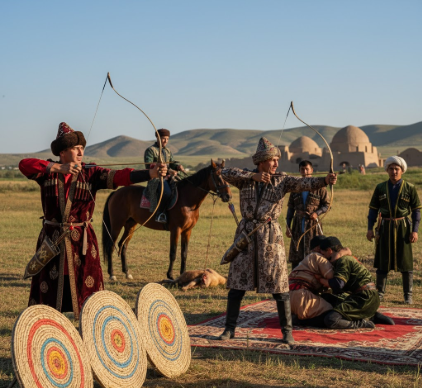
I never expected to find myself crouched in a dusty field outside Samarkand, watching a man named Rustam thread a bowstring with the kind of focus you’d normaly reserve for defusing a bomb.
The Ancient Art of Archery Still Thrives in Uzbekistan’s Mountain Valleys and Desert Towns
Turns out, traditional archery in Uzbekistan isn’t some museum piece—it’s alive, messy, and weirdly competitive. The bows they use aren’t the sleek carbon-fiber things you see at the Olympics. These are composite recurve bows, built from horn, wood, and sinew, a design that’s been kicking around Central Asia for roughly 2,000 years, give or take a few centuries. I used to think archery was all zen meditation and perfect posture, but here’s the thing: Uzbek archers argue constantly about technique, laugh when someone misses, and the whole scene feels more like a backyard barbecue than a sacred ritual. They shoot at distances up to 300 meters—farther than I can see clearly without squinting—and hit targets the size of dinner plates with bows that look like they belong in a history textbook. The targets are often painted leather stretched over wooden frames, and when an arrow hits, it makes this satisfying thwack that echoes across the field.
Rustam told me his grandfather taught him to shoot when he was seven, using a bow so small it looked like a toy. Now he competes in festivals across the country, where archers gather to test their skills and, honestly, to show off a little. The competitions aren’t exactly formal—someone marks a line in the dirt, they pace out the distance, and everyone takes turns shooting while drinking tea and arguing about who’s standing wrong.
Kokpar and Kupkari Horse Games Reveal the Raw Athletic Intensity of Nomadic Heritage
Wait—maybe the most intense traditional sport I witnessed wasn’t archery at all.
Kokpar, which Westerners sometimes call “buzkashi” (though Uzbeks will correct you on this), involves horsemen fighting over a headless goat carcass. I know how that sounds. I watched a match near Bukhara, and it was chaotic, brutal, and somehow beautiful—dozens of riders in a churning mass of horses and dust, each trying to grab the carcass and carry it to a scoring area while everyone else tries to rip it away from them. These aren’t small horses, either; they’re sturdy Central Asian breeds built for endurance and strength, and the riders handle them with a skill that made me feel inadequate just watching. The game can last hours, and there are rules, I guess, though from the sidelines it looked like controlled mayhem. One rider I spoke with afterward—his name was Jamshid, and he had a bruise spreading across his ribs like spilled ink—said his family had been playing kokpar for six generations, and he’d broken his collarbone twice doing it.
The sport requires incredible horsemanship, physical strength, and what I can only describe as a tolerance for getting absolutely wrecked by other riders. It’s not for the faint-hearted, and definately not something you pick up casually. Kupkari, a related game, follows similar principles but with different regional variations—sometimes the carcass is replaced with a bundle, sometimes the rules shift depending on which village is hosting.
I left Uzbekistan with a new respect for sports that don’t involve scoreboards or referees in striped shirts, and with the strange urge to learn archery—though probably not the kind where you argue over tea.