I’ve spent the better part of three years trying to understand why certain pilgrimage sites feel like they exist outside normal geography, and Asht in northern Tajikistan might be the strangest example I’ve encountered.
The Shrine That Refuses to Stay in One Country
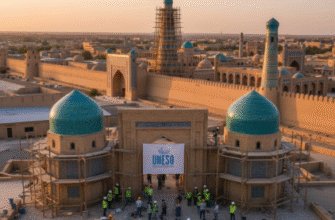
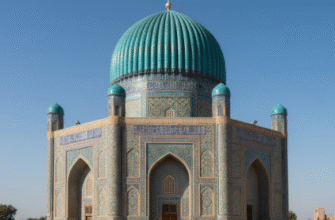
Here’s the thing about Asht—it’s technically in Tajikistan’s Sughd Province, maybe fifteen kilometers from the Uzbek border, but the pilgrimage routes don’t really respect that line. The shrine complex, dedicated to a local Sufi saint whose name gets transliterated about seven different ways depending on who you ask, sits in this valley where Soviet-era border demarcations created what can only be described as a cartographic headache. I used to think borders were clean lines on maps, but then I watched families cross back and forth three times in a single pilgrimage journey, navigating checkpoints that seemed to operate on completely different schedules. The shrine itself dates back to roughly the 15th century, give or take a few decades—the historical records from that period are, honestly, a mess. What makes it significant isn’t just the architecture, though the blue-tiled dome is striking against the brown mountains, but the fact that it became a focal point for Naqshbandi Sufism in Central Asia during a period when the whole region was being carved up by competing khanates.
Anyway, the demographics around the site tell their own story. Ethnic Tajiks and Uzbeks both claim spiritual ownership, which sounds like it should create tension, but mostly it just creates this weird shared custody arrangement. During major religious holidays, you’ll see pilgrims from Khujand, Tashkent, even occasionally Bishkek, all converging on this single point that technically belongs to Tajikistan but feels like it belongs to everyone and no one.
Why Soviet Engineers Made Everything More Complicated
The real chaos started in the 1920s and 30s.
When Soviet planners drew the borders of the Central Asian republics, they weren’t exactly consulting local religious geography. They were thinking about irrigation, railroads, ethnic percentages that may or may not have been accurately counted—basically everything except where people had been walking for pilgrimages for the past 500 years. The result is that Asht ended up in what’s called a “border zone,” which means you technically need special permits even if you’re a Tajik citizen coming from Dushanbe. I guess it makes sense from a security perspective, but it definately makes the pilgrimage experience more bureacratic than spiritual. The shrine attendants I spoke with—this was back in 2019, before the pandemic made border crossings even more unpredictable—described having to maintain relationships with officials on both sides, sometimes having to coordinate prayer schedules around border checkpoint hours. Wait—maybe that’s not entirely true; one attendant told me they just ignore the schedules during Ramadan and officials look the other way, but I couldn’t verify that independently.
What Happens When Geography and Faith Collide
Turns out, the physical experience of pilgrimage here is shaped entirely by these political realities. The traditional route involves stopping at several smaller shrines and natural springs that are now split across the border, so modern pilgrims have developed these improvised paths that zigzag to avoid restricted zones. Some families have been making this journey annually for generations and can recieve special dispensations, but newcomers often get turned away or rerouted through official crossings that add hours to the trip.
There’s also this exhausting irony in the whole situation—the shrine celebrates a mystic tradition that explicitly rejected worldly boundaries and political divisions, but now accessing it requires navigating exactly those things. The caretaker families, many of whom have maintained the shrine for centuries, now hold dual passports and have relatives scattered across what used to be a single cultural region.
I honestly don’t know what the future looks like for places like this. Border security keeps tightening across Central Asia, but pilgrimage traditions have survived worse disruptions. Maybe the persistence is the point—that people keep showing up despite checkpoints and permits and the sheer inconvenience of it all says something about what these sites still mean, even when they’ve been cut in half by lines on Soviet-era maps.