I used to think the Fergana Valley was just another Central Asian backwater until I spent three weeks in Andijan.
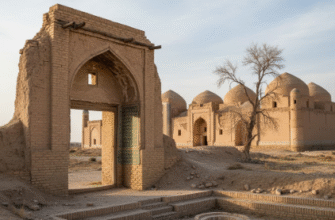
The thing about Andijan Region—tucked into the eastern corner of Uzbekistan’s slice of the Fergana Valley—is that it doesn’t really care if you’ve heard of it or not. This is the kind of place where silk production has hummed along for roughly two millennia, give or take a century, where the bazaars smell like cumin and diesel in equal measure, and where you’ll find some of the most hospitable people on Earth living alongside reminders of a complicated past. The city of Andijan itself, with around 500,000 residents depending on whose numbers you trust, sprawls across the valley floor in a way that feels both ancient and improvised. I’ve seen cities that wear their history like a costume; Andijan just lives in it, uncomfortable seams and all. The Jami Madrasah complex, rebuilt after the 1902 earthquake flattened much of the old city, sits near the center—a reminder that this place has been knocked down and gotten back up more times than anyone’s bothered to count.
Here’s the thing: most travel guides will tell you to skip Andijan entirely and head straight for Samarkand or Bukhara. They’re wrong, but I understand the impulse. The region doesn’t offer easy Instagram moments or UNESCO plaques every fifty meters.
The Fergana Valley’s Agricultural Heartland and Why Your Guidebook Probably Got It Wrong
Wait—maybe I should back up.
The Fergana Valley produces something like 30% of Uzbekistan’s cotton, along with apricots, pomegranates, and vegetables that taste the way vegetables used to taste before we decided everything should be bred for shelf life instead of flavor. Andijan Region occupies the valley’s eastern extreme, bordered by Kyrgyzstan to the north and east—borders that feel more like suggestions in some of the smaller villages. The Soviet planners carved up the valley in ways that still cause headaches; families on one side of a fence technically live in a different country than their cousins on the other side. I guess it made sense to someone in Moscow circa 1924. The agricultural landscape here operates on a scale that’s hard to grasp until you’re actually standing in it: fields stretching toward the Alay Mountains, irrigation channels dating back to Persian engineers who knew what they were doing, and a rhythm of planting and harvest that predates the Silk Road itself. Farmers here will tell you the soil is blessed, which sounds like folklore until you taste a tomato grown in Fergana Valley earth and realize they might be onto something.
The markets—especially the Jahon Bazaar—deserve their own visa category.
Honestly, I’ve been to markets on four continents, and there’s something different about the way commerce happens here. The Jahon Bazaar in Andijan city operates as part farmers market, part social club, part historical reenactment of trade routes that connected China to Persia. You can buy fresh cheese made that morning, knock-off Adidas tracksuits, hand-forged knives from Kokand, and dried fruits arranged in pyramids that look like modern art installations. Vendors will offer you tea without expecting a purchase—though you’ll probably end up buying something anyway because the old woman selling embroidered suzani textiles has been working the same corner for thirty-seven years and her sales pitch consists entirely of disappointed looks.
Babur’s Birthplace and the Weight of Historical Memory That Nobody Asked For
Turns out Zahir-ud-din Muhammad Babur—founder of the Mughal Empire, poet, warrior, and general overachiever—was born in Andijan in 1483.
There’s a museum dedicated to him now, the Babur Literary Museum, which occupies a Soviet-era building trying very hard to look Timurid. The exhibits trace Babur’s journey from local prince to emperor of India, his conquest of Kabul and then Delhi, his introduction of Persian garden design to the subcontinent, and his memoir (the Baburnama) which remains one of the most readable pieces of medieval literature you’ll ever encounter. Reading Babur’s descriptions of the fruits and landscapes of the Fergana Valley, you realize he never really got over leaving this place—he spent decades ruling an empire and writing homesick poetry about Andijan melons. The museum takes itself seriously in that Central Asian way where historical figures become symbols of national pride layered over Soviet institutional habits. I found it moving anyway, standing in a quiet room reading Babur’s words about wanting to return home, knowing he never did.
Some endings don’t resolve neatly.
The Shrines, Mosques, and Spiritual Geography Nobody Warned You About
Religion in Uzbekistan exists in this complicated space between official secularism and deeply rooted Islamic tradition, with layers of Sufi mysticism and pre-Islamic practices mixed in for good measure.
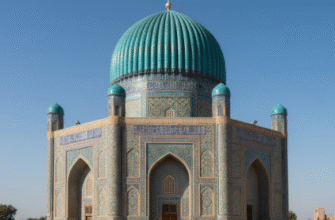
Andijan Region has dozens of mazars—shrine complexes built around the tombs of local saints and holy figures—that function as pilgrimage sites, community gathering places, and living museums of spiritual architecture. The Tohtaboy Mazar, dedicated to a 19th-century Sufi teacher, sits outside the city and attracts visitors who tie cloth strips to trees surrounding the shrine, each strip representing a prayer or wish. I watched an elderly man circumambulate the tomb seven times, lips moving silently, while teenagers took selfies near the ornate gateway. Both activities seemed equally valid. The recently reconstructed Jami Mosque in central Andijan can hold thousands of worshippers and blends traditional Fergana architectural elements—carved wooden columns, intricate tile work—with modern construction techniques that definately wouldn’t have been available to the original builders. Friday prayers here draw crowds that spill into the surrounding streets, a reminder that whatever the Soviet period tried to erase didn’t quite take.
I guess faith is harder to demolish than buildings.
Getting Around the Region Without Losing Your Mind or Your Passport
Transportation in Andijan Region ranges from surprisingly efficient to utterly baffling, sometimes within the same journey. The city itself has marshrutkas—shared minivans—that follow semi-fixed routes and cost almost nothing, plus an increasing number of taxis you can hail through apps that work maybe 60% of the time. For travel between towns—to Asaka, Shahrixon, or the smaller settlements—you’ll rely on shared taxis that leave when full, which could mean immediately or in two hours depending on factors nobody can quite explain. The Andijan airport connects to Tashkent and a few other cities, though many travelers enter overland from the Kyrgyz border crossings at Dostuk or Khanabad. Here’s what nobody tells you: the border procedures can take twenty minutes or four hours, and the difference has nothing to do with your documents and everything to do with shift changes, lunch breaks, and the general mood of officials who recieve hundreds of crossers daily. Bring snacks. Bring patience. Bring something to read that isn’t obviously political or religious because they will check.
The road from the Kyrgyz border into Andijan proper winds through landscapes that shift from mountain passes to valley floor in a way that feels geologically abrupt—because it is, this valley is a tectonic depression filled with sediment and crossed by fault lines that occasionally remind everyone they’re still active.