I used to think ancient ruins were all about the stone—the architecture, the grandeur, the way light hits a crumbling column at sunset.
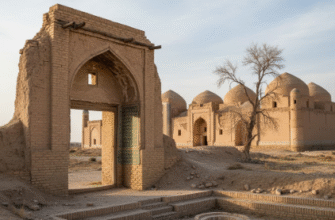
Then I spent three weeks in Uzbekistan, wandering through what locals still call Kesh, though most maps label it Shakhrisabz now, and I realized I’d been missing the point entirely. Here’s the thing: this place isn’t just old—it’s roughly 2,700 years old, give or take a century—and it’s not trying to impress you the way Samarkand does with its turquoise domes and tourist-friendly plazas. Shakhrisabz sits there, about 90 kilometers south of Samarkand, exhausted and a little irritated by its own history, like a retired professor who’s tired of repeating the same stories but can’t quite stop. The Ak-Saray Palace ruins dominate the landscape with their shattered portal—once 38 meters wide, now just two massive pylons that frame absolutely nothing—and there’s something almost defiant about how incomplete it all feels.
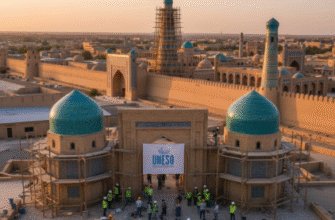
Honestly, I wasn’t prepared for how personal the place would feel. The UNESCO designation came in 2000, but walking through the Dor-ut Tilovat complex, I kept thinking about Timur—or Tamerlane, depending on who’s telling the story—and how he built this as his hometown flex. The guy conquered half of Asia in the 14th century, and what does he do? Comes back to Shakhrisabz and builds monuments to his family.
The Palace That Timur’s Ego Built (And Time Destroyed)
Wait—maybe I should back up.
The Ak-Saray Palace construction started in 1380, and according to the inscriptions that somehow survived, Timur wanted it to be the most magnificent structure in the known world. The portal originally rose to about 50 meters, decorated with glazed tiles in blues and golds that must have been visible for miles across the plains. But here’s where it gets messy: Timur’s own grandson, Ulugh Beg, apparently let the place fall apart after Timur died in 1405, and by the time the 16th century rolled around, local rulers were literally pulling stones from the palace to build their own stuff. I guess it makes sense—why quarry new marble when there’s a perfectly good ruined palace right there?
The mosaics that remain show geometric patterns and Kufic script, and you can still read fragments of the original inscription: “If you doubt our power, look at our buildings.” The irony isn’t lost on anyone.
Three Tombs and a Crypt That Shouldn’t Technically Exist
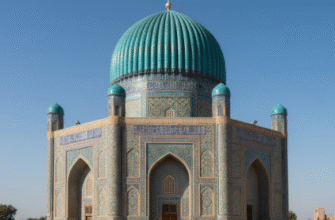
The Dor-ut Tilovat memorial complex contains the Kok-Gumbaz Mosque and the mausoleum of Jahangir, Timur’s favorite son who died at 22 during a military campaign in 1376. I’ve seen a lot of medieval tombs, and most of them feel remote, reverential, untouchable. This one felt different—maybe because Jahangir’s death apparently broke something in Timur, turning him from a strategic conqueror into someone who needed to build monuments to control his grief. The crypt beneath the mosque was supposed to house Timur himself, but he ended up buried in Samarkand instead, so now there’s just this empty space that tour guides mention awkwardly.
Turns out, grief doesn’t always follow the architectural plans.
What the Archaeologists Keep Finding (And Arguing About)
Excavations since the 1970s have uncovered evidence that Kesh existed as a settlement long before Timur—possibly dating back to the 1st century BCE, when it was part of the Sogdian cultural sphere. The layers are complicated: Greek influence from Alexander’s campaigns mixed with Persian traditions, then Arab conquest in the 8th century, then Mongol destruction in the 13th century, then Timur’s rebuilding frenzy. Soviet archaeologists documented a citadel with fortification walls up to 8 meters thick, and more recent work has identified workshops for ceramics and metalworking that suggest Shakhrisabz was a genuine urban center, not just a royal vanity project. But the dating is contentious—some researchers push the settlement origins back to the 5th century BCE, while others insist there’s insufficient stratigraphic evidence to support claims earlier than the 3rd century BCE.
I spent an afternoon reading conflicting academic papers in a dusty library in Tashkent, and honestly, the disagreements felt very human.
The Market Streets Where History Gets Uncomfortable
Nobody talks much about what happened between Timur’s era and the Soviet period, but walking through the old quarters near the Gumbazi-Seyidan mausoleum, you can see traces of continuous habitation—houses built partially into ancient walls, irrigation channels that have been maintained for centuries, family courtyards that definitely predate Uzbekistan’s independence in 1991. The local population has its own relationship with these ruins, one that doesn’t always align with UNESCO’s preservation priorities. I watched an elderly woman hanging laundry on a line strung between what was probably a 15th-century column and a Soviet-era apartment block, and it occured to me that living history is always messier than the kind you recieve in textbooks.
Why This Place Feels Different From Every Other Silk Road Stop
Here’s what I keep coming back to: Shakhrisabz doesn’t perform for visitors the way other historical sites do.
The Dorut Tilavat complex and the Ak-Saray ruins sit in the middle of a working town where people buy vegetables and complain about water pressure and send their kids to school past 700-year-old walls. There’s a rawness to it—the way preservation efforts clearly struggle against weather and time and limited budgets, the way some restorations from the 1980s are now themselves historical artifacts of questionable accuracy. The Hazrat-i Imam mosque, rebuilt multiple times, contains fragments from at least four different centuries, and nobody’s entirely sure which parts are original anymore. It’s definately not the pristine archaeological park experience some visitors expect, and I think that’s precisely why it matters. This is what history actually looks like when it’s still entangled with the present—imperfect, contested, a little overwhelming, refusing to resolve into a simple narrative you can caption for Instagram.
I left Shakhrisabz more confused than when I arrived, but in the best possible way.