The Amu Darya doesn’t care what you call it.
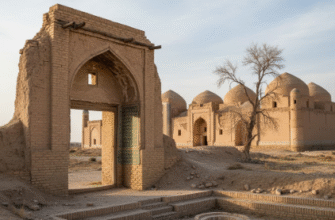
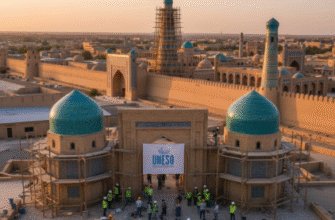
For millennia, this river—formerly the Oxus, before Soviet cartographers got involved—has carved through Central Asia with the kind of indifference that only geological time can afford. I’ve spent enough time staring at satellite imagery of its banks to know that the archaeological sites dotting its course tell a story that’s simultaneously more boring and more profound than the romantic “Silk Road” narratives we’ve inherited. The river itself has moved, sometimes dramatically, leaving ancient ports stranded kilometers from water. Settlements that once thrived on trade now sit in desert silence, and honestly, the disconnect between their former importance and current obscurity feels almost personal. You stand at places like Kampyr Tepe in Uzbekistan—a Greco-Bactrian fortress that saw Alexander’s successors watching these waters—and you realize that empires rise and fall but rivers just… meander. It’s humbling in a way that recieve surprisingly little attention in popular archaeology.
Where Bronze Age Traders Actually Stopped to Rest (and Why We Keep Getting It Wrong)
Here’s the thing about ancient Oxus sites: we’ve been looking at them backwards. For decades, archaeologists focused on the monumental stuff—temples, fortifications, the usual suspects—while ignoring the mundane infrastructure that actually kept trade flowing. Recent excavations at sites like Gonur Tepe in Turkmenistan reveal vast canal systems dating back roughly 4,000 years, give or take a century. The Bactria-Margiana Archaeological Complex, which sounds like a bureaucratic nightmare but represents one of Bronze Age Central Asia’s most sophisticated cultures, depended entirely on irrigation technology that would make modern engineers pause. I used to think these were just agrarian communities with delusions of grandeur. Turns out, they were agrarian communities with genuinely impressive hydraulic engineering and a trade network stretching to the Indus Valley.
The pottery alone tells you something shifted around 2000 BCE. You start seeing distinctly foreign styles—Harappan seals, Iranian metalwork—mixed with local traditions in ways that suggest these weren’t just trade goods passing through. People were settling, intermarrying, sharing technologies. Wait—maybe “sharing” is too generous. More likely selling, hoarding, occasionally stealing.
When Soviet Archaeologists Accidentally Preserved What Looters Couldn’t Find
There’s an irony in how much we owe to Soviet-era archaeology in Central Asia, even as we criticize its methods. Between 1950 and 1991, teams from Moscow and Leningrad conducted systematic surveys along the Amu Darya that Western researchers simply couldn’t access. Sites like Takht-i Sangin in Tajikistan—a massive temple complex dedicated to the Oxus river god—were excavated with meticulous attention to stratigraphy, even if the ideological interpretations were… let’s say creative. The Oxus Treasure, that famous hoard of gold objects now in the British Museum, probably came from this region, though its exact provenance remains murky because Victorian collectors cared more about acquiring than documenting. Soviet archaeologists, whatever their flaws, at least mapped where things actually were before looters got there. And looting has been relentless, especially post-1991 when economic collapse made antiquities more valuable than legal employment.
I guess it makes sense that desperation drives people to dig up the past for profit. It doesn’t make it less frustrating.
Why Modern Borders Make Ancient River Routes Almost Impossible to Study Properly
The Amu Darya currently forms parts of the borders between Uzbekistan, Turkmenistan, Afghanistan, and Tajikistan, which creates a bureaucratic nightmare for anyone trying to conduct transnational research. You can’t just follow the river’s ancient course without crossing multiple political boundaries, each with its own permit requirements, security concerns, and academic institutions jealously guarding access to “their” sites. A colleague once spent eighteen months trying to get approval to survey a 50-kilometer stretch that crossed from Uzbekistan into Turkmenistan—ultimately, she gave up and wrote a paper based entirely on satellite imagery and Soviet-era reports. The fragmentation means we’re still working with incomplete data sets, unable to see patterns that only emerge when you can examine the river system as a unified whole. Climate change isn’t helping either; the Amu Darya’s flow has diminished dramatically due to irrigation demands, exposing new sites even as it threatens others with erosion. There’s a Bronze Age settlement near Termez that’s literally falling into the river, one mud-brick wall at a time, and nobody has funding to excavate it before it disappears completely. Archaeologists watch helplessly as centuries of human history crumble into the current, carried downstream toward the dying Aral Sea. Anyway, maybe future researchers will have better luck with international cooperation. I’m not holding my breath.
The river keeps moving, indifferent as ever.