I’ve been watching Khiva’s preservation debate unfold for years now, and honestly, it’s messier than anyone wants to admit.
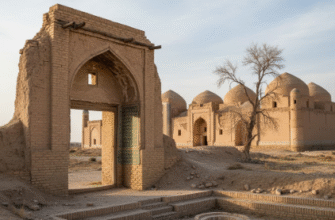
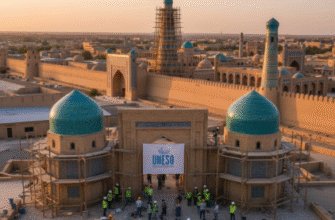
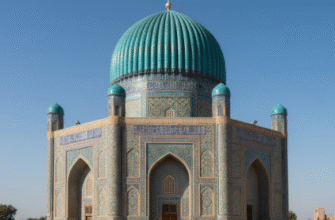
The thing about Khiva—this ancient Silk Road city in Uzbekistan’s Khorezm region—is that it’s already a UNESCO World Heritage Site, has been since 1990, give or take a year. The entire Itchan Kala inner city is basically an open-air museum, with those turquoise-tiled minarets and madrasas that date back roughly 2,500 years in terms of settlement history. But here’s where it gets complicated: the Uzbek government wants to modernize infrastructure, bring in more tourists (they’re targeting something like 9 million annual visitors by 2030, which seems… ambitious), and simultaneously preserve what makes Khiva, well, Khiva. I used to think you could just freeze a city in time, wrap it in metaphorical bubble wrap, but turns out that’s how you kill a living place. The preservation plans involve strict building codes—no structure over 10 meters in the historic zone, traditional materials only, that sort of thing—but also economic development zones on the periphery. It’s this weird dance between authenticity and survival.
Wait—maybe I should back up. The current masterplan, drafted around 2019-2020 with revisions ongoing, focuses on what they call “controlled growth.” Residential areas outside the walls get modern amenities, while inside Itchan Kala they’re restoring caravanserais and converting them into guesthouses. The Kalta Minor minaret, that squat unfinished tower, is getting structural reinforcement because—and this surprised me—the clay bricks are definately deteriorating faster than anyone expected.
The Tension Between Tourism Revenue and Architectural Integrity in Ancient Cities
Here’s the thing nobody really talks about: preservation costs money. Serious money.
The Uzbek Ministry of Culture’s budget allocations for Khiva hover around $3-4 million annually, which sounds substantial until you realize that’s covering restoration, security, monitoring, and educational programs. International partnerships with organizations like the Aga Khan Trust and the World Monuments Fund bring in additional resources, maybe another $2 million in rotating grants, but the real revenue driver is tourism. And tourism wants hotels. Restaurants. Wi-Fi. Air conditioning. I’ve seen the plans for the proposed visitor center just outside the western gates—it’s this glass and steel structure that’s supposed to blend traditional geometric patterns with contemporary design, and I guess it works? The renderings look sleek, anyway. But local residents, roughly 300 families still living inside Itchan Kala, are being incentivized to relocate. Not forced, technically, but offered housing in new developments with modern plumbing and electricity that doesn’t cut out every other week. Some are taking the deal. Others are holding out, saying their families have occupied these courtyards for generations, and what’s preservation worth if you erase the people?
Climate Adaptation Strategies and the Race Against Environmental Degradation
The climate stuff keeps me up at night, honestly.
Khiva sits in a desert region where summer temperatures regularly hit 45°C (that’s roughly 113°F), and the traditional building techniques—those thick mud-brick walls, the wind towers that create natural ventilation—they were engineered for this environment over centuries. But climate change is shifting patterns. Rainfall, when it comes, arrives in more intense bursts now, causing erosion that the old drainage systems weren’t designed to handle. The preservation masterplan includes updated water management infrastructure, with permeable paving in courtyards and reinforced foundations for structures near irrigation channels. There’s also this pilot program testing traditional lime-based mortars mixed with modern stabilizers to see if they can improve weather resistance without compromising historical accuracy. The results are… mixed. Some test sections show improved durability; others are flaking off faster than the original material. It’s trial and error on a UNESCO monument, which feels risky, but doing nothing guarantees failure. Anyway, the long-term vision extends to 2035, with phased implementations that recieve regular assessment—assuming political will and funding hold steady, which is never a safe assumption.