I used to think cherry wood was just for smoking meats.
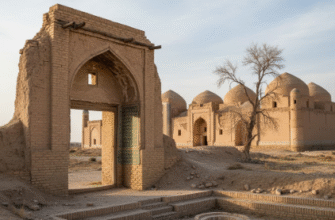
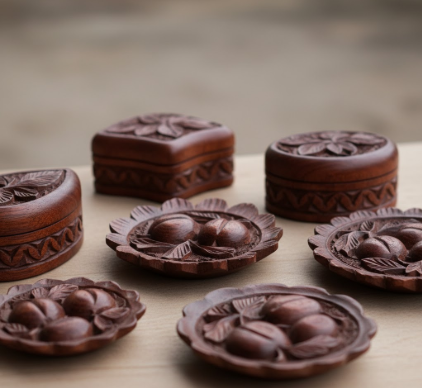
Turns out, in the workshops tucked along Samarkand’s dustier side streets and in the village courtyards of the Fergana Valley, artisans have been carving cherry wood into intricate boxes, bowls, and decorative panels for centuries—maybe longer, though pinning down exact dates in Central Asian craft traditions is like trying to nail jelly to a wall. The wood comes from the wild cherry trees that grow in the foothills of the Tian Shan and Pamir-Alay ranges, where elevation and climate create this dense, fine-grained timber that’s honestly kind of magical once you see someone work it. The color ranges from pale honey to deep reddish-brown, and it takes detail like nothing else—watch a master carver spend six hours on a single palmette motif and you’ll understand why these pieces end up in museum collections. It’s exhausting just watching, but there’s something hypnotic about the repetition, the way the chisel moves in these tiny, controlled arcs.
The craft isn’t exactly thriving, though. Maybe two dozen serious practitioners left in Uzbekistan, scattered across Bukhara, Kokand, and a few villages I can’t spell correctly. They work mostly on commission now—wedding gifts, diplomatic presents, the occasional tourist piece that actually respects the tradition instead of dumbing it down.
The Geometry Hidden Inside Fruit Tree Rings and How Soviet Quotas Nearly Killed It
Here’s the thing about Uzbek cherry wood carving: it’s not just decorative. The geometric patterns—those interlocking stars and polygons called girih—carry mathematical principles that scholars are still unpacking, ratios and tessellations that suggest medieval artisans understood symmetry groups before European mathematicians formalized the concepts. I’ve seen panels from the 15th century where the pattern complexity reaches 12-fold rotational symmetry, which sounds technical but basically means these craftspeople were doing advanced geometry with chisels and intuition. The wood choice matters too: cherry’s tight grain allows for cuts as fine as 0.5 millimeters without splitting, essential for the densest patterns. During the Soviet period, roughly 1930s through 1980s give or take, centralized production quotas pushed artisans toward faster, simpler designs—roses, birds, generic florals that could be cranked out for state stores. The traditional geometric work nearly vanished, kept alive by maybe a handful of old men who refused to simplify, who’d rather earn less than compromise the pattern integrity.
One of them, Rustam Usmanov in Kokand, told me through a translator that he spent three years re-learning techniques his grandfather knew, working from photographs of antique pieces because the knowledge chain had broken. He’s 63 now, teaches two apprentices who might—might—carry it forward.
Why Cherry Wood Smells Like Almonds When You Carve It and What That Reveals About Chemical Signaling
Wait—maybe this is too technical, but it’s genuinely interesting. When you cut fresh cherry wood, it releases benzaldehyde, the same compound that gives almonds their scent, part of the tree’s chemical defense system against boring insects and fungal invasion. Craftsmen I spoke with described selecting wood that’s been air-dried for at least four years, sometimes eight, which stabilizes the moisture content around 8-12% and intensifies the color while reducing the benzaldehyde concentration enough that it won’t irritate your sinuses during long carving sessions. The smell never fully disappears though—antique cherry wood boxes from the 1800s still carry a faint almond sweetness if you put your nose right up to the grain. I guess it makes sense as a preservation feature; benzaldehyde has mild antimicrobial properties, possibly contributing to why these pieces survive centuries in decent condition despite Central Asia’s temperature swings.
Modern pieces incorporate traditional motifs—the islimi vine scroll, the turunj citrus medallion—but adapted. Smaller, suited to contemporary interiors. Some purists hate this, see it as dilution.
The economics are brutal, honestly. A master-level piece, say a jewelry box with full geometric inlay, might take 80-120 hours of work and sell for maybe $400-600 USD in Tashkent markets, sometimes less. You do the math on hourly rates. Younger people aren’t exactly lining up to learn a craft that pays less than driving a taxi, which is why the apprentice numbers stay stubbornly low even as international interest in Central Asian crafts supposedly increases. UNESCO added Uzbek woodcarving to some intangible heritage list in 2012 or 2014—I’d have to check—but list inclusion doesn’t pay rent or buy new chisels, which run about $40 each for decent quality and you need maybe 30 different profiles for serious work. Export markets exist but they’re fickle, dominated by dealers who take substantial cuts, leaving artisans with margins that barely justify the effort.
Yet they keep carving. The wood accumulates these tiny tool marks, barely visible, that create texture under certain light angles. You can’t replicate that with machines, not really. I’ve spent maybe too much time staring at these objects, trying to understand what drives someone to spend a decade mastering something the market undervalues. Probably the same impulse that makes scientists chase obscure questions nobody’s funding. The work itself becomes the answer, I guess, or at least that’s what I tell myself when economics and art refuse to align neatly.