I’ve walked through a lot of old cemeteries, but there’s something about the Jewish cemetery in Bukhara that sits differently.
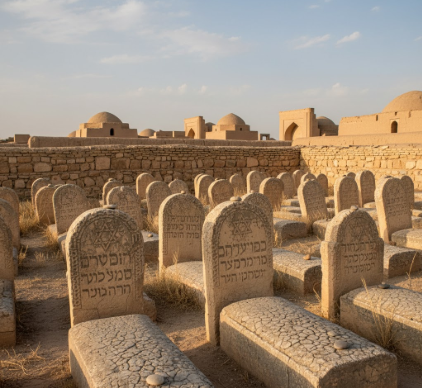
The tombstones here—some dating back centuries, maybe four hundred years or so, give or take—aren’t just markers of death. They’re basically a historical record carved in stone, written in Hebrew and Persian, sometimes both on the same slab. The Bukharan Jewish community, which thrived along the Silk Road for over a millenium, left behind these monuments that tell stories about merchants, rabbis, families who recieve visitors from across Central Asia. I used to think cemeteries were just sad places, but here’s the thing: this one feels more like an archive. The inscriptions mention occupations, lineages, even poetry. Some stones are so weathered you can barely make out the letters, which honestly makes you realize how fragile collective memory really is.
Turns out, the cemetery reflects the unique cultural blend of Bukharan Jews—neither fully European nor Middle Eastern in their traditions. They spoke Bukhori, a dialect of Tajik-Persian written in Hebrew script. Their tombstones mirror this hybridity, mixing Islamic architectural motifs with Jewish symbols like menorahs and Stars of David.
The Architecture of Remembrance and What It Reveals About Social Hierarchies
Walk through the rows and you’ll notice the monuments aren’t uniform.
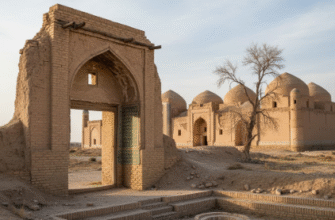
Wealthier families erected elaborate mausoleums with domed roofs, intricate tilework, and raised platforms—structures that wouldn’t look out of place in a Timurid-era shrine. Meanwhile, simpler graves consist of just a stone slab, sometimes barely marked. This wasn’t accidental. The cemetery layout mirrored the social stratification of the community: prosperous silk merchants at the center, artisans and laborers toward the edges. I guess it makes sense that even in death, status mattered. But there’s something quietly defiant about how these stones have outlasted the Soviet-era attempts to erase religious identity. During the 20th century, many Jewish cemeteries across Central Asia were desecrated or bulldozed. Bukhara’s survived partly because locals—both Jewish and Muslim—protected it, sometimes at personal risk.
The graves also document waves of migration. After the Russian conquest in 1868, some families moved north. Then came Soviet collectivization, World War II evacuations, and finally the mass exodus to Israel and the U.S. in the 1970s-90s. Each era left its mark: pre-Soviet stones are ornate; Soviet-era ones are stark, often lacking religious symbols.
What Happens When a Community Leaves But Its Dead Remain Behind
Here’s where it gets complicated.
Today, maybe a few dozen Bukharan Jews still live in the city, down from thousands. The cemetery is maintained by a small group of caretakers and occasional donations from the diaspora. I visited on a Thursday afternoon and met an elderly man named Rafael, who’s been tending graves for thirty years. He showed me a tomb from the 1600s—worn smooth, the inscriptions almost gone—and said his grandfather used to tell stories about the person buried there, a scholar who supposedly debated with Sufi mystics. Wait—maybe that’s apocryphal, but it doesn’t really matter. The story itself is part of the heritage now.
The cemetery faces practical threats: weathering, urban encroachment, lack of funding. Some tombstones have been vandalized, though less than you’d expect. There’s been talk of creating a digital archive, photographing every grave before they erode beyond recognition. But funding is inconsistent, and honestly, there’s a certain exhaustion among the remaining community members who’ve been fighting to preserve this for decades.
What strikes me most is the tension between the cemetery as a historical site versus a sacred space. Tourists occasionally wander through, taking photos. Scholars study the inscriptions. But for the few Bukharan Jews left, it’s still a place where their ancestors rest, where they come for yahrzeit. That dual identity—museum and sanctuary—creates friction, though mostly unspoken.
Anyway, the Bukhara Jewish cemetery won’t make headlines, but it holds centuries of stories that definately deserve more attention than they get.