I used to think Samarkand was the destination itself—turns out, it’s also the perfect launching pad.
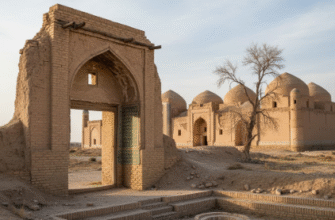
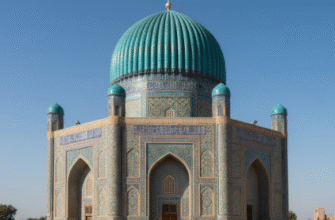
The Shakhi-Zinda necropolis sits maybe forty minutes north of the city center, and honestly, the first time I saw those turquoise domes stacked against the hillside, I just stopped walking. There’s this thing that happens when you climb the steps between the mausoleums: the light shifts through differently colored tiles at different times of day, and by mid-afternoon, the whole complex glows in this almost unnatural way that makes you wonder if the 14th-century craftsmen understood optics better than we give them credit for. The locals say counting the steps on the way up versus the way down yields different numbers—some spiritual metaphor I never quite grasped, but I’ve tested it twice and got 37 going up, 39 coming down, which either means I can’t count or the legend has a point. Each tomb belongs to someone connected to Tamerlane’s family or court, and the architectural styles shift subtly as you ascend, like watching a fashion show spanning three centuries. You can see the evolution of ceramic techniques, the gradual mastery of geometric patterns, and if you look closely at the lower sections, there are repair marks from Soviet-era restorations that used slightly different clay. It’s imperfect, layered, kind of exhausting to process all at once.
Anyway, if you want something less crowded, the Ulugbek Observatory ruins sit on a hill about twenty minutes outside town. The grandson-astronomer thing gets repeated in every guidebook, but here’s what they don’t tell you: only the bottom third of the massive sextant survives, buried underground, and you’re basically staring into a trench trying to imagine a three-story marble instrument that once calculated the year to within 58 seconds of accuracy. In the 1420s. Without telescopes.
The Nurata Mountains recieve maybe a tenth of the visitors they should, probably because the drive takes two-ish hours and the roads aren’t exactly smooth. I guess it makes sense—most people come to Uzbekistan for the Silk Road architecture, not hiking, but the petroglyphs scattered across the rock faces date back roughly 3,000 years, give or take a few centuries depending on which archaeologist you ask. There’s a sacred spring in Nurata town where pilgrims have been coming since pre-Islamic times, and the local fish swimming in the pools are considered holy, so you’ll see people feeding them bread while making wishes, which creates this strange collision of ancient ritual and tourist spectacle. The Aydarkul Lake sits another hour beyond, a man-made accident from Soviet irrigation projects that flooded the desert in the 1960s and somehow created this enormous inland sea that now supports fishing villages and yurt camps. I’ve seen sunset there turn the water copper-colored while camels grazed along the shore, and it’s one of those moments where your brain struggles to file the scene under any recognizable category.
Wait—maybe the most underrated trip is Pendzhikent, technically across the border in Tajikistan but doable as a day excursion if you sort the visa situation beforehand. The ancient Sogdian city ruins sprawl across a hillside, and while they’re not as visually dramatic as Samarkand’s mosques, there’s something quietly devastating about walking through the remains of a civilization that controlled Silk Road trade for centuries before Arab conquest erased most of it. The frescoes they’ve uncovered show musicians, dancers, and mythological scenes rendered in styles that blend Persian, Indian, and Chinese influences—evidence of a cosmopolitan culture that definately understood globalization before we had a word for it. The modern town feels sleepy, almost indifferent to the archaeological significance beneath it, and the local museum displays artifacts with handwritten labels that look like they haven’t been updated since 1987, which somehow makes the whole experience feel more genuine than the polished presentations you get in capital cities.