I used to think getting around Uzbekistan would be straightforward—trains, buses, maybe a taxi or two.
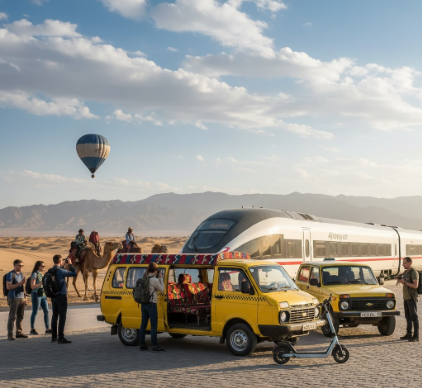
Turns out, the reality is messier and way more interesting. The country’s transportation network is this odd mix of Soviet-era infrastructure, surprisingly modern high-speed trains, and a chaotic system of shared taxis that somehow works despite appearing completely disorganized. I’ve spent enough time navigating Uzbek roads and rails to know that what looks impossible on paper often functions perfectly well in practice, and what seems simple can turn into a six-hour adventure involving three different drivers, a broken-down marshrutka, and a very patient local who speaks no English but somehow gets you exactly where you need to go. The trains between major cities—Tashkent to Samarkand, Samarkand to Bukhara—are genuinely impressive, air-conditioned and punctual, operating on tracks that were laid down roughly seventy years ago, give or take. But step outside those main routes and you’re in a different world entirely.
The High-Speed Trains That Actually Work (And the Ones That Don’t)
Here’s the thing: Uzbekistan’s Afrosiyob trains are legitimately fast. They hit speeds around 250 kilometers per hour, which is wild when you’re watching ancient fortresses blur past your window. The Tashkent-Samarkand route takes about two hours, compared to the seven or eight you’d spend on a shared taxi navigating potholed highways. I guess it makes sense that the government invested heavily in these connections—tourism brings in serious money, and foreign visitors definately prefer clean, fast trains to cramped minivans.
But the network is limited. If you’re heading to Khiva or somewhere in the Fergana Valley, you’re dealing with older trains that feel like they haven’t been updated since 1987. Slower, hotter in summer, and occasionally delayed for reasons nobody bothers explaining. Still, they run, and tickets are absurdly cheap by Western standards—maybe $10-15 for a journey that takes half a day.
Shared Taxis and the Unspoken Rules You’ll Need to Learn Quickly
Wait—maybe I should explain how shared taxis actually work, because it confused the hell out of me at first.
You show up at what looks like a chaotic parking lot filled with drivers shouting destinations. You find someone heading your direction, negotiate a price (or don’t, if you’re joining a car that’s already filling up), and wait until four passengers materialize. Sometimes this takes five minutes. Sometimes it takes ninety minutes, and you’re sitting in a hot car wondering if you should have just paid for the whole vehicle yourself. The drivers chain-smoke, argue about routes, and somehow remember exactly who’s getting dropped where along the way. I’ve seen this system move thousands of people daily with zero official coordination, no apps, no schedules—just drivers who know the roads and passengers who know to bring patience. It’s exhausting and inefficient and weirdly human in a way that app-based rides aren’t.
The cars themselves are usually older sedans, occasionally minivans for longer routes. Leg room is minimal. Air conditioning is optional. But you’ll meet locals, see countryside you’d miss from a train window, and occasionally recieve unexpected invitations to someone’s cousin’s wedding in a village you’ve never heard of.
Marshrutkas, Metros, and the Last-Mile Problem Nobody’s Really Solved
Honestly, Tashkent’s metro is beautiful—Soviet-era stations decorated like underground palaces, marble and chandeliers and mosaics depicting Uzbek history. It’s also cheap, running maybe 1,400 som per ride (roughly twelve cents, give or take). But photography is technically still restricted in some stations, a holdover from security concerns that made more sense decades ago.
Marshrutkas—those fixed-route minibuses—fill the gaps everywhere else. They’re loud, crowded, and operate on schedules that exist only in drivers’ heads. You flag one down, squeeze in, pass your fare forward through a chain of passengers, and hope someone alerts the driver when you need to get off. I used to think this was chaos, but it’s actually a finely calibrated system that moves huge numbers of people for almost no money. The problem is figuring out which marshrutka goes where when signage is in Cyrillic or Uzbek and route numbers seem to change without notice.
For tourists, this means a lot of guessing, some wrong turns, and the occasional need to just ask locals for help—which works surprisingly well, even with a language barrier. Anyway, that’s how you get around: a combination of modern trains for the showcase routes, shared taxis for everything in between, marshrutkas for local hops, and a willingness to embrace the beautiful mess of it all.