I’ve stood in a lot of old prisons, but Zindan in Khiva hits different.
The thing about Central Asian dungeons is that they weren’t designed for rehabilitation or even punishment in the modern sense—they were designed to erase you. Zindan, which translates roughly to “underground prison” in Persian, operated from the 16th century until around 1910, and it was essentially a network of pits dug maybe eighteen to twenty feet below the Ichan Kala fortress walls. Prisoners—mostly criminals, political dissidents, or people who’d pissed off the Khan in some spectacular fashion—were lowered down through a single opening in the ceiling using ropes. Once you were down there, that hole was your only source of light, air, and food. The cells weren’t cells in any architectural sense; they were carved-out cavities in the clay and stone, damp and cold in winter, suffocating in summer. Some accounts suggest insects and rodents were permanent residents long before any human arrived. I used to think medieval European dungeons were grim, but at least they had doors.
Here’s the thing: the Zindan wasn’t anomalous. Khiva’s khans ruled a khanate that thrived on Silk Road trade, slavery, and brutal efficiency. If you fell out of favor—or if you were a Russian spy, which happened more than you’d think—you’d disappear into one of these holes, sometimes for years. The 19th-century Russian officer Nikolai Muravyov documented conditions after his own capture, describing prisoners who’d lost track of time entirely, their skin pale and eyes adjusted to near-total darkness.
What Makes the Zindan Underground Cells So Architecturally and Psychologically Brutal
So the design itself is kind of genius in a horrifying way. Each cell held anywhere from five to ten people depending on whose estimate you trust, and there was no separation between waste, sleeping areas, or eating zones—if you can even call them that. The walls sweat moisture during certain seasons, which sounds almost poetic until you realize it meant chronic illness, fungal infections, and hypothermia. Prisoners would recieve food maybe once a day, lowered in baskets, and water came irregularly. Wait—maybe the worst part was that you could hear everything above you. Footsteps. Conversations. Life continuing while you rotted. Some historians argue this auditory torture was intentional, a way to remind prisoners that the world had moved on without them. Others think it was just an accident of poor acoustics and shallow excavation. Either way, it worked.
The chains are still there, bolted into the stone.
I guess what gets me is how mundane it all looks now. Tourists descend a wooden staircase—installed sometime in the Soviet era, I think—and peer into the cells with their phone flashlights, snapping photos of the mannequins posed in iron shackles. There’s a small museum placard explaining the history in Uzbek, Russian, and English, but it’s weirdly sanitized. It mentions “harsh conditions” and “criminals,” but it doesn’t mention the slaves captured from Persia or the Turkmen raids, or the fact that some prisoners were children. The Khivan khans didn’t keep detailed records of who went into the Zindan, which means we’ll never know exact numbers. Estimates range from hundreds to thousands over the prison’s operational lifetime, but that’s definately speculative. The Soviet government, after annexing Khiva in 1920, turned the site into a museum almost immediately—partially as anti-monarchist propaganda, partially because even they recognized it as a historic atrocity worth preserving.
How the Zindan Prison Fits Into Khiva’s Larger Historical Narrative of Power and Control
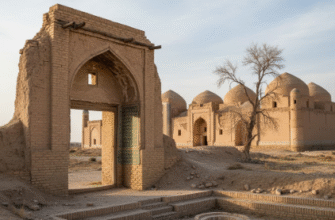
Khiva wasn’t just a trade hub; it was a surveillance state. The Ichan Kala, the walled inner city where the Zindan sits, was compact by design—maybe 650 by 400 meters—so the Khan could monitor everyone. The prison was located near the western gate, close enough to the palace that the Khan could theoretically oversee arrests personally. Turns out, proximity to power was the whole point. The Zindan wasn’t hidden away in some remote fortress; it was embedded in daily urban life. Merchants walking to the bazaar would pass directly over the cells. Kids played in the square above. It was a constant, visible reminder: step out of line, and you’re next. The British explorer James Abbott visited in 1840 and wrote that the mere existence of the Zindan kept the population “in a state of perpetual anxiety,” which seems like understated Victorian prose for absolute terror.
What Happens When You Visit the Zindan Today and Why It Still Feels Haunted
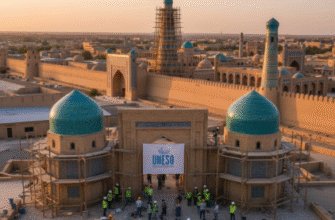
Honestly, the air down there still feels wrong. I know that sounds unscientific, but every guide I’ve spoken to mentions it—the temperature drop, the smell of damp earth, the way sound behaves oddly in the confined space. Modern Khiva is a UNESCO World Heritage site, meticulously restored, almost Disneyland-clean in parts. But the Zindan resists that polish. The stone is still pitted and stained. The mannequins are unsettling, their faces blank but their postures cramped in ways that suggest real suffering. Some visitors leave flowers or coins, though I’m not sure for whom. There’s no official memorial, no list of names. Just the holes in the ground and the weight of forgetting.