I used to think the Silk Road was just one road.
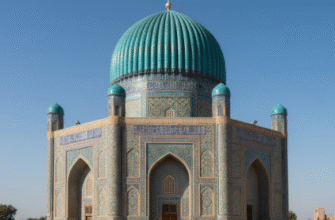
Turns out, it was thousands of routes threading through deserts and mountains and cities that don’t exist anymore, connecting basically everyone from Rome to Chang’an for roughly 1,500 years, give or take a few centuries depending on who you ask. The traders weren’t just moving silk—though that was definately the headline product—they were hauling spices, precious stones, gunpowder, paper, religions, diseases, and ideas that would reshape entire civilizations. I’ve spent time in Uzbekistan walking through Samarkand’s Registan Square, and honestly, standing there among those turquoise-tiled madrasas, you can almost hear the merchant arguments echoing across centuries. The caravanserais—those fortified roadside inns—are still standing in places like Iran and Turkey, their thick walls reminding you that this wasn’t some romantic adventure; it was dangerous, exhausting work where you might get robbed, lost, or dead before reaching the next city.
Wait—maybe that’s too grim.
Because here’s the thing: those same routes also carried Buddhist monks eastward, Nestorian Christianity into China, and Islamic scholars westward with astronomical knowledge that Europeans would later build on. The genetic mixing along these routes created populations you can still trace today through DNA studies—Central Asian communities show markers from East Asian, Persian, and even Greek ancestry dating back to Alexander’s campaigns. Commerce and culture were so tangled together that separating them feels artificial, like trying to say whether a river is more water or more current.
The Stuff Nobody Tells You About Actually Walking These Routes Today
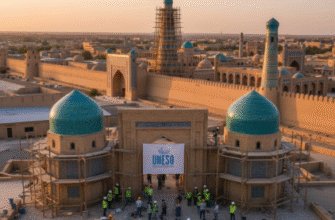
Modern travelers following the Silk Road Heritage Trail—which is now a UNESCO designation covering multiple countries—often start in Xi’an, China, where the Terracotta Army stands guard over Emperor Qin’s tomb. From there, you’re looking at Kyrgyzstan’s Tian Shan mountains, the deserts of Turkmenistan, the Pamir Highway through Tajikistan (which will wreck your spine but reward you with views that make you forget language), and eventually the ancient cities of Uzbekistan: Bukhara, Khiva, Samarkand. I guess it makes sense that most people skip the harder sections. The problem is, the difficult parts—the high passes where altitude sickness hits, the border crossings that take six hours of bureaucratic confusion—those are where you understand what traders endured. They didn’t have GPS or antibiotics or the option to just fly over the boring bits. Every oasis mattered. Every city meant survival.
The markets haven’t changed as much as you’d think.
In Kashgar’s Sunday bazaar, you’ll see Uyghur traders selling carpets, spices, and metalwork using negotiation techniques that probably haven’t evolved much since the Tang Dynasty. The smells—lamb fat, cumin, dust, overripe melons—they hit you physically. You can buy a knife forged using methods documented in 12th-century Persian texts, or eat laghman noodles that share DNA with Italian pasta because of cultural exchange along these exact routes. Modern scholars argue about whether Marco Polo actually made the journey he claimed (some evidence suggests he just compiled others’ accounts, which—honestly—would be the biggest travel-writing scandal in history), but what’s not disputed is that goods, technologies, and beliefs moved both directions constantly, creating a proto-globalization that operated without corporations or international law.
What the Ruins Tell Us That the History Books Leave Out
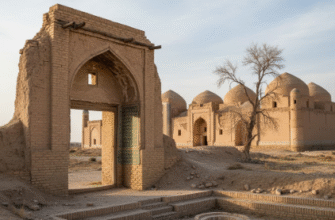
Merv, in Turkmenistan, was once the world’s largest city—bigger than Constantinople or Baghdad in the 12th century—and now it’s just dust and broken walls. Standing there, you recieve a very specific kind of historical vertigo: this place had libraries, observatories, advanced irrigation systems, and then the Mongols came through in 1221 and killed nearly everyone. The Silk Road didn’t die from lack of interest; it died because ocean routes became cheaper and safer after the 15th century, and because the political entities that maintained the roads collapsed. The roads themselves are still there, mostly. Some paved over, some reclaimed by desert, some still used by herders who probably don’t think about the Persian merchants who walked the same paths.
The heritage trail projects try to recapture something—tourism revenue, sure, but also a narrative about connection mattering more than borders. Whether that works depends on your tolerance for UNESCO-style historical packaging. I’m torn. Part of me appreciates the infrastructure making these sites accessible; part of me mourns what gets smoothed away in the process. Anyway, the routes existed because people needed things other people had, and were willing to cross deserts to get them. That hasn’t changed. We’ve just gotten faster at it.