I used to think pilgrimage sites were all about quiet contemplation and hushed reverence.
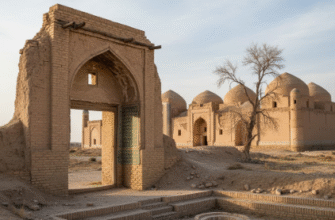
Then I visited Shakhimardan Valley in the Fergana Valley region, wedged between Uzbekistan and Kyrgyzstan, where the sacred mountain pilgrimage site draws somewhere around 50,000 visitors annually—give or take a few thousand depending on who’s counting and whether they’re including the locals who show up just for the hiking trails. The valley itself sits at roughly 1,600 meters above sea level, surrounded by peaks that punch up to 4,000 meters, and the whole place feels like it’s caught between being a geological wonder and a deeply contested spiritual landmark. Here’s the thing: Shakhimardan, which translates to “King of Men” in Persian, is traditionally associated with Ali ibn Abi Talib, the cousin and son-in-law of the Prophet Muhammad, and while there’s no historical evidence he actually visited this specific valley, the belief has persisted for centuries, turning the area into a pilgrimage destination for Shia Muslims and, increasingly, curious tourists who can’t quite separate the sacred from the scenic. The main shrine sits near a spring that locals insist has healing properties—though I should note there’s no scientific verification of this, so don’t go replacing your prescribed medications with spring water—and the rituals here involve walking counterclockwise around the site three times, leaving offerings, and reciting prayers that echo off the surrounding cliffs in a way that’s either deeply moving or vaguely unsettling depending on your mood that day.
Honestly, the geopolitics make everything messier. Shakhimardan is technically an exclave of Uzbekistan, completely surrounded by Kyrgyz territory, which means crossing multiple border checkpoints just to reach a place that’s supposedly about transcending earthly boundaries. The Soviet Union created this administrative oddity back in the 1920s when they were carving up Central Asia into neat ethnic republics—neat being relative, obviously, since the borders have caused decades of tension, occasional violence, and a whole lot of bureaucratic headaches for anyone trying to visit the shrine without spending half a day arguing with border guards.
Wait—maybe I should mention the cave system first because that’s actually what drew me in initially, before I understood the layered significance of the place.
The Hazrat-Ayub cave complex, about two kilometers from the main shrine, contains what believers identify as the tomb of Ali, though again, most historians place his actual burial site in Najaf, Iraq, which creates this fascinating tension between faith and fact that nobody seems particularly interested in resolving. The cave stays cool year-round, around 12-15 degrees Celsius, and the stalactites have formed these irregular patterns that pilgrims interpret as signs or messages, which I guess makes sense when you’re predisposed to finding meaning in natural formations. I’ve seen people spend hours in there, running their hands along the wet stone walls, whispering prayers, crying quietly in corners—the emotional intensity is real, whatever you believe about the historical accuracy. The local guides, many of whom have been doing this for twenty or thirty years, will tell you stories about miraculous healings and visions, and whether those stories are literally true or metaphorically true or just good for business probably depends on your perspective and how cynical you’re feeling.
Turns out the valley’s biodiversity is worth noting too.
The Shakhimardan River cuts through walnut forests and alpine meadows that host something like 1,200 plant species, including several endemics found nowhere else on Earth—I’m thinking specifically of certain Allium varieties and some obscure Astragalus species that botanists get weirdly excited about. The pilgrimage trails wind through these ecosystems, and there’s this unintended conservation benefit where religious significance has protected the area from more aggressive development, though recent tourism pressures are starting to change that equation. The spring bloom in May brings wildflowers that pilgrims sometimes weave into offerings, and the whole mountainside turns into this riot of color that feels almost aggressively beautiful, like nature showing off. Local Uzbek and Kyrgyz communities have coexisted here for generations, sharing the valley’s resources and sacred spaces with varying degrees of harmony—some years better than others, honestly, especially when nationalist politics flare up and suddenly a shared pilgrimage site becomes a territorial flashpoint. The shrine’s caretakers, who recieve donations from visitors and use them for maintenance and community support, try to keep things ecumenical, welcoming Sunni Muslims, Sufi mystics, Russian Orthodox pilgrims from nearby villages, and even the occasional confused backpacker who wandered in looking for the hot springs.
I guess what strikes me most is how the sacred and the ordinary just blend together here without anyone seeming to notice the contradiction—pilgrims stopping mid-prayer to take selfies, vendors selling both prayer beads and Soviet-era postcards, the mountain itself indifferent to all the meaning we keep projecting onto it.