I used to think medieval astronomy was just a footnote between Greek brilliance and European Renaissance—turns out, I was spectacularly wrong.
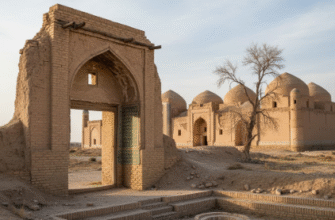
The Samarkand Observatory Museum sits on a hill in Uzbekistan, quietly marking one of history’s most audacious scientific projects. Built in the 1420s by Ulugh Beg—grandson of Timur (you might know him as Tamerlane)—this wasn’t just some prince’s hobby. Ulugh Beg was a mathematician-king who cared more about celestial mechanics than conquests, which, honestly, probably annoyed his generals. The observatory itself was massive: a three-story cylindrical building with a sextant so enormous it was partially underground, carved into bedrock. That sextant, by the way, had a radius of roughly 40 meters—give or take—making it one of the largest astronomical instruments ever constructed before telescopes existed. The whole complex included lecture halls, a library, and living quarters for dozens of scholars who came from across the Islamic world to map the heavens with unprecedented precision.
Here’s the thing: they succeeded. The star catalog produced here listed 1,018 stars with positions accurate to within a few arc-minutes—errors so small they wouldn’t be significantly improved for another two centuries. I’ve seen the remains of that sextant, and it’s humbling in a way I didn’t expect.
The Underground Arc That Measured the Universe with Medieval Precision and Obsessive Dedication
Walk into the museum today and you’ll see the excavated trench where that marble sextant once traced the sky. It’s just a curved channel now, maybe 11 meters of the original 63-meter arc still visible, but standing there you can almost feel the weight of what they were attempting. Medieval astronomers worked without lenses, without clocks that could measure seconds, without—wait—maybe I should back up. The sextant was aligned precisely along the meridian, north to south, allowing observers to track stars as they crossed that invisible line overhead. They measured angles using brass instruments and calculated time with water clocks that were, frankly, impressive but imperfect. Every observation required multiple people: one calling out positions, another recording, a third double-checking math that involved trigonometric functions most of us would struggle with today even with calculators.
The astronomer leading much of this work was Ali Qushji, who later took some of the observatory’s methods to Istanbul. Another key figure was Ghiyath al-Din Jamshid al-Kashi, whose calculations of π to 16 decimal places weren’t matched in Europe until the 1600s—a fact that still gets quietly omitted from some history textbooks.
Anyway, the political situation collapsed everything. Ulugh Beg was assassinated in 1449 by his own son in a power struggle that had exactly nothing to do with science and everything to do with the usual messy succession politics. The observatory fell into disuse, then ruin, then was literally buried and forgotten for nearly five centuries. By the time Russian archaeologist Vasily Vyatkin rediscovered the site in 1908, only that underground section of the sextant had survived—everything above ground had been looted or weathered away. The irony is brutal: the most advanced scientific instrument of its era, lost because a prince wanted a throne.
What Survives Now in the Museum and Why It Still Matters to Modern Astronomers Who Visit
The modern museum, built in 1970 and renovated several times since, does its best to reconstruct what was lost.
There are models showing the full observatory complex, reproductions of medieval instruments—astrolabes, quadrants, armillary spheres—and plenty of explanatory panels in Uzbek, Russian, and English that vary wildly in translation quality. I guess what strikes me most is how the museum tries to convey the sheer intellectual ambition of the place. These weren’t just technicians cranking out data; they were developing new mathematical techniques, refining trigonometric tables, arguing about the nature of planetary motion decades before Copernicus. One display shows pages from the Zij-i Sultani, the astronomical tables produced at the observatory, with calculations that would have taken months to complete by hand. Another shows the surviving fragment of the sextant itself, that marble curve still bearing tool marks from 15th-century craftsmen.
Modern astronomers who visit often talk about the precision achieved without modern technology—the kind of painstaking, repetitive observation that required not just skill but almost meditative patience. Some of Ulugh Beg’s star positions differ from modern measurements by less than one arc-minute, which is roughly the width of a human hair held at arm’s length projected onto the sky. For context, that’s extraordinary.
The museum also doesn’t shy away from the violence that ended it all. There’s a memorial to Ulugh Beg himself, whose remains were identified in Timur’s mausoleum in Samarkand—his skull showed evidence of the blow that killed him, a detail that feels uncomfortably intimate when you’re reading about celestial mechanics in the same building. I used to think science and politics were seperate spheres in history, but places like this make it clear they’ve always been tangled. The observatory fell because power mattered more than knowledge, at least to the people holding swords.
What remains now is a testament to what’s possible when curiosity gets institutional support, even briefly—and a reminder that progress is never guaranteed, that knowledge can be buried as easily as buildings, waiting for someone centuries later to remember it mattered.