I’ve walked through a lot of museums in my life, but something about the Samarkand City Museum stopped me cold.
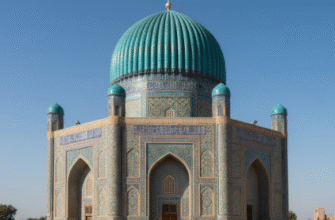
The building itself sits near Registan Square—yes, that Registan, the one plastered across every Uzbekistan tourism brochure—and honestly, it’s easy to miss if you’re rushing toward the madrasahs with their turquoise domes. The museum opened back in 1896, which makes it one of Central Asia’s oldest, and it started as this eclectic private collection assembled by some Russian enthusiasts who were, I guess, fascinated by what they called “native antiquities.” Over time it morphed into something much larger: a repository for roughly 200,000 objects spanning archaeology, ethnography, numismatics, and fine arts, give or take a few thousand depending on which catalog you consult. The Soviet era added layers of ideology—exhibits that framed Silk Road history through a Marxist lens, downplaying religious artifacts while celebrating labor and “progress.” But here’s the thing: despite political shifts, curators kept squirreling away textiles, manuscripts, and ceramics that might otherwise have vanished.
Walk into the ethnography wing and you’ll see why this place matters. There are suzanis—embroidered wall hangings—with pomegranate and almond motifs stitched by women in the Zarafshan Valley, some dating to the 1800s. The silk threads have faded unevenly, which actually makes them more beautiful, I think. Nearby: ceramic bowls from the Afrasiab settlement, which thrived before Genghis Khan’s armies leveled it in 1220.
The numismatics collection is where things get weirdly intimate, at least for me. Rows of coins minted under Timurid rulers, Samanid governors, even Alexander’s successors—tiny metal disks that passed through hands in bazaars we’ll never see. I used to think coins were just economic tools, but staring at a silver dirham from 915 CE, stamped with Kufic script, I realized they’re also prayers, propaganda, and proof someone existed. The museum has maybe 50,000 coins, though the exact number shifts because acquisitions happen quietly. Some were dug up by farmers near Pendzhikent; others came from private donors whose grandparents hid them during Soviet collectivization. Anyway, the labels are hit-or-miss—a few are in English, most in Russian or Uzbek, and occasionally there’s just a handwritten card with a date and a question mark.
Wait—maybe the manuscripts deserve more attention here.
The museum holds fragments of Qurans copied in Samarkand’s scriptoriums during the 14th and 15th centuries, when the city was Timur’s capital and calligraphers were as revered as architects. One page, attributed to a student of the master calligrapher Mir Ali Tabrizi, shows verses from Surah Ar-Rahman in gold-flecked naskh script. It’s kept behind UV-filtering glass now because light degrades the ink, but even through the glare you can see the precision—each curve deliberate, almost defiant. These weren’t just religious texts; they were flex, a way for Timur to signal that Samarkand rivaled Baghdad or Cairo. The museum also has secular manuscripts: astronomical treatises, medical compendiums influenced by Avicenna, poetry collections. Some pages have margin notes in Persian, arguing with the author or correcting math. I love that—a 600-year-old argument preserved in brown ink.
Here’s what nobody tells you: the museum’s storage rooms hold more than the galleries ever could. I didn’t get access, but a curator mentioned they’ve got entire dowry chests unopened since the 1950s, packed with jewelry and talismans. Funding is perpetually tight—ticket sales don’t cover conservation—so artifacts sit in climate-controlled limbo, waiting for grants that may or may not come. It’s frustrating.
The archaeology section ties everything together, or tries to. There are Sogdian ossuaries carved with Zoroastrian fire altars, Buddhist stupas from when Samarkand was a crossroads for monks heading to China, and Islamic oil lamps that replaced them centuries later. One case holds a terracotta figurine of a musician, maybe 2,000 years old, with a broken lute and a smile that looks almost smug. Turns out the Silk Road wasn’t just spices and silk—it was ideas colliding, gods swapping places, languages blending until nobody remembered who borrowed what first. The museum doesn’t always contextualize this well; some exhibits feel like they’re from three different eras of curation, which I guess they are. But that messiness is also honest. History isn’t a clean narrative, and neither is this place.
I left thinking about the women who embroidered those suzanis, the scribes who ruined their eyesight copying Qurans, the farmer who unearthed a coin and wondered if it was worth keeping. The Samarkand City Museum isn’t flashy—it won’t blow your mind the way Registan does at sunset—but it holds the small, stubborn pieces of lives that refuse to dissapear. That counts for something, I think. Maybe more than we usually admit.