I used to think museum photography collections were just dusty albums nobody looked at anymore.
Then I spent three hours in Khiva’s Photography Museum, surrounded by images that felt like they were still breathing. The collection spans roughly 150 years of Central Asian history, give or take a decade depending on which curator you ask, and honestly—it’s one of those places that makes you reconsider what preservation even means. These aren’t just photographs of monuments and marketplaces; they’re fragments of lives interrupted by revolution, war, Soviet reorganization, and the slow erosion of memory that happens when empires collapse. The earliest images date back to the 1870s, when Russian photographers first arrived in Khiva with their cumbersome equipment, and what strikes me most is how the subjects stare directly at the camera with this mix of curiosity and suspicion, like they knew something was being taken from them even as it was being preserved. Some prints are so faded you can barely make out the faces, but the archivists refuse to digitally enhance them beyond basic stabilization—they want you to feel the decay, I guess.
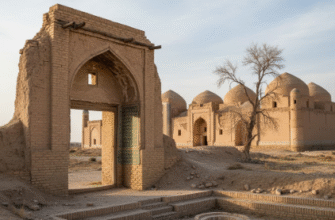
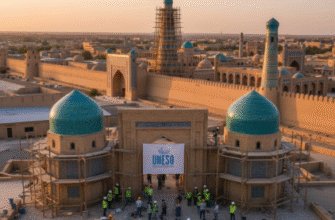
The museum sits in a converted madrasa near the Ichan Kala fortress walls, which feels appropriate somehow. You walk through rooms organized by era, though the chronology gets messy in places—Soviet-era portraits mixed with pre-revolutionary family studios, documentary shots of canal construction next to formal images of Khivan khans.
When Glass Plates Captured a City That No Longer Exists in the Same Form
Here’s the thing about historical photography in Central Asia: the technology arrived at almost the exact moment traditional ways of life started fragmenting under colonial pressure. The Photography Museum’s collection includes over 8,000 images, many shot on glass plate negatives that required subjects to hold still for 30 seconds or more, and you can see the strain in their faces—tiny blurs where someone’s hand trembled, children whose expressions shifted from solemnity to irritation mid-exposure. I’ve seen photographs of the Kalta Minor minaret under construction in the 1850s, back when it was supposed to rival anything in Samarkand or Bukhara, before the khan died and the project just stopped. The minaret still stands there, truncated and turquoise-tiled, a monument to interrupted ambition. Turns out the museum has five different photographic perspectives of that same unfinished tower taken between 1873 and 1911, and watching the city grow around it in those images is like witnessing time through a kaleidoscope. Some of the glass plates cracked over the years, creating these jagged white fissures across wedding processions and harvest scenes, and the curators left them that way—damage as part of the historical record. Wait—maybe that’s the point: nothing survives intact, not buildings, not photographs, definately not memory.
The Soviet section is where things get emotionally complicated for me.
You’ve got propaganda images of literacy campaigns and cotton quotas displayed alongside intimate family portraits that people clearly commissioned for private reasons, not ideological ones. There’s this photograph from 1927 of a woman in traditional Khivan dress standing next to the same woman in a Soviet factory uniform, obviously staged to show progress or liberation or whatever the photographer was supposed to demonstrate, but her expression in both shots is identical—this careful blankness that refuses to participate in the narrative being constructed around her. I keep thinking about what it must have felt like to recieve that print, to see yourself transformed into a symbol while still being yourself underneath. The museum doesn’t editorialize much; the plaques are factual to the point of flatness, which leaves you alone with the images and whatever discomfort or wonder they provoke.
Preservation Through Incompleteness and What Gets Lost in Translation Anyway
The archivists told me they’re constantly discovering new photographs in family collections, old suitcases, government archives that were sealed for decades then suddenly declassified.
Every new acquisition changes the collection’s meaning slightly, adds context or complicates existing narratives, and there’s something exhausting about that—this sense that historical truth is always provisional, always being revised. They showed me a recent donation: a series of portraits from the 1940s documenting Khivan musicians, most of whom were later purged or forced into other professions when traditional music fell out of political favor. The photographs survived because someone hid them in a basement wrapped in oilcloth, where they spent 50 years accumulating mold and water damage before being rediscovered. Now they’re displayed behind UV-protective glass with careful annotations about who these people were, what instruments they played, what happened to them. It’s partial restoration at best—you can’t undo decades of neglect—but it feels important anyway, this effort to say their names again, to make their faces visible. I guess it makes sense that a museum in Khiva would understand preservation as something fragile and ongoing rather than permanent. The city itself has been rebuilt so many times, conquered and abandoned and repopulated, that maybe its relationship to history is just fundamentally different from places that experienced less upheaval. The Photography Museum doesn’t pretend to offer complete documentation; it offers what survived, which turns out to be enough.