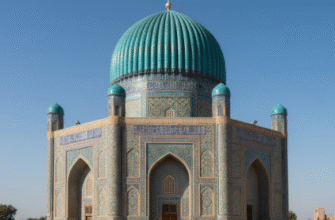
I used to think mosques were just places frozen in time, you know—prayer halls that stayed the same for centuries.
Then I spent three weeks in Bukhara last summer, standing in what locals call the pit below Magoki Kurns Mosque, watching archaeologists brush centuries of compacted earth from what turned out to be a pre-Islamic fire temple. The thing is, this site isn’t just one building stacked on another—it’s more like a layer cake of Silk Road spirituality, with each stratum telling a different story about who controlled Central Asia’s trade routes and what gods they prayed to. The earliest layers, dating back to roughly the 5th century CE (give or take a few decades, the stratigraphy gets messy), show evidence of Zoroastrian worship, complete with ash deposits that probably came from sacred fires. Then there’s a Buddhist phase nobody really talks about much, followed by what looks like a brief Nestorian Christian presence, before Islam arrived and stayed. What struck me most was how the archaeologists could trace economic collapse through pottery shards—you can literally see when trade dried up because the ceramic quality just plummets.
The name itself is weird, honestly. “Magoki” comes from “makhak,” meaning pit or hollow, because the mosque sits about 15 feet below modern street level. Centuries of urban layering just buried it. “Kurns” might reference money-changers who worked nearby, though some scholars think it’s a corruption of another word entirely—wait, maybe it was related to the old marketplace?
Digging Through Twenty Centuries of Belief Systems Under One Foundation
The excavation work started seriously in the 1930s under Soviet archaeologists, but they definately had political motivations—they wanted to prove Central Asia had a rich pre-Islamic heritage to downplay religious identity. Still, their work was solid enough. They uncovered the southern facade, which is this stunning example of 12th-century Karakhanid brickwork, with patterns so intricate they look like fabric woven from terracotta. The geometric designs include Kufic script praising Allah, but if you look closely at the lower sections, you can see earlier symbols that got partially chiseled away—probably Zoroastrian or Buddhist iconography that someone tried to erase but didn’t quite finish the job. Modern teams using ground-penetrating radar have found what might be an entire network of underground passages connecting to other buildings, though nobody’s excavated those yet because of structural concerns.
Here’s the thing: most archaeological sites give you a clean narrative.
This one doesn’t. You’ve got pottery from Samarkand mixed with shards from Merv and Khwarezm, all in the same layer, suggesting this wasn’t just a religious site but a major commercial hub where traders from across the Silk Road would come to settle debts, exchange currencies, and yes, pray—though to which god depended on the century. The numismatic evidence is wild too: coins from the Sasanian Empire, early Islamic dirhams, even a few Byzantine solidi turned up in the excavation trenches. One archaeologist told me they found a Jewish merchant’s seal in a layer dated to the 9th century, which complicates the standard story about who was doing business here. I guess it makes sense—Bukhara was cosmopolitan in ways we forget.
Why Restorers Keep Arguing About the Southern Portal’s Original Colors
The restoration efforts have been controversial. Soviet-era conservators rebuilt parts of the facade using modern bricks that don’t match the original clay composition, and now there’s this ongoing debate about whether to undo that work or preserve it as its own historical layer. Some architects argue the 20th-century repairs are significant in their own right—they represent Soviet attitudes toward Islamic heritage. Others think it’s archaeological vandalism. The blue tilework you see today on the upper sections? That’s definitely a 20th-century addition, because medieval Bukhara didn’t use glazed tiles like that on this particular structure, though they did on others. It’s created this strange hybrid building that’s simultaneously ancient and modern, authentic and fabricated.
What Three Meters of Compacted Dirt Reveal About Medieval Trade Collapse
The really fascinating stuff is in the stratigraphy reports, if you can get access to them (they’re mostly in Russian and Uzbek archives). Between the 10th and 13th centuries, you can track exactly when the Mongol invasions disrupted everything—there’s a clear abandonment layer with fire damage, followed by decades where almost nothing accumulates, then a slow rebuilding. The ceramic typology shows local potters forgot sophisticated techniques and had to relearn them. Economic trauma leaves physical evidence, turns out. By the 16th century, when the Shaybanids controlled the region, the mosque was partially buried and people were building houses on top of it, apparently unaware—or uncaring—that a major religious structure sat beneath their courtyards. It wasn’t until the 1920s that anyone realized what was down there and started digging. Sometimes I wonder what else is still buried under Bukhara’s streets, waiting for someone to notice the ground sits funny.