I’ve walked through a lot of fortresses, but Kunya Ark hits different.
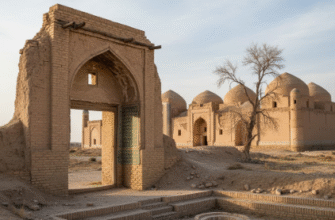
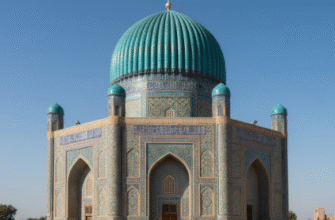
The thing about Kunya Ark—this sprawling citadel tucked inside Khiva’s ancient walls in modern-day Uzbekistan—is that it wasn’t just some military outpost. It was the nerve center of the Khivan Khanate, built around 1686 or 1688, depending on which historian you ask. The complex served as the khan’s residence, his administrative headquarters, and essentially the beating heart of a desert empire that controlled crucial Silk Road trade routes for centuries. You walk in through those massive gates and you’re stepping into what was basically a self-contained city within a city, complete with its own mint, arsenal, harem quarters, and throne room where rulers made decisions that rippled across Central Asia. The whole thing sits on roughly 3 hectares of land, though I’ve seen estimates that vary. What strikes me most is how it managed to be simultaneously a fortress, a palace, and a bureaucratic machine—all wrapped in those distinctive blue-tiled walls that Khiva does so well.
Here’s the thing: most people miss the mosque when they visit.
The Summer Mosque inside Kunya Ark is this open-air masterpiece with wooden columns that’s easy to overlook if you’re rushing through. It was built in the 1830s under Allah Quli Khan, and honestly, the craftsmanship is exhausting to look at—every inch carved with geometric patterns and floral motifs that would’ve taken artisans months, maybe years. I used to think these decorative elements were just showing off, but turns out they served a practical purpose too: the intricate wooden screens provided shade while allowing air circulation in those brutal Khivan summers where temperatures could hit 40°C or more. The mihrab—the prayer niche indicating Mecca’s direction—is covered in majolica tilework that’s somehow survived nearly two centuries of political upheaval, Soviet rule, and the general wear of time.
The Throne Room Where Empires Were Negotiated and Sometimes Lost
The kurinish khana, or throne room, is where things got real for the khans. This octagonal reception hall with its aiwan (covered porch) was where foreign ambassadors would present themselves, where trade agreements were hammered out, and where—let’s be honest—a fair number of executions were probably ordered. The walls are covered in blue and white majolica tiles arranged in patterns that are simultaneously calming and slightly disorienting. What I find fascinating is the power dynamics encoded in the architecture itself: the khan sat elevated on a platform, backlit by light from windows designed to make him appear almost ethereal to visitors approaching from the darker interior chambers. It’s psychological warfare through interior design, and it definately worked—accounts from Russian and Persian envoys describe feeling intimidated before negotiations even began.
Living Quarters That Reveal More Than Official Histories Ever Could
The harem section is where the official narrative gets messy.
Western sources love to sensationalize these spaces, but the reality of the Kunya Ark harem was more complex and frankly more interesting. Yes, it housed the khan’s wives and concubines—accounts suggest anywhere from a dozen to over forty women depending on the ruler and the era. But it was also home to female relatives, servants, and children, creating this separate domestic world with its own hierarchies and politics. The rooms are smaller than you’d expect, almost intimate, with carved wooden doors and windows that allowed the women to observe courtyard activities without being seen. Archaeological work in the 1970s uncovered evidence of Turkish baths, kitchens, and even small libraries within these quarters, suggesting the women weren’t just decorative but educated and politically aware. Some historians argue that certain khans’ wives wielded considerable influence over policy decisions, though these stories got erased from official chronicles. Wait—maybe that’s why the architecture feels so deliberately compartmentalized, creating spaces where unofficial power could operate alongside the formal throne room theatrics.
The Watchtower Perspective That Changes Everything About Desert Warfare Strategy
Climb the watchtower—and I mean actually climb it, all those narrow steps—and you’ll understand why Khiva survived as long as it did. From up there, you can see across the Kyzylkum Desert for kilometers in every direction. This wasn’t just about spotting enemy armies; it was about controlling information. Lookouts could track caravans approaching days before they arrived, giving merchants and tax collectors time to prepare. The tower also served as a signaling station, using smoke during the day and fires at night to communicate with other fortifications in the khanate’s network. Russian forces tried multiple times to take Khiva in the 1800s, failing until 1873 partly because the Kunya Ark’s observation system made surprise attacks nearly impossible. Standing up there, you feel the loneliness of it—imagine being the guard on duty, watching nothing but sand and heat shimmer for hours, knowing that one moment of inattention could doom the entire city.
Preservation Challenges When Your Monument Sits in a Living City That Doesn’t Care About Your Research Timeline
I guess it makes sense that Kunya Ark is falling apart.
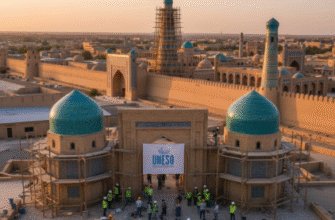
Not catastrophically—it’s a UNESCO World Heritage site as part of Itchan Kala, the inner walled city of Khiva—but the preservation work is this constant battle against entropy. The traditional building materials—mud brick, wood, ceramic tiles—weren’t designed to last forever; they were designed to be maintained by each generation. When the Soviet Union took over, restoration became about creating museum pieces rather than living structures, which created its own problems. Modern conservation teams are trying to use traditional techniques, but there’s debate about authenticity: do you replace a decayed wooden column with new wood carved the old way, or do you use a treated timber that’ll last longer but looks slightly wrong? I visited during restoration work in 2019, and the scaffolding and protective tarps gave the whole complex this weird temporal dislocation—ancient fortress meets construction site. The other challenge is tourism itself; thousands of visitors every year wear down floors, touch walls, alter humidity levels just by breathing in enclosed spaces. There’s this tension between preserving Kunya Ark for study and making it accessible to the people whose cultural heritage it represents. Honestly, I don’t know what the right answer is, and I’m not sure anyone else does either.