I used to think virtual tours were basically glorified slideshows—sterile, clunky, nothing like the real thing.
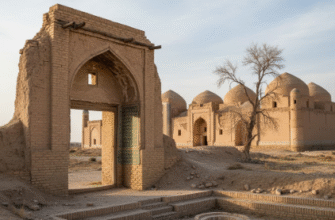
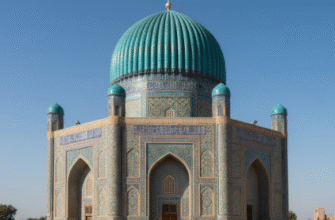
Then I stumbled into a 360-degree exploration of Khiva, that walled Silk Road city in Uzbekistan, and something shifted. The thing is, these aren’t your 2015-era panoramas stitched together with visible seams. Modern platforms use photogrammetry and lidar scanning to capture the turquoise tiles of the Kalta Minor minaret, the weathered wood of the Juma Mosque’s 218 columns (give or take a few—I’ve seen different counts), the labyrinthine alleys of Ichan Kala with a fidelity that’s, honestly, a bit unsettling. You can zoom into the majolica work on Mohammed Amin Khan Madrasah and see individual cracks in the glazing, the kind of detail I definitely missed when I was actually there, hustling between monuments before closing time. It’s not the same as standing in that courtyard at sunset, no—but it’s not trying to be, and maybe that’s the point.
Here’s the thing: accessibility isn’t just a buzzword here. Virtual tours democratize spaces that remain physically, financially, or politically out of reach for millions. Khiva’s in western Uzbekistan, hours from Tashkent, requiring visas and vaccinations and frankly a tolerance for Central Asian summer heat that I lack.
When Pixels Preserve What Erosion and Tourism Threaten
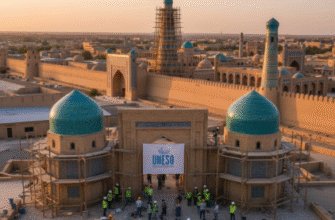
The preservation angle gets interesting when you consider that Khiva’s a living museum—UNESCO-listed since 1990, heavily restored (some say over-restored) but still inhabited. Virtual documentation creates a timestamped archive, a digital fossil of the site as it exists right now, before the next earthquake or misguided renovation or, let’s be real, the slow grind of mass tourism wears it down further. I guess it’s a hedge against impermanence. Researchers at institutions like CyArk have scanned over 500 heritage sites globally using similar tech, creating what amounts to a backup drive for human civilization. Khiva’s intricate tilework, the stuff that took Khorezm craftsmen months to lay in geometric perfection, can now be studied by architecture students in São Paulo or conservation specialists in Helsinki without anyone booking a flight or contributing to the site’s wear. There’s something quietly radical about that, even if the experience lacks the smell of cumin from nearby pilaf vendors or the weight of 2,500 years of history pressing on your chest.
Wait—maybe I’m romanticizing the in-person experience too much.
Virtual platforms also let you see things the average tourist can’t: restricted sections, aerial views via drone integration, even thermal imaging that reveals structural issues invisible to the naked eye. Some tours layer in augmented reality, reconstructing what the Tash Hauli palace looked like in 1838 before certain wings crumbled or were repurposed. You toggle between then and now, a temporal overlay that makes history feel less like a static textbook chapter and more like a conversation across centuries. The University of California’s Digital Silk Road project has done fascinating work here, partnering with Uzbek authorities to create interactive timelines where you can watch trade routes shift, see how architectural styles evolved under Persian, Mongol, and Russian influence. It’s exhausting in the best way—too much information, branching paths, the opposite of a guided tour’s tidy narrative.
The Uncanny Quiet of Exploring Alone, Together
Honestly, there’s something both liberating and eerie about wandering Khiva’s empty courtyards on your screen at 2 a.m. No crowds, no hawkers selling suzani embroidery, no tour guide rushing you along. Just you and the architecture, mediated by algorithms and bandwidth. Some platforms add ambient sound—wind through the minarets, distant calls to prayer—which helps, sort of. Others let you explore alongside other users in real-time, avatars drifting through the same digital space, which sounds social but mostly feels like a weird multiplayer game nobody asked for. I tried one once; someone’s avatar kept clipping through a wall near the Pahlavan Mahmoud mausoleum and it shattered whatever immersion I’d managed to build.
The tech isn’t perfect—compression artifacts, occasional lag, the way certain textures load late and blur into focus like you’re recovering from anesthesia. But it’s improving faster than I expected, and the gap between virtual and physical keeps narrowing in ways that make me reconsider what “visiting” even means anymore.