I’ve spent enough time in Uzbekistan’s ancient cities to know that tourism doesn’t just change a place—it rewires it completely.
Khiva, this tiny walled city in the Khorezm region, sits on the edge of the Karakum Desert like some kind of architectural time capsule. The thing is, it’s been on UNESCO’s World Heritage list since 1990, and that designation basically turned the entire Itchan Kala—the inner fortress—into what locals sometimes call an open-air museum. Which sounds romantic until you realize that roughly 300 families still live inside those walls, trying to navigate the weird collision between their daily routines and the roughly 200,000 tourists who show up every year. The numbers fluctuate, give or take, but the tension doesn’t. You’ve got artisans who’ve been practicing traditional wood carving and ceramics for generations suddenly recalibrating their entire economic model around visitor expectations. Some days I wonder if we’re preserving culture or just fossilizing it for Instagram.
The economic impact is messy and contradictory, honestly. Tourism employs maybe 40% of Khiva’s workforce now—hotel staff, tour guides, restaurant workers, souvenir sellers. That’s significant money flowing into a region that was pretty economically isolated for decades. But here’s the thing: most of those tourist dollars don’t actually stay in the community. Big tour operators based in Tashkent or Bukhara capture the bulk of the revenue, and local guesthouse owners end up competing with international booking platforms that take 15-20% commissions. I’ve talked to craftsmen who say they make more reliable income now than they did twenty years ago, but they also mention how the craft itself has changed—simplified, really—to match what tourists expect “authentic” Uzbek art to look like.
Wait—maybe that’s not entirely fair. Some families have definately benefited. The Matkarimov family, who run a small ceramics workshop near the West Gate, told me their three sons all went to university on tourism income. That wasn’t possible before.
When Ancient Infrastructure Meets Modern Crowds: The Physical Toll Nobody Talks About
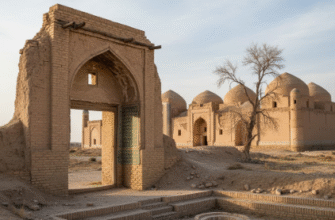
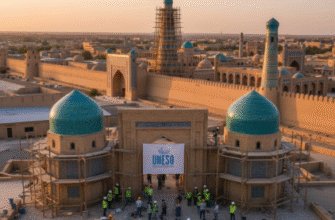
The structural damage is the part that keeps conservationists up at night. Khiva’s buildings are mostly made of adobe and carved wood—materials that were never designed to handle this kind of foot traffic. The Juma Mosque, with its 213 wooden columns (some dating back to the 10th century, some later), has seen accelerated deterioration in the past two decades. The Uzbek government invested something like $12 million in restoration between 2018 and 2023, but restoration is tricky because there’s constant tension between preserving historical accuracy and making structures safe for visitors. Some restoration work has been criticized for being too “clean”—making 400-year-old buildings look suspiciously new.
And the crowds themselves create microclimates of humidity and temperature fluctuation that these ancient structures just weren’t built to withstand.
Then there’s the infrastructure problem that nobody really wants to address head-on. Khiva’s water and sewage systems were built for a small residential population, not for hotels and restaurants serving thousands of visitors during peak season. In summer months—May through September—the strain is visible. I’ve seen backed-up sewage near the Palvan Darwaza gate, and locals complain about water pressure dropping to almost nothing during evening hours when tourists are showering after desert tours. The local government has proposed upgrades, but implementing modern plumbing in a UNESCO heritage site requires navigating layers of bureaucratic approval that can take years. Meanwhile, the environmental impact just accumulates quietly.
Cultural Authenticity Versus Economic Survival: The Identity Crisis Playing Out in Real Time
Here’s where it gets emotionally complicated. Traditional crafts have survived in Khiva partly because tourism created a market for them—but that market has also transformed what those crafts actually are. Woodcarvers used to spend months on a single intricately carved door or column. Now they produce smaller, portable items that tourists can fit in luggage. The technical skill is still there, I guess, but the scale and ambition have shrunk. Carpet weavers face similar pressures: traditional designs that took six months to complete don’t make economic sense when tourists want something they can buy in an afternoon.
Some younger residents have started leaving for Urgench or Tashkent, frustrated by what they see as their hometown becoming a performance space. One university student I spoke with—Aziza, who grew up inside the Itchan Kala—said it felt increasingly strange to live somewhere that exists primarily for other people’s photographs. Her family’s courtyard has been accidentally included in so many tourist photos that she’s learned to time her comings and goings to avoid peak visiting hours.
But then you talk to someone like Rustam, who runs a small guesthouse, and he’ll tell you tourism saved his family’s home from abandonment. His grandparents’ house was deteriorating badly in the 1990s, and converting it to a guesthouse provided both income and motivation to restore it. He acknowledges the trade-offs—the loss of privacy, the seasonal stress—but he’s also pragmatic about the alternatives, which weren’t great.
Turns out, impact is never just one thing. It’s this exhausting mix of preservation and exploitation, opportunity and displacement, pride and resentment, all happening simultaneously in a space about one square kilometer. The Khiva experience isn’t unique—you see similar dynamics in Dubrovnik, Angkor Wat, Machu Picchu—but each place negotiates these tensions differently depending on local governance, community cohesion, and how much power residents actually have in decision-making processes. In Khiva’s case, community input has historically been pretty limited, though there’s been some recent effort to include local voices in tourism planning committees. Whether that actually shifts power dynamics or just creates the appearance of participation remains to be seen, honestly.