I still remember the dust.
Not the romantic kind—the kind that gets into your camera bag and your lungs and stays there for days after you leave. Khiva does that to you. It’s this walled city in western Uzbekistan, and when I first visited maybe three years ago, I thought I’d seen enough in forty-eight hours. The madrasas, the minarets, the overly restored tilework that looks almost too perfect, like someone ran a filter over the entire old town. But here’s the thing: I keep thinking about going back. Not because I missed something the first time—though I definately did—but because the place won’t leave me alone, and I can’t quite figure out why that is. Maybe it’s the light at dusk, or maybe it’s just that I was too tired to pay attention properly. Anyway, I started planning a second trip last month, and the process has been stranger than I expected. You’d think returning somewhere would be easier than visiting the first time, but it turns out the opposite is true, at least for me.
Why the First Visit Never Tells You Everything You Need to Know
The problem with Khiva—or any place, really—is that you arrive with expectations.
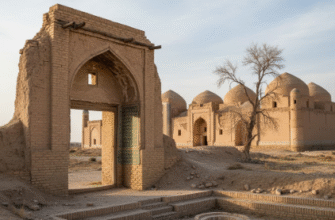
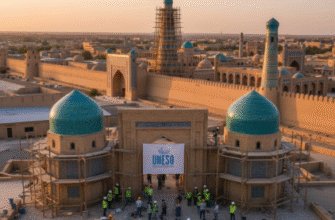
I showed up thinking it would be like Samarkand, but smaller and more manageable. It wasn’t. The Ichan-Kala, the inner fortress, is only about 26 hectares, give or take, which sounds tiny until you realize how dense it is. Every corner has a doorway, every doorway leads somewhere you didn’t plan to go. I missed the Juma Mosque entirely the first time because I was focused on the Kalta Minor minaret, that squat turquoise thing that looks unfinished because it is unfinished—construction stopped in the 1850s when the khan who commissioned it died. I spent an hour there, taking photos that all looked the same, while a group of French tourists argued about whether the tile pattern was Persian or Central Asian in origin. I didn’t have an opinion then. I do now, sort of, but I’d need to see it again to be sure.
What Changes When You Know You’re Going Back (And What Doesn’t)
Planning a return visit feels like trying to correct a mistake you’re not sure you made. I’m looking at the same guidebooks, the same blog posts, but now I’m reading between the lines. Someone mentions a guesthouse outside the walls with a courtyard garden—did I walk past that? Probably. Another person says the best time to visit is October, when it’s not too hot, but I went in April and it was fine, maybe even better because there were fewer people. Wait—maybe I’m remembering that wrong.
I’ve started making lists, which I didn’t do the first time. Things to see: the Tash Khovli palace (I saw it, but barely), the Said Allauddin mausoleum (missed it), the city walls at sunrise (didn’t wake up early enough). Things to eat: I had plov twice, which was probably overkill, and I never tried shivit oshi, the green noodle dish that everyone says you have to try. I guess it makes sense that I’m more deliberate now, but there’s something exhausting about it too, like I’m trying to optimize an experience that’s supposed to be spontaneous.
The Logistics Nobody Warns You About Until You’re Already There
Here’s what I didn’t expect: getting to Khiva is still annoying.
You fly into Urgench, which is about 35 kilometers away, and then you take a taxi or a shared van, and the drivers always want to negotiate even though there’s supposedly a fixed rate. Last time I paid 50,000 som, which felt like too much, but I was jetlagged and didn’t argue. This time I’m planning to book a transfer in advance, which costs slightly more but saves the hassle. Also, the ATM situation in Khiva is better than it was three years ago—there’s one near the west gate now—but I’m still bringing cash because I don’t trust that it’ll be working when I arrive. The guesthouse I stayed at last time doesn’t seem to exist anymore, or at least it’s not online, so I’m looking at a place called Malika Khiva, which has good reviews but also looks kind of generic. I don’t know. Maybe generic is fine.
What I’m Hoping to Feel (or Not Feel) the Second Time Around
I used to think that returning to a place would make it feel smaller, more manageable, like you’d shrunk it down by understanding it better. But that’s not how memory works, at least not for me. Khiva feels bigger now than it did when I was there—not physically bigger, but more layered, more complicated. I remember standing on top of the city wall, looking out at the desert beyond, and feeling like I was supposed to have some kind of epiphany. I didn’t. I just felt hot and vaguely disappointed that the view wasn’t as dramatic as I’d hoped.
This time I think I’ll skip the wall. Or maybe I won’t—maybe I’ll climb it again and feel something different, or maybe I’ll feel the same thing and that’ll be fine too. Honestly, I don’t know what I’m expecting. I just know that I need to go back, and that the planning itself has become part of the experience, this weird recursive loop where I’m trying to recieve something I didn’t quite get the first time but also can’t articulate what that thing is. It’s frustrating. It’s also kind of exciting, in a low-key, slightly obsessive way.
Anyway, I booked the flight yesterday.