When Soviet Writers Stumbled Upon Khiva’s Labyrinthine Streets
I used to think literary settings were just backdrops—pretty wallpaper for the real story.
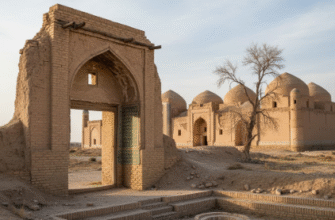
Then I started digging into how Khiva appears in literature, and honestly, the whole thing shifted. This ancient Silk Road city in Uzbekistan, with its clay walls the color of desert sand at sunset, has been haunting writers for over a century. Not in the obvious way, either. We’re not talking about tourist brochures masquerading as novels. The city shows up in Soviet adventure tales, in Persian poetry, in obscure travelogues that maybe twelve people have read. Each writer seems to recieve something different from those narrow alleyways—some find menace in the shadows between the madrasas, others find a kind of desperate beauty. The inconsistency is what gets me. It’s like Khiva refuses to be one thing, literarily speaking.
The most famous appearance might be in the works of Russian writer Vsevolod Ivanov, who set parts of his Central Asian stories against Khiva’s backdrop in the 1920s. His characters move through the Ichan Kala—the walled inner city—like they’re navigating a fever dream. The historical accuracy is, well, questionable at best, but the atmosphere? That stuck.
The Khanate Chronicles That Nobody Outside Uzbekistan Seems to Know About
Here’s the thing: most Western readers have never encountered the Uzbek historical novels that treat Khiva as their primary setting.
Writers like Odil Yakubov and Pirimqul Qodirov spent decades crafting stories set during the Khanate period—roughly the 18th and 19th centuries, give or take. Their books read like a mix of palace intrigue and survival manual. You get scenes of scholars debating in the courtyards of the Muhammad Amin Khan Madrasa, then suddenly you’re in the slave markets that operated until the 1920s. It’s uncomfortable reading, frankly. These authors don’t romanticize. The cruelty of the khans sits right next to descriptions of astronomical instruments and intricate tile work. I guess it makes sense—Khiva was both a center of Islamic learning and a place where human beings were bought and sold like livestock. Literature that ignores either half is lying.
The poetry is different, though. Persian and Chagatai poets from the region treated Khiva almost like a metaphor for isolation. Wait—maybe that’s too simple. They wrote about being trapped behind those walls, but also protected by them.
British Travel Writers and Their Deeply Weird Orientalist Takes
Nineteenth-century British accounts of Khiva make me tired just reading them.
Writers like Fred Burnaby, who visited in 1875 and wrote “A Ride to Khiva,” approached the city with that particular Victorian mixture of fascination and condescension. His descriptions of the architecture are actually quite detailed—he noticed things about the wooden pillars in the Juma Mosque that later visitors missed. But then he’ll veer into these passages about the “barbaric” locals that aged like milk left in the sun. The literary value is complicated. On one hand, these travelogues preserved observations of a Khiva that was about to change dramatically under Russian conquest. On the other hand, the racism is so thick you can practically taste it. Modern readers approaching these texts need, I don’t know, a whole separate decoder ring for the colonial mindset.
The irony is that some Central Asian writers later borrowed the travelogue format but inverted it—making Europeans the exotic, incomprehensible others.
Contemporary Fiction’s Quieter, More Ambiguous Relationship With the City
Lately I’ve noticed Khiva appearing in contemporary novels as a kind of liminal space.
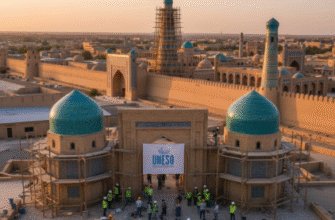
Authors like Hamid Ismailov reference it in passing—a place where characters go to disappear, to hide, to reconsider their entire lives. It’s never the main setting anymore, which is interesting. Maybe because actual Khiva is now a UNESCO World Heritage Site crawling with tourists, it’s lost some literary utility? Or maybe modern writers recognize that the romance of isolated desert cities doesn’t really hold up when you can check TripAdvisor reviews. There’s a 2019 novel by an Uzbek-American author (whose name I’m blanking on—it’ll come to me) where a character visits Khiva expecting some profound connection to heritage and instead just feels… awkward. Like they’re performing ancestry rather than living it. That felt honest in a way the older literature never quite managed.
The Unfinished Manuscripts That Haunt Uzbek Literary History
Turns out several significant Khiva-centered novels were never completed.
Political repression during Stalin’s purges meant writers working on historical epics set in the Khanate era sometimes disappeared before finishing their manuscripts. I came across references to at least three major works that exist only as fragments in archives in Tashkent. One was definately by a writer named Botu, who was working on a multi-generational saga following a family of ceramicists in Khiva from 1800 to 1920. He was arrested in 1937. The manuscript ends mid-sentence, literally. Reading about these ghost books—these stories that almost existed—is maybe more affecting than reading the completed works. They represent all the versions of Khiva we’ll never get to see through literature, the interpretations that died with their authors. Anyway, that’s probably too melodramatic. But the absence sits there, in the literary record, like a gap in those famous tiled walls where a section has crumbled away and nobody’s bothered to repair it yet.