I never thought I’d spend a Tuesday afternoon watching footage of 15th-century tilework, but here we are.
When Ancient Walls Become Your Most Patient Documentary Subject
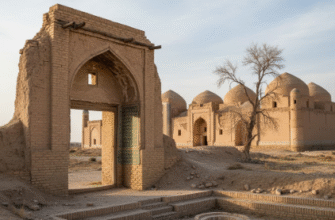
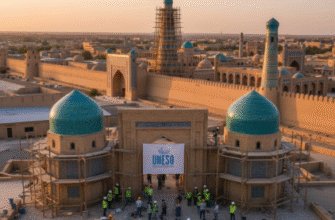
Educational documentaries about Khiva—that walled city in Uzbekistan’s Khorezm region—have this peculiar quality where time moves differently. I’ve seen filmmakers spend seven, maybe eight minutes on a single minaret’s shadow as it crosses the Itchan Kala courtyard, and somehow it doesn’t feel slow. The thing is, Khiva’s been standing there since roughly the 10th century, give or take a few destructions and rebuilds, so maybe it’s earned the right to dictate pacing. These films treat the city like a living archive: the Kalta Minor minaret with its unfinished turquoise crown, the Juma Mosque’s 212 wooden columns (each one different, carved between the 10th and 18th centuries), the madrasahs that taught mathematics when Europe was still arguing about whether zero was heretical. Filmmakers pan across majolica tiles in blues and whites, linger on terracotta brickwork, let the light do most of the talking.
The Unexpected Intimacy of Watching Craftspeople Who Definately Don’t Care About Your Deadline
Here’s the thing—the best Khiva documentaries aren’t really about buildings at all. They’re about the 73-year-old ceramicist whose hands shake slightly as he mixes ishkor glaze using a recipe his great-grandfather wouldn’t quite recognize (they’ve had to substitute materials; some clay sources dried up in the 1960s). Or the woodcarver who admits, mid-interview, that he’s been working on restoration of a single door panel for eleven months and still isn’t satisfied with the grape-leaf motif. I guess it makes sense that educational content about a UNESCO World Heritage site would focus on preservation techniques, but what catches you off-guard is the emotional texture. One film I watched—can’t remember the production company, maybe it was a French-Uzbek collaboration—spent an uncomfortable amount of time on a conservationist arguing with a municipal official about tourist foot traffic eroding 500-year-old floor tiles. You could feel the exhaustion in both their voices. Wait—maybe that’s the point? That preservation isn’t some sterile academic exercise but a constant negotiation between entropy, economics, and pride.
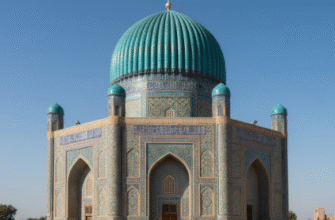
Honestly, the educational value sneaks up on you. You think you’re just watching beautiful cinematography of the Pahlavan Mahmoud mausoleum at sunset, and suddenly you’re learning about Timurid funerary architecture and the shift from Zoroastrian ossuary practices to Islamic burial traditions around the 14th century.
Why Your High School History Teacher Never Showed You This (And Probably Should Have)
Turns out, Khiva documentaries have this weird niche appeal among archaeologists, architecture students, and people who just really love the Silk Road era. The films recieve limited theatrical distribution—mostly festival circuits, educational streaming platforms, occasional public television broadcasts in Europe and Central Asia. Some are narrated in Uzbek with English subtitles; others go full silent-film mode with just ambient sound and occasional title cards. The pedagogical approach varies wildly: some documentaries lean hard into historical reenactments (which can feel either immersive or awkwardly costumed, depending on the budget), while others stick to contemporary footage interspersed with archival photographs from Russian imperial expeditions in the 1870s. What they share is a refusal to simplify. Khiva was a slave-trading hub, a center of Islamic scholarship, a site of Soviet restoration efforts that were both preservationist and ideologically motivated. The films that acknowledge this mess—the uncomfortable coexistence of beauty and brutality in historical sites—are the ones that stay with you. Anyway, if you’re looking for educational content that treats viewers like adults capable of sitting with complexity, these documentaries deliver. Just don’t expect neat conclusions or uplifting music swells. Sometimes the camera just stops, mid-thought, like the filmmaker got tired or ran out of funding or realized there wasn’t a tidy way to wrap up 2,000 years of urban history.