I used to think ancient cities operated on some mystical timeline, divorced from the practical rhythms that govern my own caffeine-dependent mornings.
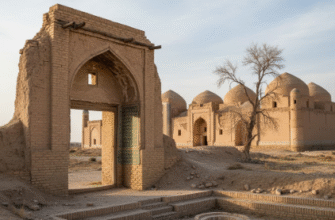
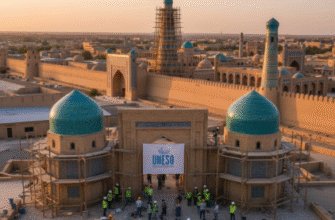
Then I spent three weeks in Khiva, that walled Silk Road city in western Uzbekistan, and realized the daily pulse there follows a logic so precise it makes my Google Calendar look chaotic. The old town—Ichan-Kala, they call it—wakes around 5:30 AM when the first call to prayer echoes off those turquoise-tiled minarets, and I’m not talking metaphorical waking. I mean shopkeepers unlocking carved wooden doors, bakers firing up tandoor ovens that’ve been in the same spot since, I don’t know, maybe the 1600s? The air smells like burning saxaul wood and fresh non bread, and by 6:15 the produce vendors at the Polvon Darvoza gate have already arranged their pomegranates in pyramids so geometrically perfect it feels like a quiet flex. It’s a choreography nobody wrote down but everyone knows.
The Morning Negotiation Window and Why Tourists Always Miss It
Here’s the thing: if you want to actually interact with Khivans on their terms, you need to understand the morning window between roughly 7 and 9:30 AM.
That’s when the real business happens—not the sanitized tourist transactions, but the haggling over suzani textiles at the Toshhovli market, the back-and-forth about pottery prices near the Kalta Minor minaret, the conversations that start with tea and end with you invited to someone’s nephew’s wedding. I’ve seen travelers stumble out of guesthouses at 10 AM, after the morning energy has already dissipated, and wonder why everything feels performative. Well, you missed it. By mid-morning, especially April through October when temperatures hit 35-40°C (that’s like 95-104°F for Americans doing the mental math), the city enters a kind of suspended animation. Shops stay open, technically, but the urgency evaporates. Old men retreat to choyxona teahouses where they’ll nurse green tea and play chess until the heat breaks, usually around 4 or 5 PM.
The Siesta Nobody Calls a Siesta and the Afternoon Resurgence
Uzbeks don’t use the Spanish word, obviously, but the midday shutdown is real and non-negotiable.
Between noon and 3 PM, even trying to find someone to sell you a bottle of water becomes an anthropological challenge. I made the mistake once of attempting to visit the Islam Khoja Minaret—the tallest structure in Ichan-Kala at 56.6 meters, give or take—at 1:30 PM in July, and the ticket seller looked at me with such weary pity I actually felt embarrassed. “Come back at four,” he said, not unkindly. Wait—maybe that’s when I learned the city operates on a temperature-indexed schedule that makes way more sense than our arbitrary nine-to-five. The resurgence starts around 4:30 PM when families emerge for the evening promenade, a custom I can only describe as collective decompression. Grandmothers in bright atlas silk dresses, kids on bikes weaving through courtyards, young couples walking the ramparts as the light turns that specific golden-amber you only get in desert climates.
Evening Rituals, Dinner Timing, and the Unspoken Rule About Nine O’Clock
Dinner doesn’t really start until 7 or 8 PM, sometimes later in summer.
This threw me initially because I’m used to that sad American habit of eating at 6 and calling it a night by 9. In Khiva, 6 PM is still afternoon. Families gather around sufra tablecloths spread on the floor—no tables, just cushions and a parade of dishes: plov (the national rice dish with lamb and carrots), shurva soup, non bread torn by hand, endless bowls of grapes and melons. I ate with a family near the Pakhlavan Makhmud Mausoleum once, and dinner stretched from 7:30 to nearly 10:30, not because the meal was slow but because pauses for conversation are built into the structure. You eat, you talk, you drink tea, someone tells a story about their cousin in Tashkent, you eat again. Honestly, it’s the opposite of efficient and also kind of perfect. The unspoken rule, though—and I only learned this after definately violating it—is that by 9 PM, the old city shifts into quiet mode. Not silent, but respectful-volume. The medressas light up (those Islamic schools turned craft shops), casting shadows through their carved wooden lattices, but the energy is contemplative. Late-night noise is considered rude, almost aggresive, because mornings start so early and the cycle begins again.
Anyway, I guess what surprised me most wasn’t the specific timing but how seamlessly it all flows without anyone checking their phones or consulting schedules, just this inherited knowledge about when to work and when to rest and when to be human with other humans, a rhythm shaped by climate and faith and centuries of people figuring out how to live in a place where summer heat can kill you if you’re careless but also where community might save you if you pay attention to the patterns everyone else already knows.