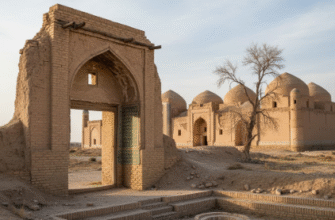
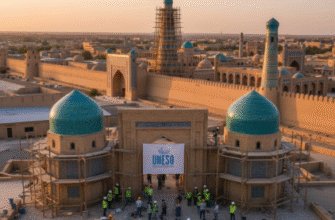
Khiva sits in the middle of the Kyzylkum Desert, which means your trip will be defined by heat.
I’ve been to Uzbekistan three times now, and each trip taught me something different about timing—mostly because I got it wrong the first time. Khiva in July is, to put it mildly, a test of human endurance. The temperature climbs past 40°C (104°F), sometimes hitting 45°C, and the ancient clay walls of Itchan Kala seem to radiate heat like they’re personally offended by your presence. The air is so dry that sweat evaporates before you notice it, which sounds convenient until you realize you’re dehydrating faster than you think. I used to believe that desert heat was somehow more bearable than humid heat—turns out that’s only true up to a point, and that point is roughly 42°C, give or take. Walking through the narrow alleys between madrasas feels like moving through an oven, and the locals, wisely, disappear indoors between noon and five. Tourism drops to almost nothing in summer, which means you’ll have the place to yourself, but you’ll also spend most of your time seeking shade and wondering why you didn’t plan better.
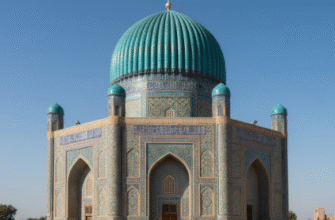
Here’s the thing: spring and autumn are when Khiva actually makes sense. March through May and September through early November offer temperatures in the 15-25°C range (roughly 59-77°F), which is ideal for wandering around a walled city with no air conditioning. The light in April is extraordinary—soft and golden in the early morning, turning the turquoise tiles of the minarets almost luminous.
Why April and October Are the Sweet Spots for Visiting This Ancient Silk Road City
April might be the single best month to visit Khiva, and I say that with some authority after three trips. The weather is mild, occasionally breezy, and the desert flowers—yes, they exist—start appearing in the outskirts. You’ll see poppies and wild tulips if you venture beyond the city walls, which most tourists don’t bother doing. The city itself is still waking up from winter, so there’s a freshness to everything, a sense of anticipation. October is similarly excellent, though it tends to be slightly warmer than April. The harvest season brings a certain energy to the bazaars, and the evening temperatures drop quickly after sunset, which means you can actually enjoy walking around at night without melting. The skies in October are clearer too—fewer dust storms, better visibility, sharper photographs. I guess it makes sense that these shoulder seasons are when serious photographers and architecture enthusiasts show up, because the conditions are just objectively better for appreciating the details of the tilework and wood carvings.
Winter is complicated.
December through February brings temperatures that can drop below freezing, especially at night, and Khiva isn’t really built for cold weather tourism. The guesthouses have heating, but it’s inconsistent—sometimes a radiator, sometimes a space heater that smells faintly of burning dust. Snow is rare but not impossible, and when it does fall, the city transforms into something out of a fairytale, all white domes and icy blue tiles. I’ve seen photographs from a February snowfall in 2019, and they’re stunning, but the people who took them also complained bitterly about frozen fingers and closed restaurants. The thing about winter in Khiva is that it’s genuinely quiet—almost no tourists, which can feel either peaceful or lonely depending on your temperament. Some museums and monuments reduce their hours or close entirely, which is frustrating if you’ve traveled a long way. But if you’re the type who likes having historical sites essentially to yourself, and if you don’t mind bundling up in layers, winter has its charms. The air is crisp, the crowds are gone, and the locals seem more willing to chat with the few visitors who do show up.
Summer Tourism Requires Strategic Planning and a High Tolerance for Discomfort
If you absolutely must visit in summer—maybe your vacation time is fixed, or you’re combining Khiva with other Central Asian destinations—then you need a strategy. Start your days at dawn, ideally around 6 AM, when the temperature is still tolerable and the light is magical. Explore until about 10 AM, then retreat to your guesthouse or a shaded teahouse. Honestly, the midday hours are for resting, reading, napping—anything but walking around. Resume activities around 5 or 6 PM, when the sun starts to lose its intensity. Evening in Khiva, even in summer, can be pleasant once the heat breaks. The walls glow in the sunset, and the city feels almost habitable again. Hydration is non-negotiable—carry water constantly, drink more than you think you need, and watch for signs of heat exhaustion like dizziness or headache. Sunscreen, a wide-brimmed hat, and loose cotton clothing are essential, not optional. Some travelers I met in July 2021 were wearing synthetic fabrics and suffering accordingly—cotton breathes, synthetics don’t, and in 43°C heat that difference matters more than you’d think.
Wait—maybe the most important factor isn’t temperature at all, but what you want from the experience. If you’re after dramatic photographs with no people in the frame, summer or winter works. If you want comfortable exploration and the ability to spend full days outside, spring and autumn are definately the way to go. If you’re hoping to experience local festivals or cultural events, you’ll need to research specific dates—Navruz in March is a big deal across Uzbekistan, including Khiva, and the energy is palpable. I guess what I’m saying is that there’s no single perfect time for everyone, but there are clearly better and worse choices depending on your priorities and heat tolerance.