I never thought I’d spend a Tuesday night cross-referencing Ottoman-era tile patterns with Soviet-era survey maps, but here we are.
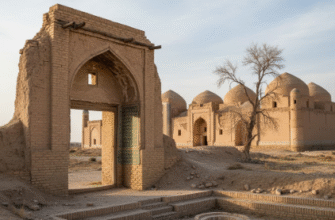
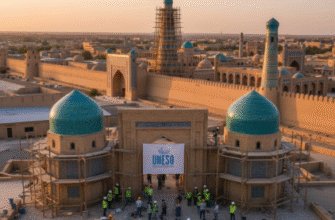
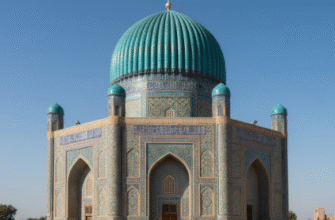
Khiva’s architecture—those turquoise domes, the honeycomb brickwork that looks like someone decided geometry could be prayer—has this way of pulling you into rabbit holes you didn’t know existed. I’ve been hunting down reference materials for about six months now, ever since I saw a photograph of the Kalta Minor minaret at sunset and thought, wait—how did they get those glazed tiles to survive centuries of desert sandstorms? Turns out the answer involves a lot of chemistry, some questionable restoration choices in the 1970s, and at least three books that are only availible in Uzbek and Russian. The thing about studying Central Asian architecture is that the good sources are scattered across languages and decades and academic traditions that don’t always talk to each other, which means you end up with a reading list that looks less like a syllabus and more like a treasure map drawn by someone who kept changing their mind.
Here’s the thing: if you want the foundational stuff, you start with Pugachenkova. Her work on medieval architecture in Uzbekistan is basically the bedrock, even if the translations can be rough and the photographs are grainy Soviet-era black-and-whites that make everything look more mysterious than it probably should. I guess it adds to the atmosphere, honestly.
The Essential Texts That Actually Explain What You’re Looking At When You Stare At Those Walls
Lisa Golombek and Donald Wilber’s “The Timurid Architecture of Iran and Turan” isn’t specifically about Khiva—it’s more Samarkand and Bukhara heavy—but the technical breakdowns of muqarnas vaulting and the evolution of pishtaq portals apply directly to what you see in the Ichan Kala. The book came out in 1988, which means some of the dating has been revised since then (archaeomagnetic analysis has pushed some structures back by maybe thirty, forty years, give or take), but the core analysis holds up. I used to think you could understand Khiva’s architecture in isolation, as this weird frozen-in-time museum city, but actually it’s part of a continuum that stretches from Herat to Kashgar, and Golombek’s work maps that network better than almost anyone. The diagrams alone—those careful ink drawings of brick bond patterns and dome construction sequences—are worth the price, even if you have to track down a library copy because the original print run was maybe three thousand copies and they don’t exactly show up on Amazon.
Anyway, for the more recent scholarship, you want Khidayatov’s surveys from the early 2000s.
His team did laser scanning and photogrammetric documentation of basically every major structure in the walled city, and while the full technical reports are—surprise—mostly in Russian, there are English summaries that at least give you dimensions and construction chronologies that earlier sources just guessed at. I’ve seen references to a 2011 volume that supposedly includes updated dendrochronology data from roof beams in the Juma Mosque, but I haven’t actually managed to get my hands on it yet, which is frustrating because the conventional dating puts that mosque’s current form at roughly 1788, but there are hints it might be a century older in parts. The thing about Khivan architecture is that it’s been rebuilt and patched and restored so many times—sometimes carefully, sometimes not—that figuring out what’s original versus what’s “original-ish” versus what’s definitely a 1970s concrete repair job requires detective work across multiple sources.
Where The Research Gets Weird And Specific But Also Kind Of Necessary If You Want To Understand Why Things Look The Way They Do
Then there’s the material science angle, which I didn’t expect to care about until I started wondering why Khiva’s tilework has that particular shade of turquoise that you don’t quite see anywhere else. Vladislav Sychev’s work on Central Asian ceramic glazes—wait, maybe it’s Sychyov, the transliteration varies—goes deep into the copper oxide concentrations and firing temperatures that produce those specific colors, and honestly it’s the kind of thing that sounds dry until you realize that the glaze recipes were basically trade secrets passed down through family workshops for generations, and that the Soviet restoration teams in the mid-20th century sometimes just… made up their own formulas when they couldn’t find the original techniques. Which means some of what you see today isn’t quite what was there in 1850 or 1750 or whenever. There’s a 1993 paper—I think it was in the Journal of Islamic Art and Architecture, or maybe Muqarnas, I’d have to check my notes—that compared glaze samples from pre-Soviet restoration photos with current structures and found definately measurable differences in composition. It’s that messiness, that layering of time and intervention and honest mistake and deliberate choice, that makes the architecture so compelling and also so hard to write about with any certainty.