I used to think Sufi shrines were just quiet places where old men prayed.
Then I spent three days in Katta Langar, a village wedged into the Nuratau Mountains of Uzbekistan, roughly 80 kilometers south of Samarkand—give or take a few winding dirt roads—and realized I’d been thinking about sacred spaces all wrong. This isn’t some polished tourist site with gift shops and guided tours. It’s a living, breathing community where roughly 300 families tend orchards, herd livestock, and maintain a pilgrimage tradition that stretches back maybe 800 years, depending on which elder you ask. The shrine itself honors Hazrat Ali, cousin and son-in-law of the Prophet Muhammad, and people here will tell you he drank from the mountain spring that still flows through the village center. Whether that’s historically verifiable or not—honestly, does it matter when you see grandmothers filling copper pitchers at dawn, whispering prayers their grandmothers taught them?
The Mountain Community That Modernity Somehow Missed (Or Maybe Just Ignored For A While)
Katta Langar sits at about 1,400 meters elevation, tucked into folds of limestone and juniper forest that look prehistoric in the right light. The Nuratau range isn’t particularly famous—it’s not the Pamirs, not the Tian Shan—but it’s old, geologically speaking, maybe 300 million years old, and the isolation it provides has preserved something rare. Most villages this remote in Central Asia either emptied out during Soviet collectivization or got paved over by development. Katta Langar did neither. The houses are still traditional: adobe walls, flat roofs, orchards of apricot and walnut crowding the courtyards. I guess the lack of road access helped—there’s only one paved route in, added in the 1990s, and it’s the kind of road that makes you reconsider your life choices during every switchback.
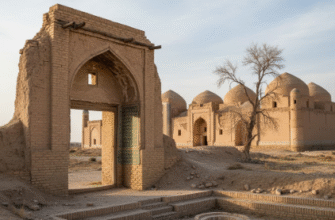
Anyway, the shrine complex sprawls across a hillside, connected by stone paths worn smooth by centuries of pilgrims.
There are prayer rooms, a small mosque, guesthouses for travelers, and that spring I mentioned—locals call it the “sacred water,” and chemical analysis shows it’s unusually rich in minerals, iron and calcium mostly, which probably explains the slight metallic taste. People come here for healing, for blessings, for answers. I met a woman from Tashkent who’d traveled eight hours by bus because her son was sick and doctors couldn’t figure out why. She wasn’t sure the water would help, but she wasn’t sure it wouldn’t, either. That’s the thing about faith—it doesn’t require certainty.
How A Medieval Trade Route Village Became A Sufi Pilgrimage Epicenter (And Why That Distinction Actually Matters)
Wait—maybe I should back up.
The Silk Road passed through this region, not directly through Katta Langar but close enough that travelers and traders would detour to the springs for fresh water and rest. By the 12th or 13th century—scholars argue about dates, which is annoying but typical—Sufi mystics started settling here, drawn by the isolation and the spiritual energy people claimed to feel in the mountains. Sufism, for anyone unfamiliar, is the mystical branch of Islam, focused on inner experience and direct connection with the divine rather than strict ritual adherence. It’s poetry and ecstatic dance and long nights of meditation. The shrine at Katta Langar became a teaching center, a place where wandering dervishes would stop to study with local masters, and over time the whole village organized itself around this spiritual economy. Families specialized: some became shrine keepers, others guesthouse operators, still others farmers who supplied food for pilgrims.
That structure persists today, though obviously modernized.
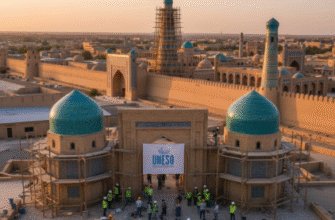
The shrine is still maintained by descendants of the original caretaker families, funded partly by donations and partly by the Uzbekistan government, which recognized the site’s cultural value in 2007 and added some infrastructure—solar panels, a visitors’ center that’s rarely staffed. Tourism exists but it’s modest, maybe a few thousand people annually, mostly domestic pilgrims with a handful of curious foreigners like me who heard about the place from a documentary or a travel blog. The village economy still depends on agriculture—apricots, walnuts, honey—and remittances from younger people who left for cities.
Living With Ghosts, Saints, And The Persistent Problem Of Water Rights In A Climate-Changing World
Here’s the thing: tradition is great until it collides with practical reality.
The sacred spring produces less water than it did 50 years ago, according to villagers I spoke with. Climate data for the region shows average temperatures rising about 1.2 degrees Celsius since 1980, and precipitation patterns shifting—longer dry periods, shorter intense rains. The spring depends on snowmelt and underground aquifers, both vulnerable to warming. Village elders held a meeting last year to discuss rationing water between the shrine, the households, and the orchards. They haven’t reached consensus, which surprises exactly no one who’s ever tried to negotiate shared resources in a tightly-knit community where everyone’s related by blood or marriage and grudges last generations. One farmer told me, exhausted, that he doesn’t know if his grandchildren will be able to stay here. The orchards are dying. The young people leave anyway, for jobs, for universities, for lives less dictated by seasons and saints.
And yet people keep coming to the shrine, keep filling their bottles with sacred water, keep believing in something bigger than drought and economics. I watched a teenage boy help his elderly grandfather climb the path to the prayer rooms, both of them moving slowly, patiently. The boy’s phone buzzed constantly—texts, probably, or social media—but he didn’t check it once during the hour they spent there. Maybe that’s the real miracle of Katta Langar: not the spring, not the shrine, but the fact that in 2025, in a world optimized for speed and distraction, a place still exists where people choose slowness, where they honor continuity over convenience. I definately didn’t expect to find that in a village I’d never heard of three months ago, wedged into mountains most maps barely bother to label.