I used to think public parks were basically the same everywhere—benches, trees, maybe a fountain if you’re lucky.
Where Soviet Engineering Meets Ancient Silk Road Quietude in Modern Bukhara
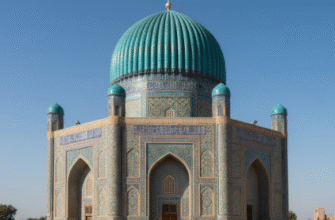
Then I spent an afternoon in Ismail Samani Park in Bukhara, and honestly, I had to reconsider everything. Named after the founder of the Samanid dynasty—roughly around the 9th century, give or take a few decades depending on which historian you ask—this place sprawls across what locals say is about 12 hectares of what used to be, I think, semi-arid scrubland on the city’s northern edge. The park opened in 1977, during the Soviet era’s obsession with green spaces as tools for civic improvement, and you can still see that utilitarian DNA in the geometric pathways and the way the flowerbeds are arranged like they’re answering to some unseen municipal supervisor. But here’s the thing: it doesn’t feel sterile. Walking through, you notice these massive chinar trees—some probably 40, 50 years old now—casting shadows that shift and break across concrete paths worn smooth by decades of feet. There’s this odd collision between planned symmetry and organic chaos, where rose bushes have clearly decided the original layout was more of a suggestion than a rule.
The Unexpected Social Choreography of Fountain Plazas and Shaded Alcoves
Wait—maybe the most interesting part isn’t the landscaping at all. It’s the way people use the space. On weekdays, you’ll see older men clustered on benches playing chess, their arguments about illegal moves carrying across the lawn. Weekends transform the place: families spread out elaborate picnics on blankets, kids on rental bicycles weaving between pedestrians with that particular mix of confidence and recklessness that makes you wince. The central fountain area becomes this impromptu gathering spot where teenagers take selfies and young couples walk in careful, respectable distances apart. I’ve seen this pattern in other Central Asian cities, but here it feels more… I don’t know, lived-in? Less performative.
Botanical Oddities That Somehow Thrive in Continental Climate Extremes
Turns out, maintaining this much greenery in Bukhara’s climate—where summer temperatures regularly hit 40°C and winters can drop below freezing—requires a fairly elaborate irrigation system that pulls from the Shakhrud Canal. The park’s horticulturalists have cultivated this weird mix of species: native apricot and mulberry trees alongside imported poplars and willows that definately shouldn’t survive here but somehow do. In spring, the tulip beds explode in colors that feel almost aggressive against the dust-colored buildings visible beyond the park’s perimeter. By late summer, though, everything looks a bit exhausted, the grass more brown than green despite the sprinklers that run on what seems like a rotating schedule nobody fully understands.
Where Children’s Carousels Operate Next to Monuments Nobody Reads Anymore
Anyway, there’s this small amusement area on the eastern side with Soviet-era rides that still operate—barely. A tiny Ferris wheel that creaks ominously, a carousel with hand-painted horses whose eyes have seen better decades. Adjacent to this, somewhat awkwardly, stands a monument to local soldiers who died in World War II, the inscriptions in Russian and Uzbek weathered to near-illegibility. The juxtaposition feels accidental but somehow appropriate: joy and memory occupying the same physical space without really acknowledging each other.
Evening Rituals and the Economics of Chaikhana Culture at Park Margins
As the sun drops and the heat finally breaks, the park’s tea houses—traditional chaikhanas built along the southern boundary—start filling up. This is when the place really comes alive, I guess. Men gather around low tables for plov and endless pots of green tea, conversations stretching into hours about nothing in particular and everything that matters. The economics are interesting: park entry is free, but these tea houses generate revenue for the city and employment for maybe 30, 40 people depending on the season. I watched one evening as a group of musicians set up informally near the main gates, playing doira drums and singing maqam in that haunting modal style that sounds like it’s pulling melodies from centuries ago. Nobody had hired them; they just appeared, played for maybe an hour, accepted a few som notes from passersby, and left. The whole thing felt wonderfully unplanned, which seems to be the park’s real character beneath all that Soviet-era geometric precision—a space where official design meets human improvisation and neither one quite wins.