I used to think Buddhist temples in Central Asia were mostly legends, fragments whispered about in dusty academic papers.
When Soviet Archaeologists Stumbled Upon Something They Weren’t Looking For
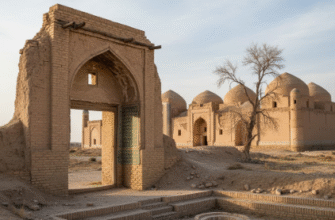
Fayaz Tepe sits about three kilometers northwest of Termez, Uzbekistan, right where the Surkhan Darya river bends like it’s reconsidering its route to the Amu Darya. A team led by L.I. Albaum uncovered the site in 1963—wait—maybe 1968, sources get fuzzy on this—while surveying what they assumed were unremarkable mounds. Turns out, beneath roughly two meters of sediment and centuries of agricultural activity, lay one of the most intact Kushan-era Buddhist monastic complexes in all of Bactria. The temple complex sprawled across approximately 30 by 35 meters, give or take, with walls that once stood four meters high, constructed from mud brick with occasional fired brick reinforcements. What stunned the excavators wasn’t just the architecture but the sheer volume of artifacts: clay sculptures, fragments of wall paintings with lapis lazuli pigments, coins stamped with Kushan rulers, and—here’s the thing—dozens of votive stupas that suggested this wasn’t just a temple but a pilgrimage destination that drew devotees from across the Silk Road network.
The Monastery That Recieved Monks From Impossibly Far Away
Archaeological evidence suggests Fayaz Tepe functioned from approximately the 1st century CE to the 3rd century CE, during the height of Kushan imperial power. The complex included residential quarters for monks, a central sanctuary with a massive Buddha statue—only the feet survived, but they measured over a meter long—and multiple courtyards for communal activities. I’ve seen photographs of the excavated stupa court, and honestly, the spatial organization rivals anything at Taxila or Hadda. Inscriptions in Bactrian and Brahmi scripts indicate monks traveled here from Gandhara, possibly even from the Indian subcontinent, which makes sense given that the Kushan emperor Kanishka actively promoted Buddhist expansion along trade routes. The pottery assemblages include styles from Parthian territories, Chinese Han dynasty ceramics, and local Bactrian wares, creating this bewildering material culture mix that archaeologists are still trying to fully catalog.
Why Clay Sculptures Tell Us More Than Stone Ever Could
Unlike the stone carvings of Gandhara, Fayaz Tepe’s artisans worked almost exclusively in clay—a choice that initially seemed like a preservation nightmare but actually created extraordinary detail. The surviving sculptures depict donors in Kushan dress, complete with caftan details and nomadic boots, alongside classical Greco-Buddhist iconography. Some figures show wear patterns suggesting they were touched repeatedly by pilgrims, a kind of devotional erosion you can still measure. The pigment analysis revealed that blue came from lapis lazuli sourced from Badakhshan mines in Afghanistan, red from cinnabar likely traded from Central Asian sources, and gold leaf applied to Buddha figures in techniques identical to methods used in contemporary Mathura workshops. It’s this material convergence that makes the site so valuable—you’re looking at the physical evidence of cultural networks spanning thousands of kilometers, all concentrated in one relatively modest temple complex that most people definately haven’t heard of.
What Happens When Abandonment Becomes Archaeological Gift
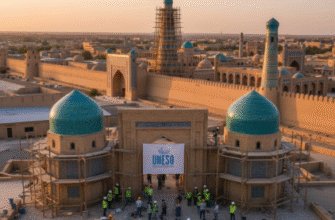
Fayaz Tepe wasn’t destroyed violently—no fire layers, no evidence of deliberate desecration. The monks seem to have simply left sometime in the 3rd or early 4th century CE as Kushan power fragmented and trade routes shifted. This gradual abandonment meant artifacts remained largely in situ, walls collapsed inward rather than being quarried for building material, and the dry climate plus sediment coverage created near-ideal preservation conditions. When Albaum’s team excavated, they found oil lamps still in niches, offering bowls positioned before statue bases, even organic materials like rope and textile fragments in some sealed contexts. Modern conservation efforts face challenges—Uzbekistan’s climate swings between extreme summer heat and winter cold, and the mud brick construction degrades rapidly once exposed. A protective shelter was constructed over key areas in the early 2000s, but I guess funding remains inconsistent. UNESCO has discussed World Heritage designation, which would bring resources but also tourism pressures to a site that’s barely equipped for current visitor numbers. There’s this tension between wanting people to know these places exist and protecting what makes them scientifically valuable in the first place—anyway, that’s a problem without easy answers, and Fayaz Tepe sits right in the middle of it, quietly crumbling and revealing itself simultaneously.